
A Swiss biotech just earned the first-ever FDA Fast Track for a drug targeting the genome's 'dark side' in heart disease. HTX-001 goes after a rogue piece of non-coding RNA to reprogram scarred heart cells, and it could rewrite the rules for an entire class of medicine.
Your DNA has a dirty secret. About 98% of it doesn't code for proteins. Scientists used to call it "junk DNA." Turns out, that junk might hold the key to fixing broken hearts.
A tiny Swiss-American biotech called HAYA Therapeutics just convinced the FDA to give its lead drug, HTX-001, a Fast Track designation for a type of heart disease with almost no good treatments. That alone would be noteworthy. But the real story is what HTX-001 actually is: the first therapy targeting a long non-coding RNA (lncRNA) ever to reach this regulatory milestone in cardiac disease.
If that sounds like a lot of jargon, stick with me. This one matters.
For decades, drug developers focused on the 2% of DNA that makes proteins. The other 98%, the so-called "dark genome," was mostly ignored. But buried in that darkness are lncRNAs: stretches of genetic code that don't build proteins but act more like control switches. They tell cells what to become, how to behave, and when to go haywire.
Think of your genome like a massive orchestra. Proteins are the instruments. LncRNAs are the conductor, waving the baton, deciding which sections play loud and which ones stay quiet. When the conductor loses the plot, the music turns into noise.
HAYA's founders, including CEO Samir Ounzain, built the company around one specific conductor gone rogue: a lncRNA called WISPER. Discovered in Ounzain's lab at the University of Lausanne, WISPER is overactive in damaged hearts. It flips on fibrosis, the process where scar tissue slowly stiffens the heart muscle until it can't pump properly.
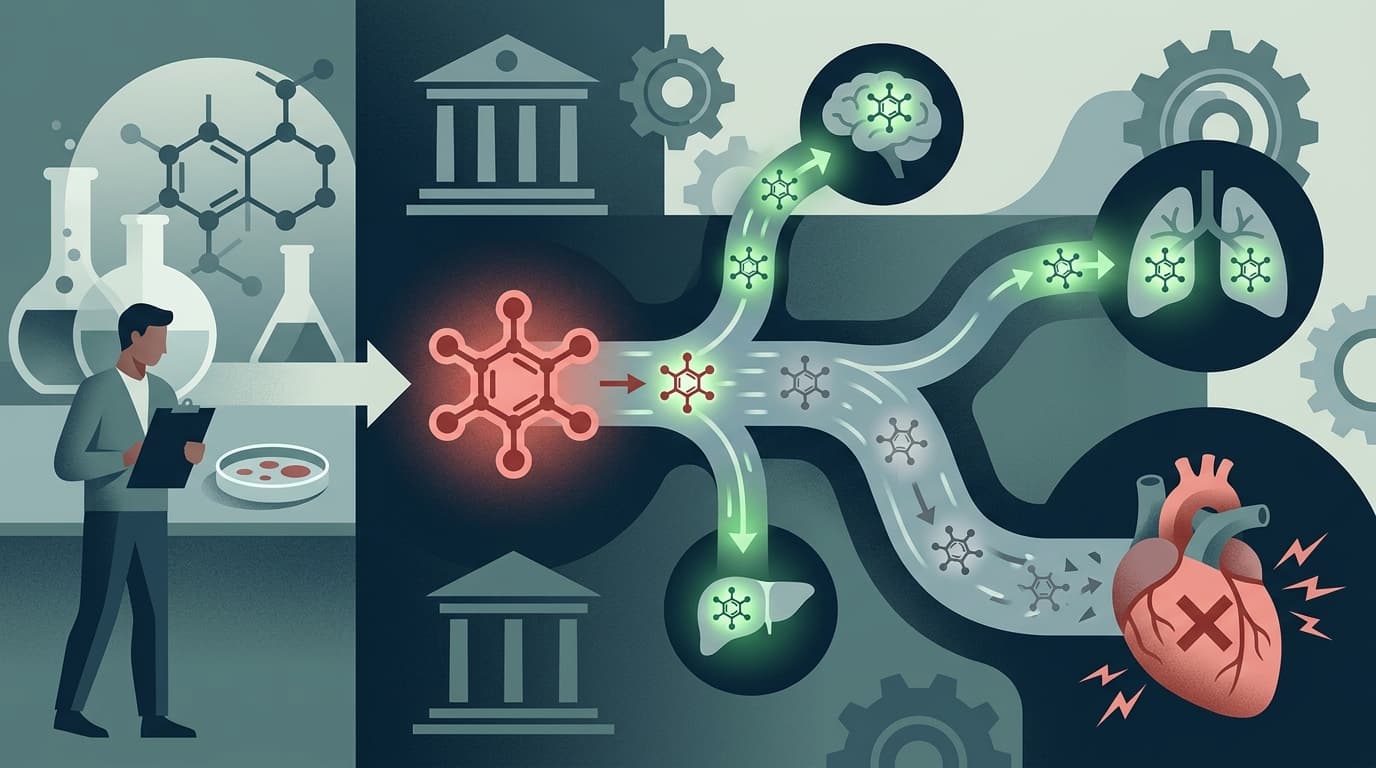
HTX-001 is designed to silence WISPER. It's an antisense oligonucleotide (essentially a synthetic snippet of genetic material) that binds to the WISPER RNA and shuts it down. The goal isn't just to slow the scarring; it's to reprogram the cells causing it, nudging diseased cardiac fibroblasts back toward a healthier state.
If proteins are the building you're trying to fix, HAYA is going after the blueprint.

AstraZeneca and Ionis' Wainua crushed it in nerve disease, so everyone expected it to dominate in heart failure caused by the same rogue protein. A 1,432-patient Phase 3 trial just proved that biology doesn't work that way.


Join thousands of biotech professionals who start their day with our free, daily briefing.

HTX-001 is aimed at non-obstructive hypertrophic cardiomyopathy (nHCM), a condition where the heart muscle thickens abnormally without blocking blood flow. It accounts for roughly one-third to one-half of all HCM cases, which means hundreds of thousands of patients across the U.S. and Europe.
Those patients are stuck in a treatment dead zone. The exciting new cardiac myosin inhibitors (mavacamten, aficamten) that have transformed obstructive HCM? Not approved for the non-obstructive kind. Septal reduction surgery? Designed for obstruction. What's left is the medical equivalent of comfort food: beta-blockers, calcium channel blockers, and careful fluid management. They ease symptoms but do nothing to stop the underlying fibrosis from getting worse.
For patients whose disease progresses to advanced heart failure, the options narrow to a heart transplant. That's not a treatment strategy; it's a last resort.
The FDA's Fast Track designation recognizes this gap. It gives HAYA more frequent check-ins with regulators and potentially opens the door to rolling review or accelerated approval down the road. It does not mean the drug works. But it does mean the agency agrees: these patients need something better, and they need it soon.
HAYA announced the Fast Track news on July 28, 2026. The company had already dosed its first cohort in a Phase 1a/b trial back in May. The study is testing multiple ascending doses in healthy volunteers first, then nHCM patients, measuring safety, how the drug moves through the body, and early signs of biological activity.
The preclinical data are encouraging, if you're comfortable extrapolating from mice and minipigs. In animal models of heart damage, HTX-001 reduced cardiac fibrosis and improved heart function. Multi-omics analyses showed it dialed down the fibrotic gene programs and even reversed some metabolic changes associated with disease. The cells started burning fatty acids again instead of relying on the sugar-heavy metabolism typical of sick hearts.
But here's the honest truth: no lncRNA-targeting drug has ever proven itself in humans for any cardiac condition. HTX-001 isn't just testing a new molecule; it's testing an entirely new class of medicine. The translation from animal hearts to human hearts is never guaranteed, and chronic suppression of a regulatory RNA in cardiac tissue raises questions about durability, dosing, and off-target effects that only clinical data can answer.
HAYA isn't the only company betting on lncRNAs. Flamingo Therapeutics is developing FTX-001, which targets the cancer-linked lncRNA MALAT1, and is reportedly close to entering the clinic. Amaroq Therapeutics in New Zealand has a preclinical oncology pipeline built on lncRNA targets. NextRNA Therapeutics in Boston is taking a different angle entirely, designing small molecules (not oligonucleotides) that disrupt lncRNA-protein interactions, backed by a collaboration with Bayer.
But none of them have reached the regulatory milestone HAYA just hit. And HAYA itself has serious backers: a $65 million Series A led by Sofinnova Partners and Earlybird, with Eli Lilly among the investors. Lilly also signed a separate collaboration, reportedly worth up to $1 billion, to use HAYA's platform for metabolic diseases like obesity.
That's a meaningful signal. When a pharma giant that size writes a check, it's not charity; it's a calculated bet that lncRNA-targeting technology actually works.
The next big moment for HTX-001 will be initial safety and pharmacodynamic data from the Phase 1 trial. Analysts and cardiologists are watching for any hint of WISPER knockdown in humans, whether through blood-based biomarkers or cardiac imaging signals like changes in heart wall thickness.
Even a modest sign of anti-fibrotic activity in early cohorts would send shockwaves through both the cardiology and RNA therapeutics communities. A stumble, on the other hand, would cool enthusiasm for the entire lncRNA drug class.
For now, HTX-001 sits in that exhilarating, nerve-wracking space where the science is beautiful and the data are still coming. The dark genome is finally getting its moment in the spotlight. Whether it delivers on the promise is the billion-dollar question.
Supernus and Indivior are merging into a $2.2 billion CNS and addiction powerhouse, combining ADHD drugs with the dominant opioid treatment franchise. It's specialty pharma's latest bet that brain disorders and addiction belong under one roof.