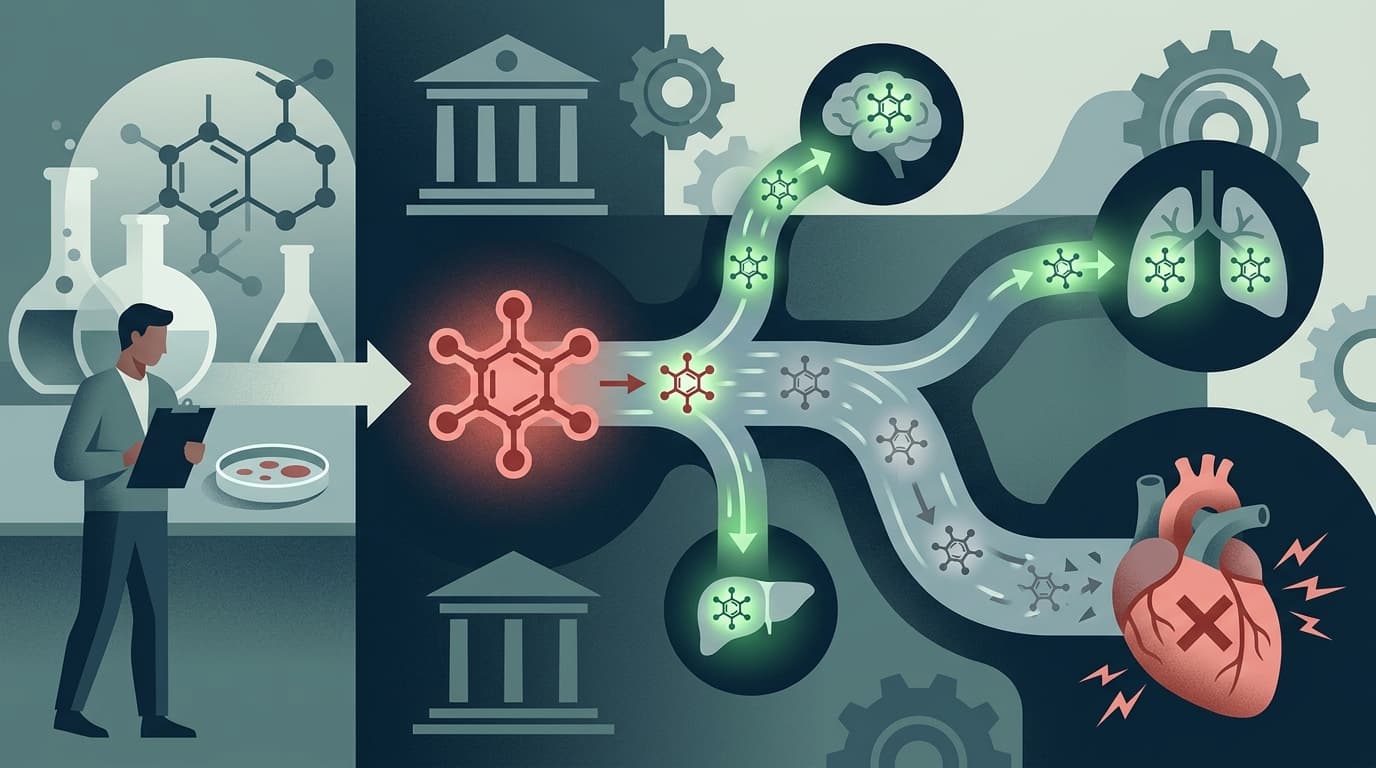

GSK is walking away from its $2.2 billion neurodegeneration partnership with Alector after both drugs failed in clinical trials, writing off $700 million. It's the latest (and most expensive) sign that big pharma's patience for brain disease bets is running thin.
Seven hundred million dollars. That's what GSK paid Alector back in 2021 for a shot at cracking neurodegeneration. Five years later, both drugs have flopped, the partnership is dead, and GSK is walking away with nothing to show for it.
It's the biotech equivalent of buying a luxury car, watching it break down twice, and handing the keys back to the dealer.
When GSK and Alector inked their collaboration in July 2021, the headline number was eye-popping: up to $2.2 billion in total deal value. GSK put down $700 million upfront (split into $500 million at signing and $200 million in early 2022). Another $1.5 billion in milestone payments dangled in front of Alector like a golden carrot, tied to clinical wins, regulatory approvals, and commercial launches.
The bet centered on two antibodies designed to boost levels of a protein called progranulin. Think of progranulin as a kind of brain janitor; it helps clean up cellular debris and keeps neurons healthy. When people carry mutations that reduce progranulin, they develop devastating brain diseases. The idea was elegant: raise progranulin levels, slow the damage.
Latozinemab targeted frontotemporal dementia (FTD), a brutal form of brain degeneration that often strikes people in their 40s and 50s. Nivisnebart went after early Alzheimer's disease. Two drugs, two massive unmet needs, one blockbuster partnership.
On paper, it looked like a home run. In the clinic, it was a strikeout.
The first blow landed in October 2025. Latozinemab's Phase 3 trial, called INFRONT-3, tested whether the drug could slow disease progression in FTD patients carrying progranulin mutations. It didn't. The drug failed its primary endpoint, which is a clinical way of saying it couldn't do the one thing it was designed to do.
The frustrating part? Latozinemab actually did raise progranulin levels in patients' blood. It hit the target perfectly. But hitting the target didn't translate into helping patients. It's like acing every practice shot and then missing every free throw in the actual game. The biology looked right; the clinical results said otherwise.

AstraZeneca and Ionis' Wainua crushed it in nerve disease, so everyone expected it to dominate in heart failure caused by the same rogue protein. A 1,432-patient Phase 3 trial just proved that biology doesn't work that way.

Join thousands of biotech professionals who start their day with our free, daily briefing.
That failure forced Alector to cut nearly half its workforce, eliminating roughly 116 jobs. For a small biotech, that's not trimming the hedges. That's ripping out the garden.
Then came the knockout punch. In April 2026, nivisnebart's Phase 2 trial in early Alzheimer's (called PROGRESS-AD) was stopped cold. An independent monitoring board reviewed the data and concluded the drug was unlikely to ever show a benefit, even if the trial ran to completion. In clinical research, that's called a futility analysis, and it's about as damning as it sounds.
Two drugs. Two failures. Zero reasons for GSK to stick around.
On July 6, 2026, GSK sent Alector a formal termination notice. Under the contract's 180-day notice provision, the split becomes official on January 2, 2027. At that point, all rights to both drugs revert back to Alector.
For GSK, this means writing off that entire $700 million upfront payment. The $1.5 billion in milestone payments? Those will never be paid. It's a clean break, and an expensive one.
But GSK can afford a $700 million loss far better than Alector can absorb the aftermath. With both flagship programs dead, Alector loses not just the milestone money, but the validation, resources, and credibility that come with having a top-ten pharma company as your partner.
The numbers tell a grim story. Alector's stock has cratered to roughly $1.50 per share. Its market cap has shriveled to around $184 million, which is less than a quarter of what GSK paid just for the upfront.
The company has taken some defensive steps. It fully repaid a $10 million loan from Hercules Capital, cleaning up its balance sheet. A handful of analysts still rate the stock a "Strong Buy" with price targets around $5, but that optimism rests entirely on what comes next.
And what comes next is early. Very early.
Alector is pivoting to a new technology called its "Brain Carrier" platform, which is designed to shuttle drugs across the blood-brain barrier (the biological fence that keeps most medicines out of the brain). The company has at least five wholly owned programs targeting Alzheimer's and Parkinson's using this approach. TD Cowen analysts have called the preclinical data "initially promising," while cautioning that clinical proof is still distant.
The most advanced program, an anti-amyloid antibody, is on track to file for FDA permission to begin human testing in the first quarter of 2027. That's promising, but it means meaningful clinical data is years away.
GSK's exit from Alector isn't happening in a vacuum. It's part of a broader pattern of big pharma getting burned by neuroscience bets and pulling back quickly when data disappoints.
In 2024 alone, Roche returned two failed Alzheimer's assets to AC Immune. Johnson & Johnson cut Alzheimer's and Parkinson's programs from its pipeline. Otsuka abandoned a Phase 3 Alzheimer's drug after it flopped. Sage Therapeutics saw its neurodegeneration candidate fail across Parkinson's, Alzheimer's, and Huntington's disease before shutting it down entirely.
The pattern is clear. Big pharma still wants to crack the brain; Alzheimer's alone represents a multi-billion-dollar market. But the tolerance for negative data has evaporated. Companies are structuring deals with built-in escape hatches, funding programs through milestones rather than massive upfront commitments, and walking away the moment a trial misses.
Call it "Big Pharma 2.0" for neuroscience: interested, but keeping one hand on the exit door at all times.
For GSK, this is a painful but manageable write-off. The company is cutting its losses and redeploying capital elsewhere. For Alector, the road is much harder. The company now faces life as a small, cash-constrained biotech with no late-stage programs, no big pharma partner, and a stock price that reflects deep skepticism.
The progranulin hypothesis (that boosting this one protein could slow neurodegeneration) has taken a serious hit. Two well-funded, well-designed programs failed to show clinical benefit despite strong biomarker results. That disconnect between biological activity and patient outcomes is a cautionary tale for the entire field.
Alector's Brain Carrier platform could eventually prove transformative. But "eventually" is a long time when you're a $184 million company with no revenue and no partner. The clock is ticking, and the next chapter depends entirely on whether the science can deliver what progranulin couldn't: actual proof that patients get better.
Supernus and Indivior are merging into a $2.2 billion CNS and addiction powerhouse, combining ADHD drugs with the dominant opioid treatment franchise. It's specialty pharma's latest bet that brain disorders and addiction belong under one roof.