Millions of Women Take Ozempic. What Happens If They Get Pregnant?
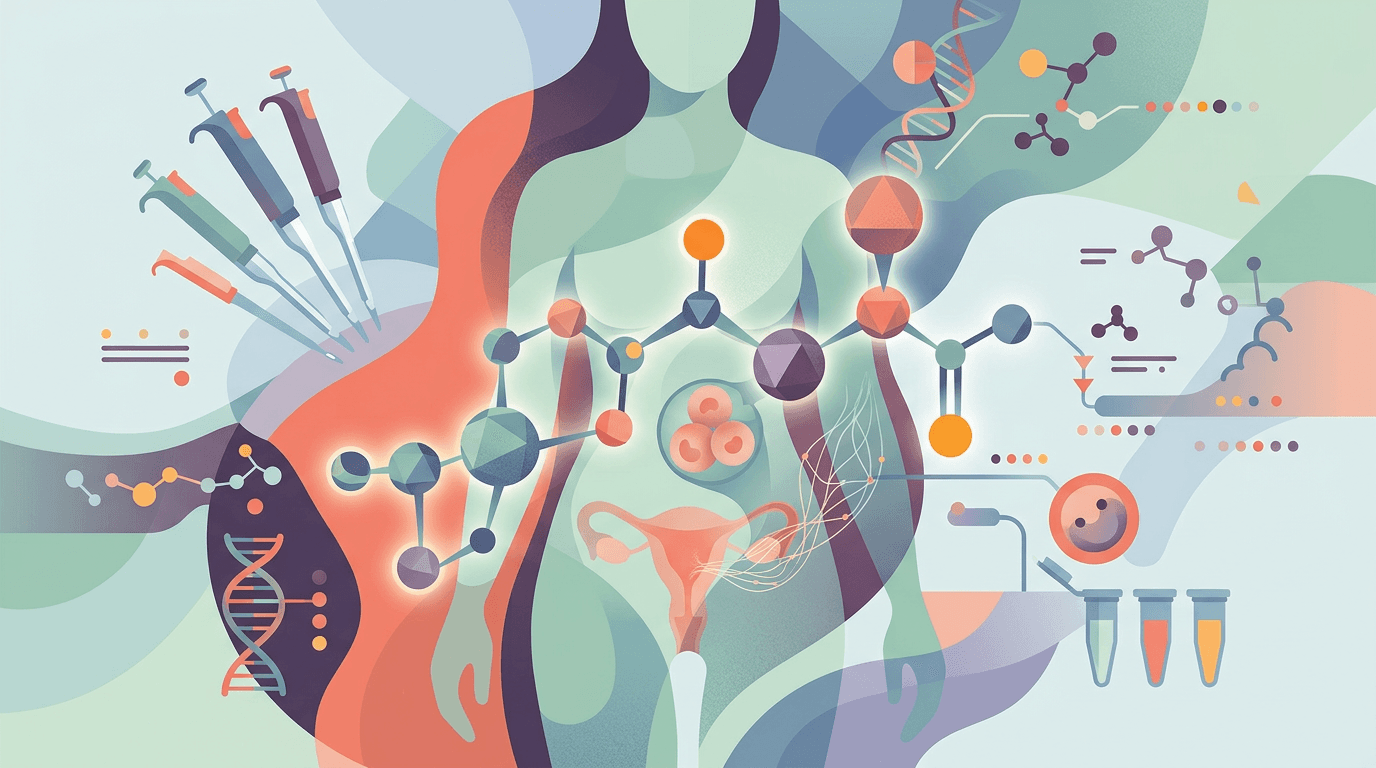
A Harvard analysis of 3,572 pregnancies found that accidental GLP-1 drug exposure in early pregnancy didn't significantly raise the risk of miscarriage or birth defects. With millions of women of childbearing age now on Ozempic and Mounjaro, the findings address one of biotech's most urgent unanswered safety questions.
Imagine finding out you're pregnant and realizing you've been injecting a weight-loss drug for the past few weeks. That's the reality for a growing number of women on GLP-1 drugs like Ozempic, Wegovy, and Mounjaro. The labels say stop before conception. The animal studies look scary. And until now, nobody had great data on what actually happens to the pregnancy.
A new analysis from Harvard just offered the first real answer. It's not as terrifying as you might think.
The Study That Had Everyone Waiting
Researchers at the Harvard T.H. Chan School of Public Health analyzed 3,572 pregnancies from insurance claims data spanning 2011 to 2024. They compared women who continued GLP-1 receptor agonists (the class of drugs that includes semaglutide and tirzepatide) into early pregnancy with women who stopped them before the first trimester.
The headline finding: the rate of non-live births (miscarriages, stillbirths, and other pregnancy losses) was 29.7% among women who continued versus 27.1% among those who stopped. That's a gap of just 2.6 percentage points, and it was not statistically significant. In plain English, the difference was small enough that it could easily be due to chance.
The study also found no definitive increase in major birth defects or abnormal fetal growth, though the researchers noted their evidence on those outcomes was limited.
Why This Matters More Than You'd Think
GLP-1 drugs are everywhere. Prescriptions have been skyrocketing among women of childbearing age, and not just for diabetes. In one large Australian study, 91% of women prescribed GLP-1s in 2022 did not have type 2 diabetes; they were using the drugs for weight management. Even more concerning: only 21% had documented contraception use when they started treatment.
Do the math. Millions of reproductive-age women are on these drugs. Many aren't using birth control. Pregnancies are going to happen, whether planned or not. And when they do, someone has to answer the question: did I just hurt my baby?
Get tomorrow's biotech intelligence before your competitors.
Join thousands of biotech professionals who start their day with our free, daily briefing.
That question has been hanging over the entire GLP-1 class like a storm cloud. Until now, the best data came from animal studies, and those looked rough.
The Animal Problem
In lab animals, GLP-1 drugs have caused a laundry list of bad outcomes: reduced fetal weight, skeletal abnormalities, delayed bone development, and embryonic death. Liraglutide caused fetal malformations in rats and rabbits at high doses. Dulaglutide triggered early embryonic death and fetal abnormalities. Semaglutide showed growth restriction and structural problems.
These findings are why every GLP-1 drug label carries stern warnings. Semaglutide's label (for Wegovy) reads bluntly: "May cause fetal harm. When pregnancy is recognized, discontinue." The FDA recommends stopping semaglutide at least two months before a planned pregnancy because of its long half-life of about seven days. For tirzepatide, the manufacturer recommends a washout period of at least two months before a planned pregnancy.
But animal studies don't always predict what happens in humans. Rats aren't people (despite what your ex's friends might suggest). And for years, the human data simply didn't exist in any meaningful quantity.
Humans Tell a Different Story
The Harvard analysis is the latest, and one of the largest, pieces of a growing puzzle. Across multiple observational studies and cohorts, a consistent picture is emerging: inadvertent early pregnancy exposure to GLP-1 drugs does not appear to cause a dramatic increase in birth defects or miscarriage.
A multinational cohort study found that first-trimester GLP-1 exposure wasn't associated with higher rates of major congenital malformations compared to women on insulin or overweight controls. One analysis put the malformation rate at 2.6% for GLP-1-exposed pregnancies versus 2.3% for diabetic controls and 3.9% for overweight/obese controls. Those numbers are virtually indistinguishable.
A systematic review covering roughly 49,000 pregnancies with periconceptional GLP-1 exposure reached a similar conclusion: no statistically significant link to major birth defects, miscarriage, preterm birth, or low birth weight. The one caveat was a small signal for kidney malformations, though the researchers attributed that likely to residual confounding (basically, the underlying health conditions of the mothers muddying the data).
Reassurance, Not a Permission Slip
Sonia Hernández-Díaz, the senior author of the Harvard study, was careful with her words, noting that the findings provide some reassurance regarding unintentional exposure to GLP-1s early in pregnancy, while emphasizing that the study alone cannot change current recommendations to stop GLP-1s before pregnancy.
That distinction is critical. Think of it like a seatbelt study. If researchers found that people who forgot to buckle up in a minor fender-bender mostly turned out fine, that wouldn't mean seatbelts are unnecessary. It would mean that if you forgot to buckle up one time, you probably don't need to lose sleep over it.
The expert consensus right now splits cleanly into two lanes:
If you're planning a pregnancy: Stop GLP-1 drugs well in advance. Two months for semaglutide, two months for tirzepatide. Work with your doctor to transition to pregnancy-compatible options like insulin or metformin. This hasn't changed.
If you just found out you're pregnant while on a GLP-1: Don't panic. The data so far show no large spike in miscarriage or major birth defects from brief early exposure. Stop the drug, call your OB-GYN, and get a detailed ultrasound. You have every reason to proceed with cautious optimism.
The Elephant in the Exam Room
The bigger issue isn't really about what happens after accidental exposure. It's about what happens before the prescription is written.
With GLP-1 drugs being prescribed at record rates to women in their 20s, 30s, and 40s, the contraception conversation should be happening at every single appointment. Tirzepatide actually slows gastric emptying enough to reduce absorption of oral birth control pills; the label instructs patients to use a backup method for four weeks after starting or changing doses. That's a practical detail that can easily get lost in a busy clinic visit.
Reproductive health experts are now calling GLP-1 pregnancy safety a priority research area. Pregnant women were excluded from the pivotal clinical trials for these drugs (as they almost always are), which means the safety data has to be pieced together after the fact from insurance claims, registries, and case reports. It's like trying to review a restaurant by only talking to people who accidentally wandered in.
The Bottom Line
The Harvard analysis doesn't prove GLP-1 drugs are safe during pregnancy. No single observational study can do that. What it does is shrink the fear. For the millions of women who might find themselves unexpectedly pregnant while on Ozempic, Wegovy, or Mounjaro, the evidence so far says the same thing: this is probably not the catastrophe you're imagining.
But "probably not catastrophic" and "definitely safe" are very different statements. The labels still say stop. The guidelines still say plan ahead. And the research community still has a lot of work to do before anyone can say with confidence what GLP-1 exposure means for a developing fetus beyond those first few weeks.
For now, the best prescription might be the simplest one: have the conversation before it's urgent.
Clinical & Regulatory
4 min read
Roche Just Crashed the Obesity Party With a Number Nobody Expected
Roche's obesity drug enicepatide posted 22.5% weight loss in 48 weeks, landing squarely in Zepbound territory and turning Roche from a latecomer into a legitimate contender. The real question: can it compete with what Lilly and Novo are cooking up next?