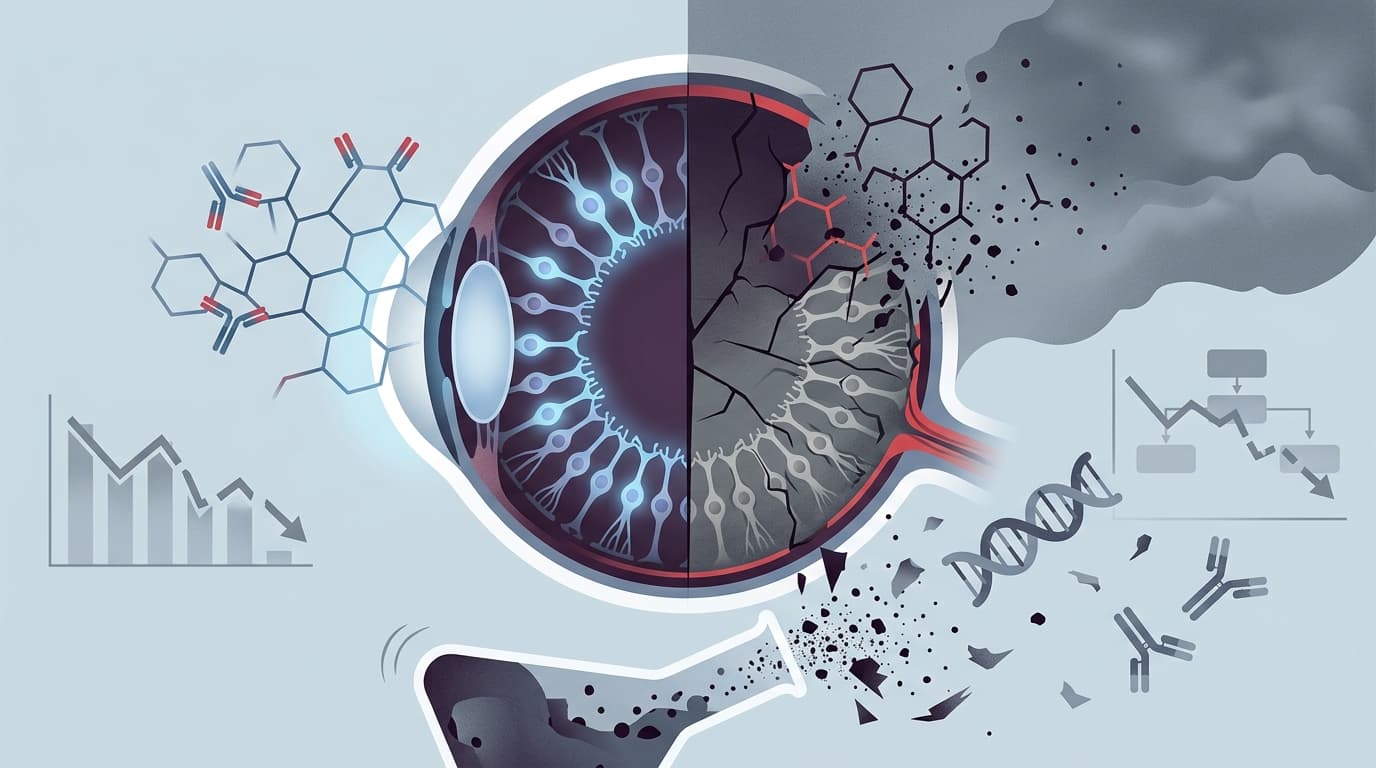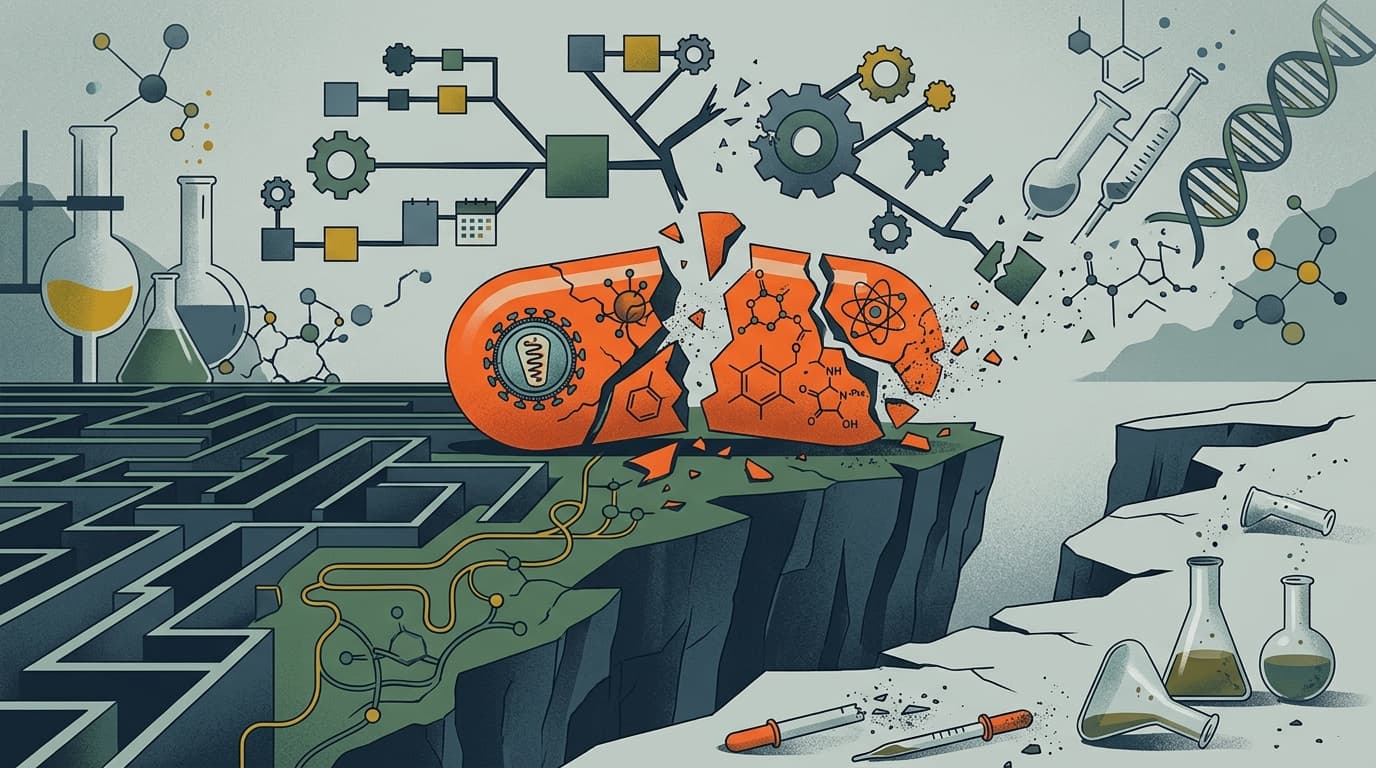

Gilead pulled the plug on its weekly HIV pill trial after an FDA safety hold lasted nearly a year without resolution. The company's HIV empire isn't crumbling, but its "dosing optionality" strategy just lost a key option.
Imagine you're building a house. You've poured the foundation, framed the walls, and started hanging drywall. Then the inspector shows up, slaps a stop-work order on the whole project, and ten months later, you're still arguing about whether the foundation is safe. At some point, you stop building and call the demolition crew.
That's essentially what Gilead Sciences just did with its Wonders-2 HIV trial.
The FDA placed a clinical hold on Wonders-2, a phase 2/3 study testing a weekly oral HIV pill against its own blockbuster daily treatment, Biktarvy, and Gilead has now effectively discontinued the trial. The trial combined two experimental drugs: GS-1720 (an integrase inhibitor, which blocks HIV from inserting itself into your DNA) and GS-4182 (a capsid inhibitor, which attacks the protein shell surrounding the virus). The pitch was compelling: take one pill a week instead of one pill a day.
The problem? The FDA placed a clinical hold on the study back in June 2025, and nearly a year later, that hold hasn't budged. Gilead confirmed it has "discontinued safety follow up" and is transitioning all 73 enrolled participants to standard HIV treatments.
The hold didn't just hit Wonders-2. It also froze its sibling trial, Wonders-1 (which had enrolled roughly 675 participants), plus three earlier-stage phase 1 studies involving the same drug candidates.
The safety signal that triggered the hold was, in the context of HIV, about as alarming as it gets.
Some participants taking the GS-1720/GS-4182 combination showed drops in CD4+ T-cell counts and absolute lymphocyte counts. In plain English: their white blood cell numbers fell. For anyone, that's concerning. For people living with HIV, a virus that destroys the immune system, it's a five-alarm fire.
Think of it this way: if your treatment for a disease that attacks immune cells also causes immune cells to decline, you've got a fundamental credibility problem. It's like selling a fireproof suit that occasionally catches fire.

Immunovant's FcRn inhibitor batoclimab just struck out in two Phase 3 trials for thyroid eye disease, sending shares tumbling and raising hard questions about whether this entire drug class can crack TED. The company is betting its future on a next-gen molecule, but the clock is ticking.


Join thousands of biotech professionals who start their day with our free, daily briefing.

But "it got better eventually" isn't the kind of safety profile that convinces regulators to lift a hold.
Gilead says it's still working with the FDA to resolve the situation, but the company has offered no timeline for when (or if) the hold might be lifted.
Gilead isn't just any player in HIV. It is the HIV market.
The company's portfolio generated $19.6 billion in HIV revenue in 2024. Biktarvy alone pulled in $13.4 billion that year, commanding more than 50% of the US treatment market. When people talk about HIV drugs, they're mostly talking about Gilead's drugs.
The weekly oral combo was supposed to be the next chapter in that dominance story. Daily pills transformed HIV from a death sentence into a manageable condition. Weekly pills would have been the next leap forward, giving patients even more freedom and flexibility. Instead, GS-1720 and GS-4182 are now sitting in regulatory limbo, with one of their two major trials already scrapped.
If there's a silver lining for Gilead, it's that the clinical hold doesn't touch its most exciting asset: lenacapavir.
Lenacapavir, marketed as Yeztugo for prevention and Sunlenca for treatment, is a twice-yearly injection that showed 100% protection against HIV in women and 99% protection across broader populations in phase 3 trials. It received FDA approval on June 18, 2025, and racked up $150 million in preliminary US sales that year.
The drug has reshaped the competitive landscape. Analysts project Gilead now captures 52% of the total US HIV market, leapfrogging GSK's ViiV Healthcare unit, which had previously led the long-acting therapy space with Apretude (an every-two-months injection that now looks quaint by comparison).
Gilead's pipeline beyond Wonders isn't empty, either. The company has seven HIV candidates in development, including a daily oral bictegravir/lenacapavir combination with a regulatory decision expected in the second half of 2026.
Gilead's CEO Daniel O'Day has emphasized "dosing optionality" as the company's competitive advantage, the idea that patients want prevention and treatment choices that fit their lives. A twice-yearly shot for some, a daily pill for others, and potentially a weekly pill for those who want something in between.
Losing the weekly option doesn't destroy that strategy, but it narrows it. And it raises an uncomfortable question: how dependent is Gilead's future on lenacapavir working in every format they need it to?
GS-4182, one of the two drugs under the clinical hold, is actually a prodrug of lenacapavir (meaning it converts into lenacapavir in the body). The safety issues that tanked Wonders-2 appear to involve the combination with GS-1720 rather than GS-4182 alone, which is why other lenacapavir programs remain unaffected. But the overlap is close enough to make investors pay attention.
Meanwhile, Gilead faces growing pressure on the access front. Advocacy groups have criticized the company for prioritizing profits over equitable distribution of lenacapavir in low-income countries. Gilead has signed royalty-free licensing agreements covering 120 countries, but critics argue it's not enough.
Wonders-1, with its 675 participants, remains paused but hasn't been formally terminated. That distinction matters; it suggests Gilead hasn't completely abandoned GS-1720 and GS-4182 as a combination. Whether the FDA eventually lifts the hold will depend on Gilead's ability to explain why those immune cell counts dropped and convince regulators it won't happen again.
For now, Gilead's weekly HIV pill sits in the same uncomfortable category as a lot of promising drug candidates: good idea, real science, wrong safety profile. The company's HIV empire isn't crumbling; $19.6 billion in annual revenue and a transformative twice-yearly injection make sure of that. But the dream of a weekly oral option just got a lot further away.
In biotech, sometimes you have to tear down the house and start over. The question is whether Gilead has enough blueprints to keep building.
United Therapeutics' lung drug Tyvaso just posted blockbuster results in a disease it was never originally designed to treat. The IPF data could double the drug's market, and Wall Street is already doing the math.