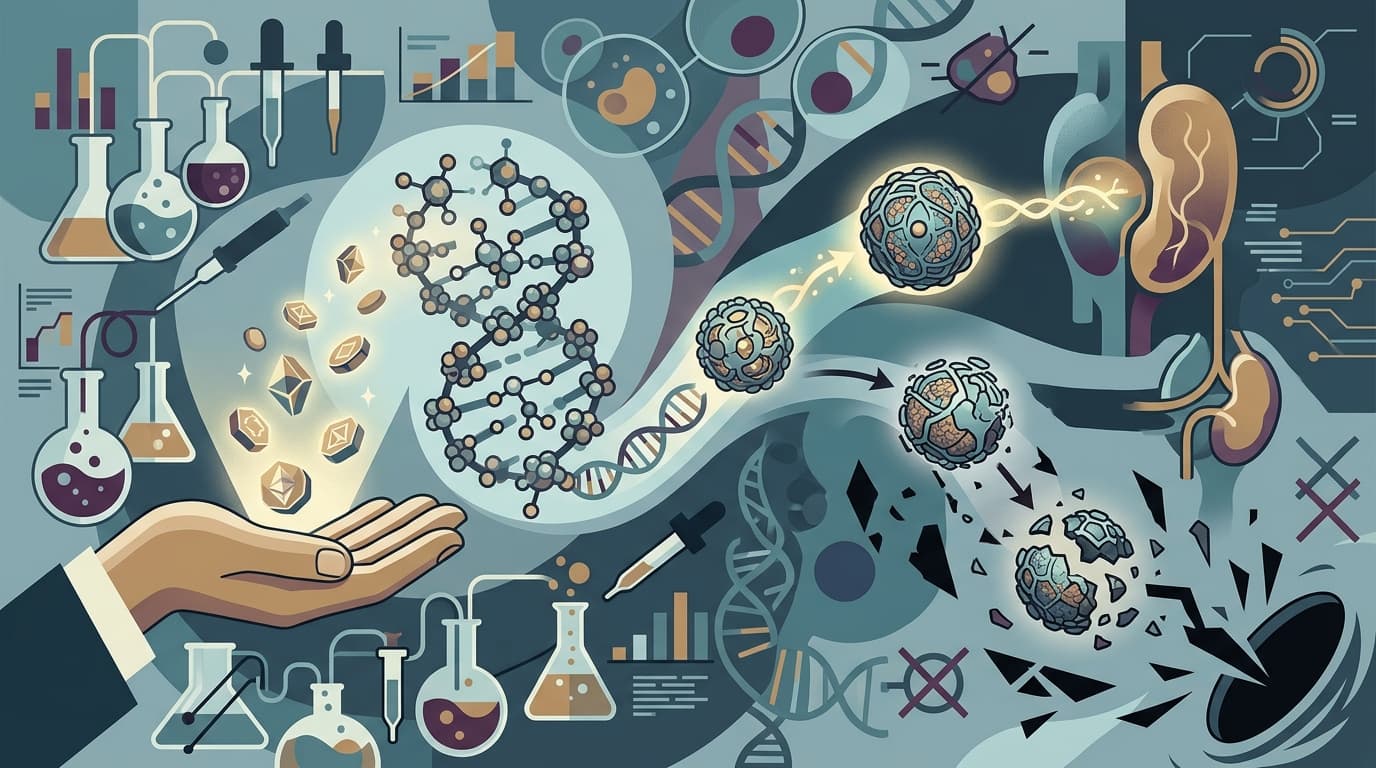

Genmab dropped $1.8 billion on ProfoundBio's cancer drug pipeline in 2024. Less than two years later, two of the three clinical-stage assets are dead and a third is barely enrolling patients. Now the entire deal rides on one surviving drug.
Imagine buying a house with three bedrooms, only to discover that two of them have no floors. That's roughly what's happening to Genmab right now.
The Danish biotech giant paid $1.8 billion in cash to acquire ProfoundBio back in April 2024. The prize: a portfolio of next-generation antibody-drug conjugates (ADCs), which are essentially guided missiles that deliver chemo directly to cancer cells. Three of these ADCs were already in clinical trials, which made the deal look like a fast track to oncology dominance.
Fast forward to early 2026, and two of those three clinical-stage assets are dead. A third is on life support. And Genmab is left hoping the one remaining star can justify the entire price tag.
Let's start with the casualties.
GEN1107 was the first to go. Genmab pulled the plug back in September 2025 after the drug showed an "unfavorable benefit-risk profile" in a Phase I/II trial for advanced solid tumors, including ovarian, endometrial, and triple-negative breast cancer. In plain English: the side effects weren't worth the results.
GEN1160 followed more recently. This ADC was being tested in blood cancers and solid tumors (think kidney cancer, nasopharyngeal cancer, and non-Hodgkin lymphoma). The cause of death? Slow enrollment. Not enough patients were signing up for the trial, and Genmab decided it wasn't worth the effort. The company framed it as "portfolio prioritization," which is corporate-speak for cutting your losses.
Then there's GEN1286, a bispecific ADC (one that targets two different proteins on cancer cells instead of one) that's technically still alive but barely breathing. Its Phase I/II trial managed to recruit just 23 of 214 planned patients before enrollment was paused. That's roughly 11% of its target. The trial remains open on paper, but it's closed to new patients.
So what's left standing? Meet rinatabart sesutecan, or Rina-S, the crown jewel of the ProfoundBio deal.

Merck is dropping $6.7 billion on Terns Pharmaceuticals and its single Phase 1/2 cancer drug. With Keytruda's patent cliff looming in 2028, the pharma giant is making one of the most aggressive early-stage bets in recent memory.


Join thousands of biotech professionals who start their day with our free, daily briefing.
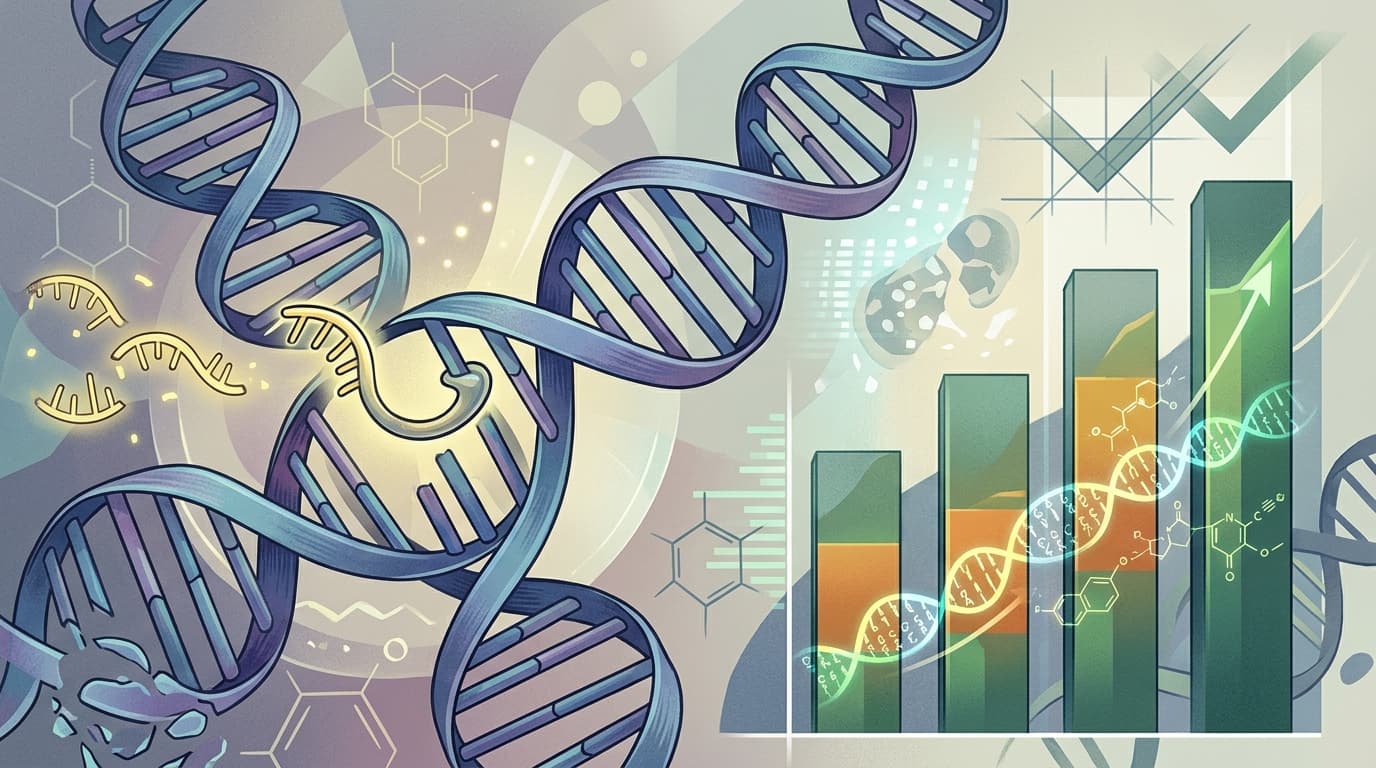
Rina-S targets a protein called FRα (folate receptor alpha) that's commonly found on gynecologic cancers. The early data is genuinely promising: in heavily pretreated patients with platinum-resistant ovarian cancer, Rina-S showed strong confirmed response rates. In endometrial cancer patients, it hit 50%. Those are strong numbers for patients who've already been through multiple rounds of treatment.
The drug has already earned FDA Breakthrough Therapy Designation, which means regulators see enough potential to expedite its review. Genmab is now running a Phase III trial, with the first registrational readout expected in 2026 and a potential launch in 2027. The company sees a $2 billion-plus market opportunity across several gynecologic cancer types.
If Rina-S delivers in Phase III, the ProfoundBio deal could still look smart. That's a big "if," though. Phase III trials are where promising drugs go to prove themselves, and plenty of them fail at this stage. The response rates from earlier trials are encouraging, but they came from small patient groups. Larger trials have a way of humbling even the best-looking data.
Genmab's experience highlights a brutal truth about biotech M&A: buying a pipeline is not the same as buying a product.
When big companies acquire smaller biotechs, they're essentially placing bets on unproven science. The earlier the stage, the riskier the bet. ProfoundBio's drugs were all in Phase I or Phase I/II trials at the time of the deal, which means none of them had cleared the bar that separates "interesting" from "actually works."
Paying $1.8 billion for that level of uncertainty takes serious conviction. And to be fair, ProfoundBio had just raised $112 million in a Series B round in February 2024, barely two months before Genmab swooped in. Investors clearly saw something worth backing. But early-stage clinical data can be misleading, and the attrition rate for oncology drugs in development is notoriously high.
Two out of three clinical assets failing within 18 months of acquisition isn't unusual by industry standards. It's just a lot more painful when you've written a $1.8 billion check.
To Genmab's credit, the ProfoundBio deal isn't happening in isolation. The company has been on a shopping spree, picking up Merus for approximately $6.9 billion (a deal that closed in December 2025) to add petosemtamab, a bispecific antibody for head and neck cancer that already has an FDA Breakthrough Therapy Designation and a Fast Track Designation.
Combined with its existing blockbuster EPKINLY (a bispecific antibody for blood cancers with peak sales projected at $2.3 billion), Genmab is building a diversified oncology portfolio. The strategy is clear: don't put all your eggs in one basket.
But that diversification comes at a cost. Between ProfoundBio and Merus, Genmab has spent billions on acquisitions in two years. The company needs its big bets to pay off, and 2026 is shaping up to be the year that tells the story. Registrational readouts for Rina-S, EPKINLY expansions, and petosemtamab are all expected this year.
Genmab's ProfoundBio deal is becoming a case study in the risks of oncology M&A. Two of three clinical assets are gone. A third is limping along. The entire $1.8 billion bet now rides on a single drug: Rina-S.
The early data is promising. The market opportunity is real. But we've seen this movie before, where a company bets big on acquisition, watches most of the pipeline crumble, and prays that one survivor can carry the whole portfolio.
Sometimes it works (think Gilead buying Pharmasset for $11 billion and getting Sovaldi). Sometimes it doesn't. For Genmab, the answer arrives when Rina-S Phase III data drops later this year. Until then, that $1.8 billion receipt is looking a little heavy.
Gilead just dropped $2.175 billion on a startup barely old enough to walk, betting that cancer-fighting T-cell engagers can reset the immune system for autoimmune diseases. The kicker? No clinical trial results have been published yet.