Genentech Cut 103 Jobs and Wrote a $490M Check on the Same Day
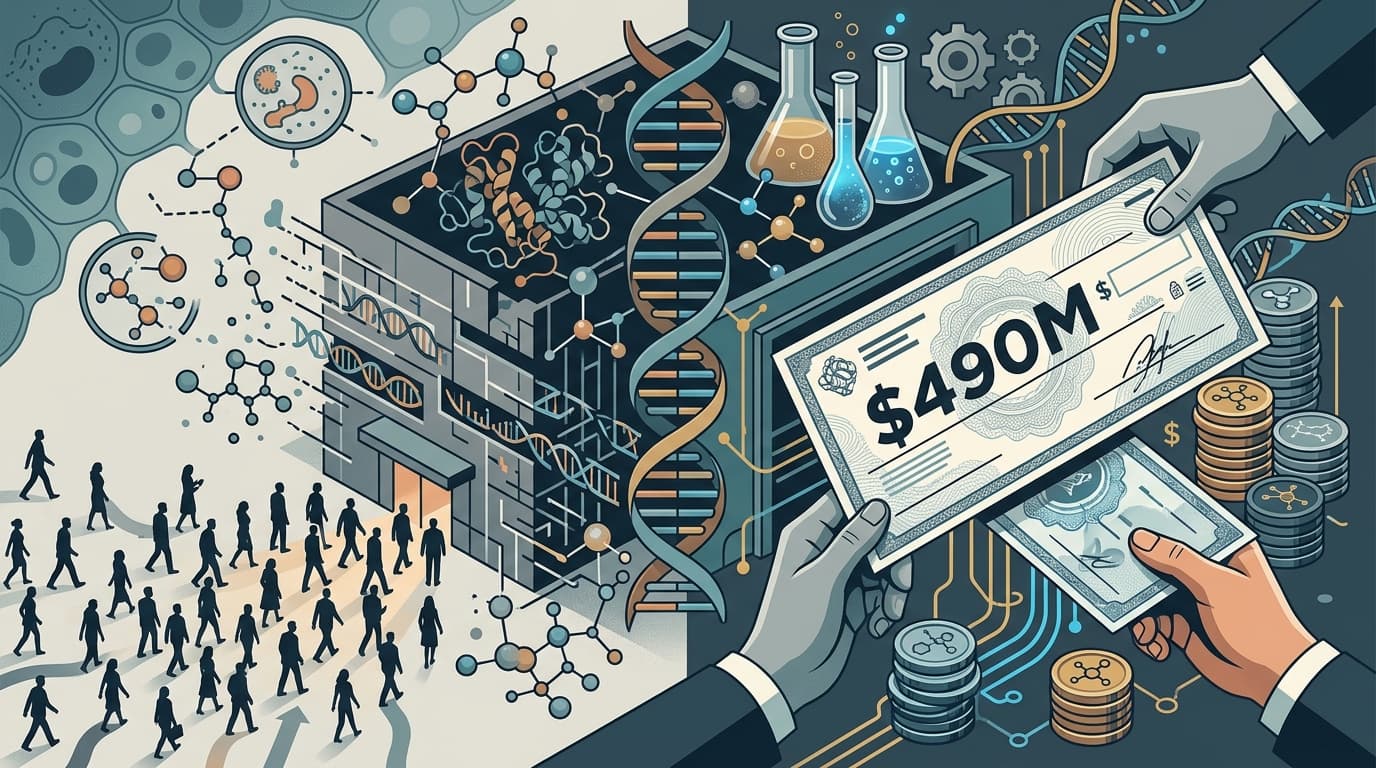
Genentech axed 103 scientists from its storied research unit and signed a $490 million breast cancer deal with Astex on virtually the same timeline. It's the clearest signal yet of how big pharma is reshuffling the R&D deck in 2026.
The Biotech Version of Remodeling While You're Still Living in the House
Imagine firing your kitchen contractor on Monday and hiring a new one on Tuesday. That's essentially what Genentech just did, except the kitchen costs $490 million and the contractor is a breast cancer drug.
The Roche subsidiary confirmed it's cutting 103 positions from its South San Francisco headquarters, effective July 29. The layoffs hit Genentech Research and Early Development (gRED), the unit responsible for shepherding drugs from the lab bench through early human testing. On roughly the same timeline, Genentech inked an exclusive collaboration with Astex Pharmaceuticals worth up to $490 million in milestones, plus royalties, to develop new breast cancer therapies.
Firing scientists with one hand. Signing a half-billion-dollar deal with the other. Welcome to big pharma in 2026.
What Got Cut, and Why It Matters
The 103 jobs aren't random. They're part of a deeper restructuring of gRED, Genentech's legendary research engine. Think of gRED as the part of the company that turns a scientific hunch into an actual drug candidate. It takes programs from discovery through Phase II (the stage where you first find out if the drug might work in people), then hands them off to Roche's global team for the expensive late-stage trials.
This restructuring goes beyond headcount. Genentech is shutting down its infectious disease and physiological chemistry units entirely and trimming teams in early clinical development, translational medicine, and development sciences. Several high-profile scientists have already departed, including Vishva Dixit, a vice president who spent nearly 30 years at the company, along with leaders in infectious diseases and cell therapy.
Genentech calls these "focused adjustments" and insists it's still hiring in priority areas like AI, automation, and digital capabilities. That framing is important: this isn't a company in retreat. It's a company deciding which rooms of the house to renovate and which ones to tear down completely.
Get tomorrow's biotech intelligence before your competitors.
Join thousands of biotech professionals who start their day with our free, daily briefing.
The Astex Deal: Outsourcing the Early Risk
Now for the other side of the coin. The Astex collaboration gives Genentech an exclusive license to compounds from Astex's breast cancer discovery program. The two companies will work together to optimize lead compounds, and then Genentech takes over everything: preclinical work, clinical trials, regulatory filings, and global sales.
The financial structure tells you a lot about the strategy. Astex gets $25 million upfront, a relatively modest check by pharma standards. The remaining $490 million-plus comes in milestones tied to preclinical, clinical, regulatory, and commercial achievements, plus tiered royalties on any eventual sales.
In other words, Genentech is paying a small entry fee for the right to develop breast cancer drugs without having to discover them internally. It's the pharmaceutical equivalent of ordering takeout instead of building a new kitchen from scratch. You still get dinner; you just don't need as many cooks.
A Pattern, Not an Anomaly
If this feels familiar, it should. Genentech has filed 15 California WARN notices affecting 2,151 workers since 2017. In 2025 alone, the company cut at least 489 jobs across multiple waves. A 2024 restructuring trimmed 436 positions when Roche implemented a 3% global workforce reduction.
At the same time, Roche has been aggressively pruning its pipeline. The company removed roughly 20% of its new drug candidates between mid-2023 and early 2024. Gone are early-stage programs in solid tumors, brain cancer, and various experimental immunotherapy approaches. Roche even killed a $2 billion cell therapy partnership with Adaptive Biotechnologies and ended an oncology collaboration with Bicycle Therapeutics.
But the spending hasn't stopped; it's just been redirected. Roche still has 66 new molecular entities in development and 107 total projects. The company's oncology and hematology business generated roughly $19 billion in 2025 sales. CEO Thomas Schinecker has described the approach as concentrating on "projects that have a high likelihood to succeed and have a huge patient impact."
Translation: kill the B-minus programs, double down on the A-plus ones.
The Breast Cancer Bet Makes Strategic Sense
Breast cancer isn't a random pick for Genentech. It's arguably the company's deepest franchise. Herceptin, Perjeta, Kadcyla, Phesgo: these drugs built Genentech's oncology reputation over decades. And the late-stage pipeline is stacked with next-generation breast cancer therapies.
Giredestrant, an oral drug designed to degrade the estrogen receptor, is in Phase III. Inavolisib (branded Itovebi), a targeted therapy for patients with a specific genetic mutation called PIK3CA, has pivotal trial readouts coming this year. And GDC-4198, a CDK4/2 inhibitor designed to overcome resistance to existing treatments, is being positioned as potentially best-in-class.
The Astex deal slots neatly into this portfolio. Rather than building every breast cancer drug from scratch inside gRED, Genentech is selectively importing early-stage programs from specialized partners. It keeps the pipeline fed without maintaining a massive (and expensive) internal discovery apparatus.
The Bigger Picture: Pharma's Two-Speed Economy
Genentech's restructure-and-deal playbook isn't unique. Across the industry, 2026 looks like a year of simultaneous austerity and ambition. Novo Nordisk plans to cut about 9,000 jobs (roughly 11.5% of its workforce). Bayer has already shed around 12,000 positions. Takeda is restructuring its cell therapy R&D.
Yet deal-making is booming. In just 12 days during March 2026, seven biopharma transactions above $1 billion were announced, totaling approximately $29 billion. Average deal values are climbing even as total deal volume dips. Companies want fewer, bigger, more strategic bets.
The pattern is clear: large pharma is getting leaner internally while spending more externally. Internal headcount shrinks in legacy areas. External spending grows in high-conviction therapeutic spaces, especially oncology. It's a "two-speed economy" where the same company can be cutting costs and writing enormous checks at the same time.
What to Watch
The real question isn't whether Genentech's layoffs are justified or whether the Astex deal will pay off. It's whether this model (thin the internal herd, partner for early innovation) actually produces better drugs faster.
Genentech built its reputation on the idea that a free-thinking, well-funded research lab could out-innovate the rest of pharma. The departure of 30-year veterans and the closure of entire scientific units chips away at that identity, even if the spreadsheet says it makes sense.
The next 18 months will be telling. Giredestrant, inavolisib, and divarasib (a KRAS inhibitor for lung cancer) all have major data readouts coming in 2026. If those programs deliver, the restructuring narrative becomes "smart reallocation." If they stumble, it becomes "gutting the golden goose."
For now, Genentech is betting that the best innovation doesn't always have to come from within. That's a reasonable bet. But it's also one that the ghosts of 1 DNA Way are watching very closely.
Funding & Financings
5 min read
The Gene Editing Company That Wants to Replace Your Cholesterol Meds
A gene editing startup co-founded by a Nobel laureate just filed to go public, and it's not chasing rare diseases. Scribe Therapeutics wants to use CRISPR to replace your daily cholesterol pills with a single dose that silences the genes behind heart disease.