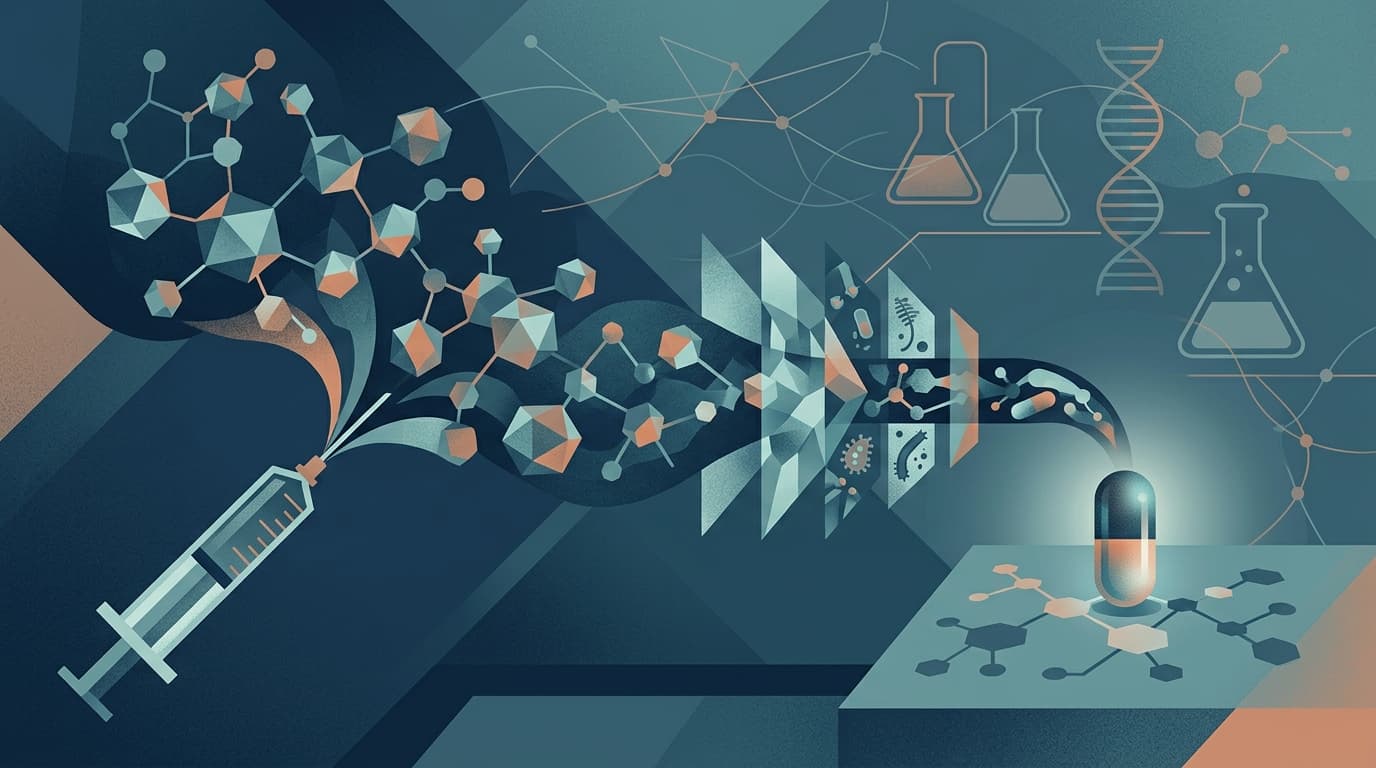

Genentech is paying up to $1 billion for DualityBio's novel-payload ADC platform, betting that cracking tumor resistance is the next frontier in cancer's hottest drug class. The deal structure says a lot about where pharma thinks the real value lies.
Antibody-drug conjugates are the hottest thing in cancer treatment. They're also running into a wall.
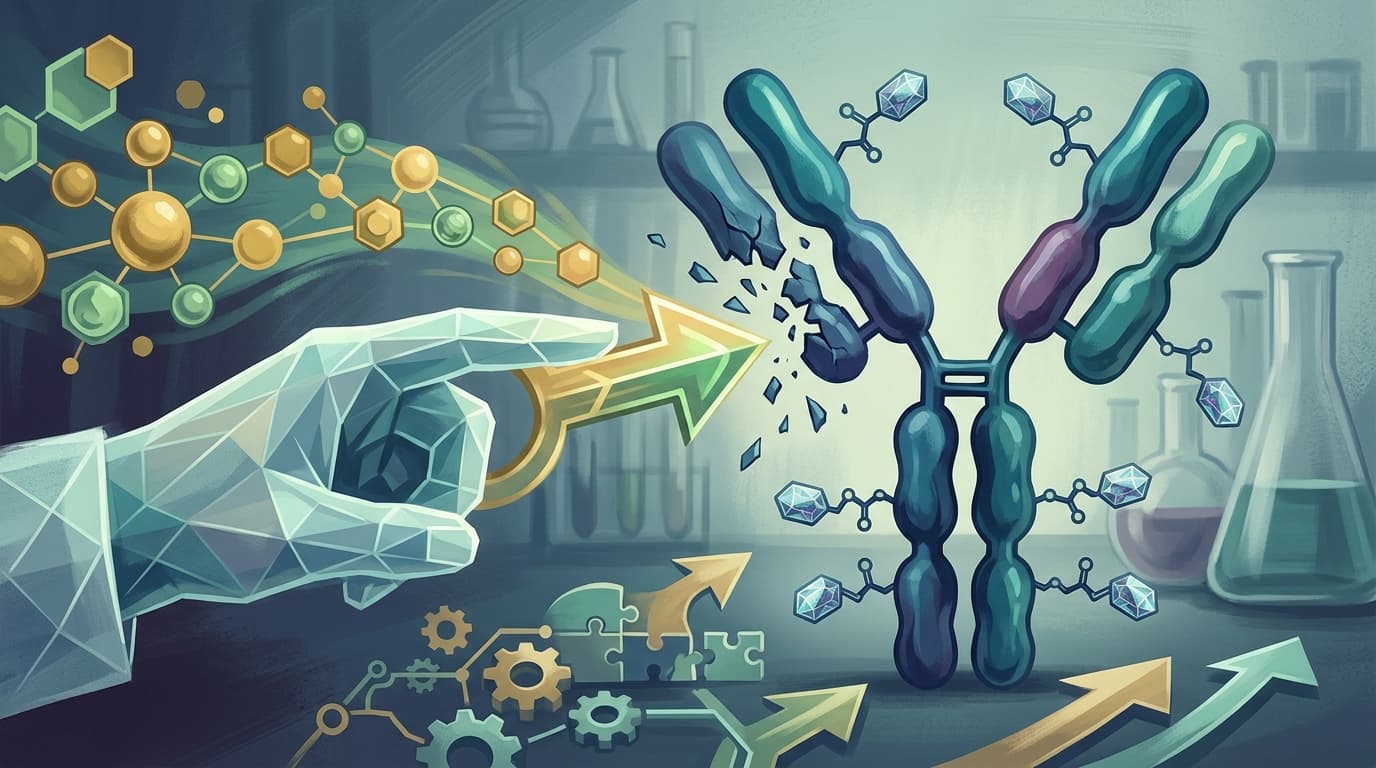
ADCs work like guided missiles: an antibody finds the tumor cell, locks on, and delivers a toxic payload right to it. The concept is elegant. The problem? Tumors are learning to dodge them. And that resistance problem is now so important that Genentech just agreed to pay more than $1 billion to a Shanghai-based biotech that thinks it can fix it.
To understand why this deal matters, you need to understand why ADCs stop working.
Picture a FedEx driver who always delivers to the same address. Now imagine the house changes its address, installs a gate, reroutes the driveway, or just stops opening the door. That's basically what cancer cells do to ADCs. They downregulate the target antigen (change the address), impair internalization (lock the gate), mess with the internal processing that's supposed to release the toxic payload (reroute the driveway), or pump the drug right back out through efflux transporters (refuse the package).
The kicker: failure at any single step can torpedo the whole therapy. And when oncologists try using a second ADC after the first one stops working, it often doesn't hit as hard, especially if both carry similar payloads. That suggests the payload itself, not just the antibody target, shapes resistance.
This isn't a niche concern. It's the central durability problem in one of oncology's fastest-growing drug classes.
On August 27, 2026, Genentech announced a collaboration with DualityBio built around the biotech's DUPAC platform, a novel-payload technology specifically designed to overcome resistance to existing ADC drug classes, particularly those carrying topoisomerase I inhibitor payloads (the most common warheads on approved ADCs today).
The financial structure tells you a lot about Genentech's thinking. DualityBio gets $45 million upfront, which is a modest down payment by big pharma standards. The real money, , plus tiered royalties, only flows if the science actually works.

Gilead built lenacapavir's identity around a twice-yearly injection. Now the FDA just approved it inside a daily pill called Bixlenvo, and the logic behind that counterintuitive move reveals Gilead's broader chess match to defend its HIV empire.


Join thousands of biotech professionals who start their day with our free, daily briefing.
In other words, Genentech is buying an option on a platform, not writing a blank check. That back-end-heavy structure is classic pharma: pay a little now, pay a lot later if you nail it.
Under the deal, DualityBio leads discovery and early clinical development. Genentech picks up an exclusive worldwide license and takes the wheel after Phase 1a trials. It's a clean handoff: the biotech does what it's good at (novel chemistry), and Genentech does what it's good at (global development and commercialization at scale).
DualityBio was founded in 2019 in Shanghai and went public on the Hong Kong Stock Exchange (ticker: 9606.HK). For a company that's barely seven years old, it's built an unusually deep ADC toolkit.
The company runs four proprietary platforms: DITAC (topoisomerase I ADCs), DIBAC (bispecific ADCs that target two things at once), DIMAC (immune-modulating ADCs for autoimmune disease), and DUPAC (the novel-payload platform at the heart of the Genentech deal). Its pipeline includes 12 self-developed ADC candidates, with seven already in clinical trials.
Several of those programs are explicitly aimed at treatment-resistant cancers, including EGFR-resistant, HER3-resistant, and TKI-resistant tumors. The bispecific ADC platform is particularly clever: by targeting two antigens simultaneously, it makes it harder for tumor cells to escape by simply downregulating one target.
DualityBio isn't unknown to big pharma, either. BioNTech previously signed a partnership that included $170 million upfront and over $1.5 billion in potential milestones. When two major companies are writing checks of this size, it's not a coincidence; it's a pattern.
This deal fits neatly into Roche/Genentech's broader strategy, which favors targeted collaborations over megadeals. Roche's business development leadership said in 2024 that the company planned to do more deals and more internal ADC work. But Roche has been deliberate about when it partners versus when it acquires. The preference: collaborate when external technology is meaningfully different from what's already in-house.
Previous moves tell the same story. Roche inked a next-generation ADC deal with MediLink Therapeutics in 2024 and Genentech has a long-standing ADC partnership with Seattle Genetics. The DualityBio deal extends this pattern into a specific frontier: resistance biology.
What makes this deal conceptually different from a typical ADC license is that Genentech isn't just buying a molecule. It's investing in the thesis that payload innovation is the key to cracking ADC resistance. If DUPAC's chemistry can sidestep the mechanisms that make current payloads fail, it could unlock durability improvements across multiple tumor types.
The billion-dollar headline is eye-catching, but milestone-laden deals of this size are common in oncology partnerships. The truly interesting signal is what the money is being spent on.
Two years ago, most ADC deals were about finding new targets or improving linker chemistry. This deal is squarely about resistance, and it treats resistance biology as a standalone investment thesis worth committing serious capital to. That's a shift.
The ADC market has been on a tear, with approvals multiplying and pipelines ballooning across the industry. But durability limitations have quietly become the elephant in the room. Responses can be impressive early on, then fade as tumors adapt. If the field can't solve that problem, ADCs risk becoming expensive band-aids rather than durable treatments.
Genentech is betting that DualityBio's novel payloads can change the equation. The structure of the deal (biotech leads early, pharma takes over late) is designed to test that hypothesis efficiently.
The first real test will come when DUPAC-based candidates enter Phase 1a trials. Investors should watch for two things: safety signals (novel payloads always carry new toxicity risks) and early signs of activity in patients who've already failed existing ADCs. That second piece of data, showing responses in ADC-pretreated patients, would be the strongest possible validation of the resistance thesis.
If it works, expect every major pharma company with an ADC franchise to start shopping for its own resistance platform. If it doesn't, this deal becomes a $45 million experiment that quietly fades away. That's the beauty of the milestone-heavy structure: Genentech gets to find out before the big checks come due.
SK Biopharmaceuticals just paid $795 million for a drug that targets the same brain channel class that flopped a decade ago. The early data on opakalim suggests the second-generation version might actually be worth it.