Gene Therapy Just Took Its Biggest Swing at Heart Failure
Heart failure gene therapy has been in the penalty box since Celladon's spectacular CUPID2 failure nearly a decade ago. AskBio just fully enrolled one of the largest gene therapy trials ever run in heart failure, with over 170 patients and a data readout looming in early 2027.
The Graveyard Has a New Visitor
Heart failure gene therapy has a reputation problem. The last time someone tried a big clinical trial in this space, it flopped so hard that it scared an entire field into retreat for years. Now AskBio, a Bayer subsidiary, is back at the plate with a fully enrolled Phase 2 trial, more than 170 patients across 46 sites in 12 countries, and a data readout coming in the first half of 2027.
This is either the comeback story of the decade or the setup for another heartbreak. Let's talk about why it matters either way.
The Ghost of CUPID2
To understand why this trial is a big deal, you need to know about Celladon. Back in the early 2010s, a company called Celladon ran CUPID2, a Phase IIb trial testing whether you could fix a failing heart by delivering a gene called SERCA2a directly into heart muscle cells. SERCA2a is basically the protein that helps your heart cells handle calcium properly, and calcium handling is what makes heart muscle contract and relax. Fix the calcium, fix the pump. Simple idea.
CUPID2 enrolled about 250 patients and tested the concept with an AAV (adeno-associated virus) vector delivered straight into the coronary arteries. The result? A hazard ratio of 0.93 with a p-value of 0.81. For the non-statisticians: that's about as close to "did absolutely nothing" as a clinical trial can get. No improvement in heart failure events, no improvement in survival, no improvement in how far patients could walk.
The therapy was safe. It just didn't work. And the most likely culprit wasn't the target itself; it was the delivery. Getting enough viral vector into enough heart cells to actually change cardiac function turned out to be like trying to water a football field with a garden hose. The biology was sound. The execution wasn't.
CUPID2 didn't kill heart failure gene therapy permanently, but it sent the field back to the drawing board for nearly a decade.
A Smarter Angle of Attack
AskBio's therapy, called umiposgene parvec (AB-1002), learned from that failure. Instead of replacing SERCA2a directly, it goes upstream. Think of it this way: if SERCA2a is the engine in your car, AB-1002 doesn't swap in a new engine. It removes the parking brake that's been dragging on the old one.
Get tomorrow's biotech intelligence before your competitors.
Join thousands of biotech professionals who start their day with our free, daily briefing.
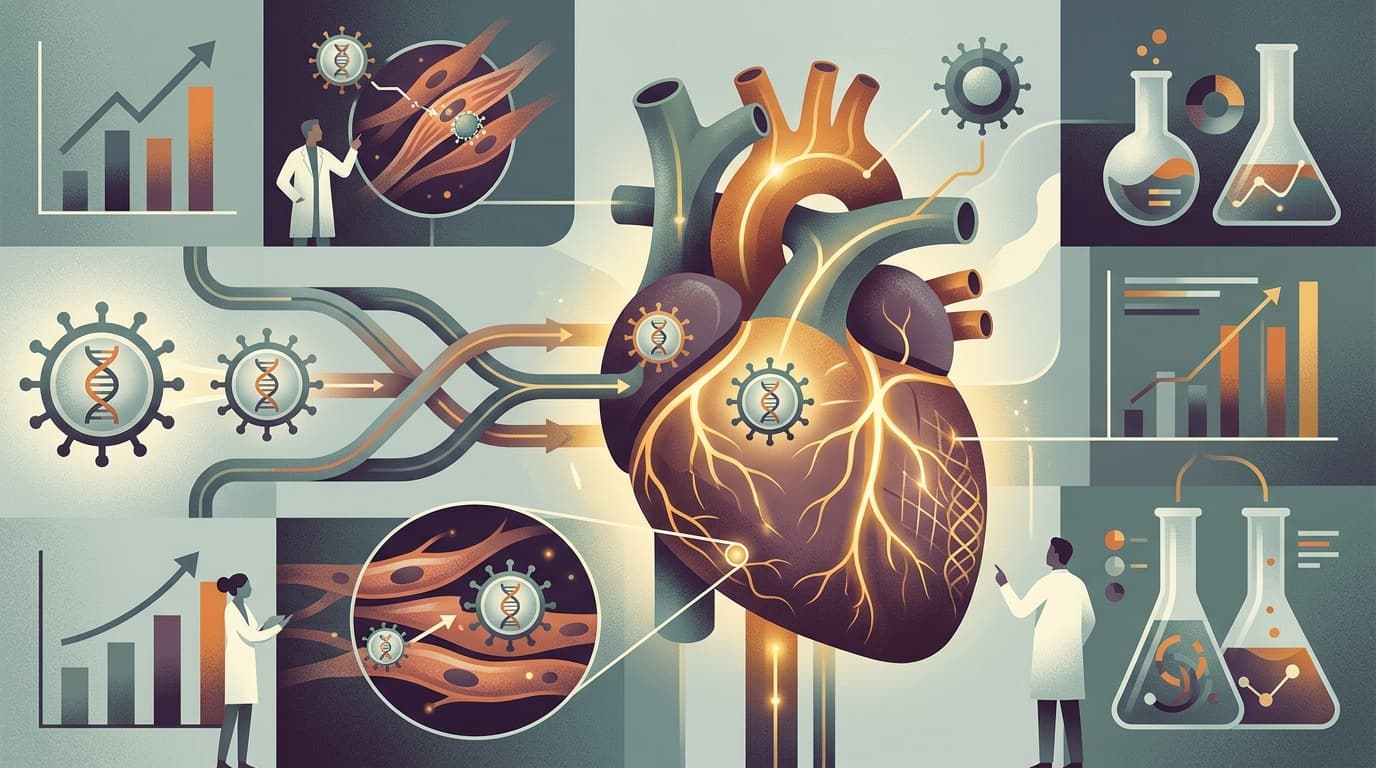
The therapy uses an AAV vector designed to home in on heart tissue. Once inside cardiomyocytes (heart muscle cells), it produces a protein called I-1c, a constitutively active form of inhibitor-1. I-1c blocks an enzyme called PP1 that's overactive in failing hearts. When PP1 is overactive, it puts the brakes on SERCA2a. Block PP1, and SERCA2a can do its job again: cycling calcium properly so the heart contracts with more force.
Same downstream goal as CUPID2. Completely different upstream approach. And critically, AskBio is using a newer vector called AAV2i8 that's designed to be cardiotropic, meaning it preferentially infects heart cells rather than scattering throughout the body. That addresses the biggest lesson from CUPID2: delivery matters as much as the target.
What the GenePHIT Trial Actually Looks Like
The trial, called GenePHIT, is a Phase 2, adaptive, double-blind, placebo-controlled study. Patients are randomized 1:1:1 to receive a low dose, a high dose, or a placebo, all delivered as a single infusion directly into the coronary arteries.
The patient population is specific: adults with non-ischemic cardiomyopathy (heart failure not caused by blocked arteries), NYHA Class III symptoms (significant limitation of daily activity), and a left ventricular ejection fraction between 15% and 35%. For context, a healthy heart pumps out about 50% to 70% of its blood with each beat. These patients' hearts are pumping less than half that.
The primary analysis comes at 52 weeks, with endpoints including cardiovascular death, changes in ejection fraction, NYHA class, six-minute walk distance, and heart failure hospitalizations. Patients will then be followed for four additional years, totaling five years of safety and durability data.
With over 170 patients enrolled, this is one of the largest gene therapy trials ever conducted specifically in heart failure. That scale matters because it gives the study statistical power that earlier, smaller trials simply couldn't achieve.
Why the Phase 1 Data Gives Cautious Optimism
AskBio didn't jump straight to 170 patients. The Phase 1 study treated 11 patients and focused primarily on safety. The results were encouraging: the therapy was well tolerated, with no serious vector-related adverse events and only mild, temporary increases in liver enzymes.
That's a good sign, but let's be honest about what it doesn't tell us. Eleven patients can't reveal anything meaningful about whether the therapy actually improves heart function, reduces hospitalizations, or keeps people alive longer. The Phase 1 was a "does this seem safe enough to keep going" checkpoint, not a proof of concept. The real test starts when Phase 2 data arrive.
One lingering question: preexisting neutralizing antibodies. Many people have been exposed to AAV viruses naturally, and their immune systems may already have antibodies that could neutralize the therapy before it reaches heart cells. How GenePHIT handles this in a larger, more diverse patient population will be critical to watch.
The Bigger Picture for Cardiovascular Gene Therapy
AskBio isn't operating in a vacuum. The cardiovascular gene therapy field has been quietly rebuilding since the CUPID2 era, but most programs are still early-stage and small. CDR132L is in Phase 2 for post-heart-attack patients with reduced ejection fraction. Various programs are targeting inherited cardiomyopathies like arrhythmogenic and hypertrophic forms. And in the broader cardiovascular gene editing space, Intellia's nexiguran ziclumeran was running a Phase 3 trial for ATTR cardiomyopathy before getting paused in October 2025 over liver toxicity concerns.
The bottom line: there is still no approved gene therapy for heart failure. GenePHIT is one of the most advanced programs trying to change that.
AskBio also has momentum beyond this trial. In February 2025, the FDA granted its Parkinson's disease gene therapy (AB-1005) a Regenerative Medicine Advanced Therapy designation. In December 2025, both AB-1005 and AB-1002 received Japan's SAKIGAKE designation, which accelerates review timelines. Bayer's acquisition of AskBio back in 2020 is starting to look like a long game that might actually pay off.
What Comes Next
The initial Phase 2 readout is expected in the first half of 2027. That's when we'll know whether AB-1002 can do what SERCA2a replacement couldn't: meaningfully improve heart function through a single infusion.
If the data are positive, it could open the door for cardiovascular gene therapy to move beyond ultra-rare diseases and into the mainstream. Heart failure affects millions of people worldwide, and current treatments manage symptoms without fixing the underlying cellular dysfunction. A one-time gene therapy that restores proper calcium handling would be genuinely transformative.
If the data disappoint, well, at least we'll have learned something new about why the heart remains one of gene therapy's toughest targets. But for now, the field has its biggest test in years, and the clock is ticking toward 2027.
Clinical & Regulatory
4 min read
Five Years on One Heart Drug. Here's What Happened.
Bristol Myers Squibb just dropped five years of follow-up data for Camzyos at ESC Congress 2026, and the results held up across the board. Nearly every patient hit their target, most became asymptomatic, and a billion-dollar drug just got a lot harder to argue against.