Fosun Just Bet $60M on an Alzheimer's Drug That Doesn't Work Like Anything Else
Fosun Pharma just paid $60 million for the option to license a daily Alzheimer's pill from South Korea's AriBio, in a deal worth up to $4.7 billion. With Phase 3 data expected this year, the bet could reshape the Alzheimer's market or evaporate entirely.
A $60 Million Lottery Ticket
Most Alzheimer's drugs in the spotlight right now are antibodies. They're infused intravenously. They target amyloid plaques. They cost a fortune. And they require regular brain scans to monitor for dangerous swelling.
So when China's Fosun Pharma dropped $60 million on an option to license a pill for Alzheimer's, it raised some eyebrows. The drug is called AR1001, and it comes from a small South Korean company called AriBio. It's not an antibody. It's not targeting amyloid the way Leqembi or Kisunla do. It's an oral PDE5 inhibitor (think: a cousin of Viagra) that crosses into the brain and attacks Alzheimer's from multiple angles at once.
The deal, signed on May 13, could be worth up to $4.7 billion if everything goes right. That makes it the largest Alzheimer's licensing deal ever struck by a Korean company. But right now, it's a calculated gamble: Fosun paid $60 million for the right to decide later whether it wants the drug.
How the Option Works
Think of it like putting down a deposit on a house you haven't inspected yet. Fosun's $60 million is non-refundable. In return, it gets an exclusive 90-day window after AR1001's Phase 3 results come in to decide whether to pull the trigger on a full license.
If Fosun likes the data and exercises the option, it pays another $80 million upfront. That brings the total early commitment to $140 million. From there, the deal stacks up to $100 million in regulatory milestones (tied to approvals in various countries), plus royalties in the low double-digit percentage range on net sales. Sales milestones kick in once annual revenue hits $2.5 billion.
If the Phase 3 data disappoints? Fosun walks away. It's out $60 million, but that's a manageable loss for a company of its size. For a small firm like AriBio, which has raised about $85 million in total funding, that $60 million is a lifeline regardless of what happens next.
Get tomorrow's biotech intelligence before your competitors.
Join thousands of biotech professionals who start their day with our free, daily briefing.
The approved Alzheimer's treatments getting all the attention right now are anti-amyloid antibodies. Eisai's Leqembi (lecanemab) slowed cognitive decline by 27% in its pivotal trial. Lilly's Kisunla (donanemab) did even better, hitting 35% on the primary endpoint and 36% on CDR-SB. Both won FDA approval, and together they've pulled in the lion's share of a market projected to reach $7.5 billion by 2035.
But they come with baggage. Both require IV infusions every few weeks. Both carry the risk of ARIA, a type of brain swelling that needs regular MRI monitoring. And both are expensive, creating huge logistical headaches for healthcare systems worldwide.
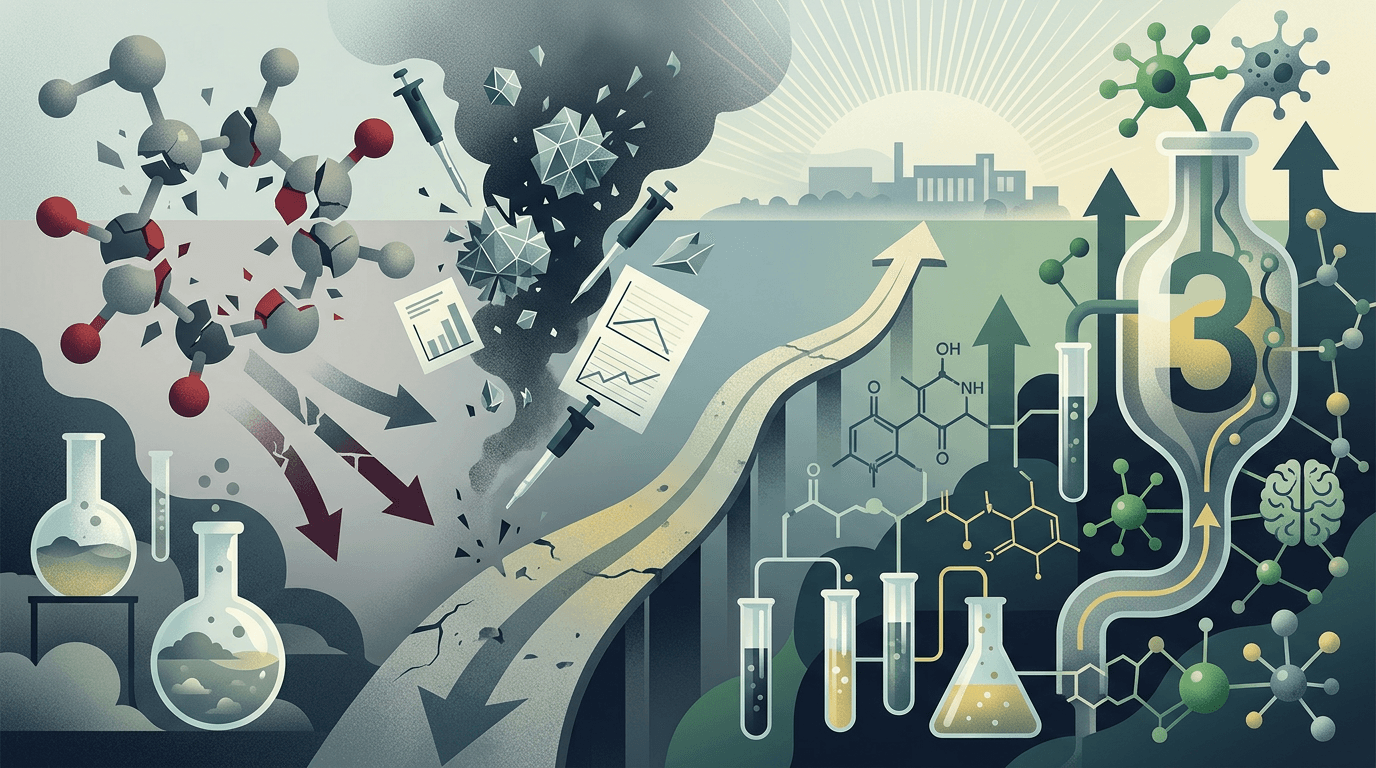
AR1001 takes a completely different approach. It's a daily oral pill: no infusions, no infusion centers, no MRI surveillance schedule. Instead of hammering amyloid plaques with an antibody, AR1001 inhibits PDE5 (phosphodiesterase-5) in the brain. That single mechanism triggers a cascade of effects: clearing toxic amyloid and tau proteins through autophagy (the cell's built-in recycling system), reducing neuroinflammation, improving cerebral blood flow, and protecting neurons from dying.
It's like the difference between hiring a specialist to fix one thing in your house versus hiring a general contractor who tackles plumbing, electrical, and structural issues all at once. Whether that multi-pronged approach actually works in a large clinical trial is the billion-dollar question.
The Phase 3 Trial Everyone's Watching
The study is called POLARIS-AD, and it's big. About 1,535 patients with early-stage Alzheimer's (confirmed by amyloid brain scans or biofluid tests) are enrolled across roughly 230 sites in 13 countries. Participants take either 30 mg of AR1001 or a placebo daily for 52 weeks.
The trial's main goal is measuring change on the CDR-SB, a clinical scale that tracks how well patients manage daily tasks and think clearly. It's the same yardstick the FDA used to evaluate Leqembi and Kisunla, so the results will be directly comparable.
POLARIS-AD finished enrolling in 2025, and topline results are expected sometime in 2026. That timeline is exactly why the option structure makes sense for Fosun: pay now, see the data, then decide.
AR1001's Phase 2 trial in 210 patients showed the drug was well-tolerated and produced encouraging signals. It reduced levels of phosphorylated tau-181 in patients' blood (a key marker of Alzheimer's progression) and improved cognition scores in the mild Alzheimer's subgroup. Promising, but Phase 2 is a far cry from Phase 3. Plenty of Alzheimer's drugs have looked great in small trials and cratered in large ones.
Fosun's Bigger Neurology Play
This isn't Fosun's first move in Alzheimer's. The company already licensed AR1001 for Greater China and 10 Southeast Asian countries in a prior deal with AriBio. The new option expands that to global commercialization rights, excluding Korea, the Middle East, Latin America, and a few other territories.
And AR1001 isn't even Fosun's only Alzheimer's bet. The company spent approximately $200 million (1.4 billion yuan) to acquire a 53% stake in Green Valley Pharmaceuticals, the maker of GV-971, another Alzheimer's drug. It also runs a joint venture with Insightec to commercialize focused ultrasound brain therapy in China.
Fosun is essentially building a neurology portfolio brick by brick: one oral pill, one existing Alzheimer's asset, one brain treatment device. It's a diversified bet on a disease that has humbled nearly every pharma company that's tried to crack it.
Why This Deal Matters Beyond the Numbers
The Alzheimer's market is evolving fast. Anti-amyloid antibodies proved the amyloid hypothesis has legs, but their practical limitations (cost, infusions, monitoring) leave a massive opening for something simpler. An effective oral drug for Alzheimer's would be a game-changer, particularly in regions like Asia-Pacific, where infusion infrastructure is limited and the patient population is booming.
That's the real reason Fosun is willing to put $60 million on the table before seeing Phase 3 data. If AR1001 works, an oral Alzheimer's pill with a multi-target mechanism could carve out a category of its own, complementary to (or even competitive with) the antibodies. If it doesn't, Fosun loses its deposit and moves on.
The POLARIS-AD readout, expected later this year, will tell us which scenario plays out. For AriBio, a small Korean biotech with $85 million in total funding, the stakes couldn't be higher. For Fosun, it's one piece of a much larger puzzle.
And for the millions of Alzheimer's patients and families worldwide? It's another reason to watch the data, hold your breath, and hope.
Clinical & Regulatory5 min read
Biogen's Alzheimer's Drug Failed Its Big Test. They're Going to Phase 3 Anyway.
Biogen's tau-targeting Alzheimer's drug missed its primary endpoint in a Phase 2 trial. Instead of pulling the plug, the company is charging ahead to Phase 3, pointing to cognitive and biomarker signals that no tau drug has ever produced before. It's either a bold move or a familiar mistake.