The Blood Disorder That Finally Got Its First Drug After Decades of Nothing
For decades, warm autoimmune hemolytic anemia had zero FDA-approved treatments. Now J&J's Imaavy has changed that, and a wave of competitors is right behind it. Here's why this first-in-disease approval matters more than the modest trial numbers suggest.
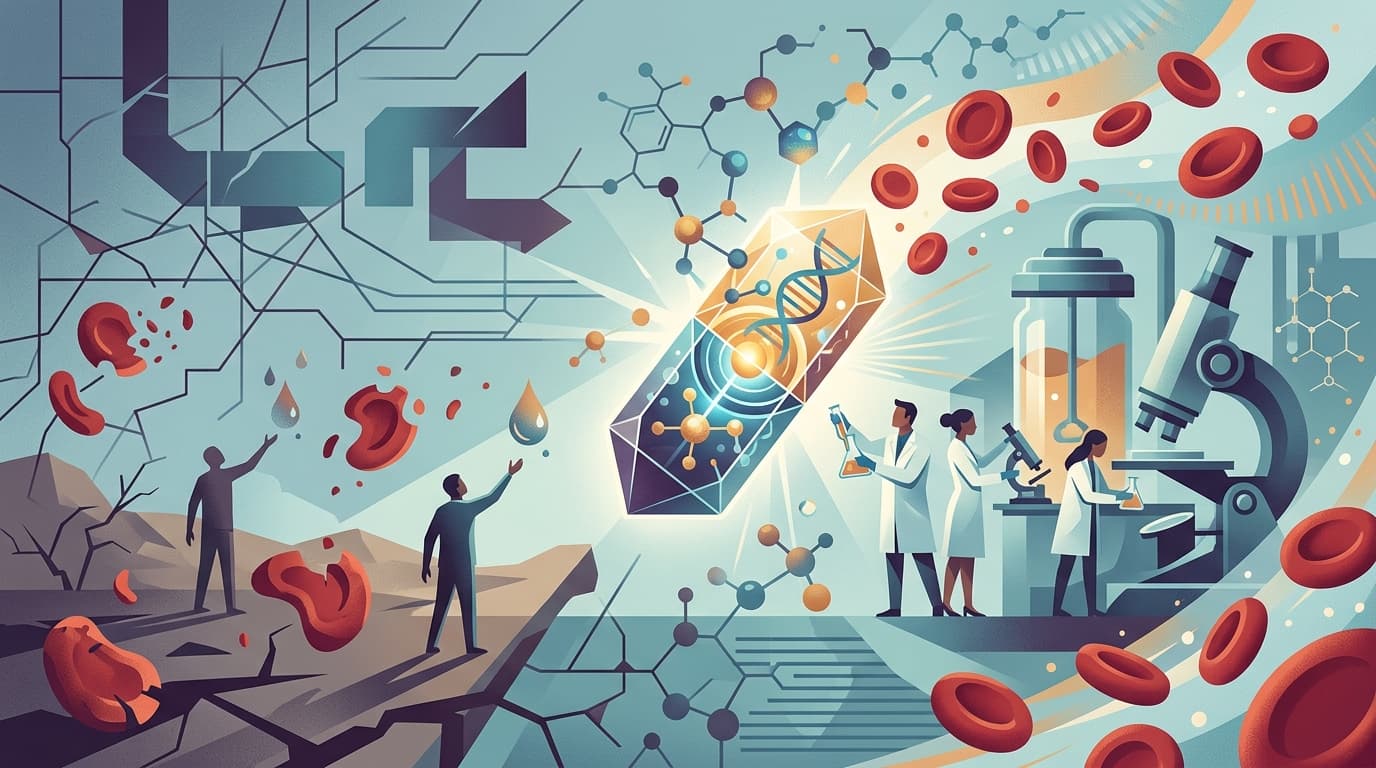
Imagine your immune system declaring war on your own blood.
Not a metaphorical war. A literal one, where your body's defenses tag your red blood cells as enemy invaders and systematically destroy them. That's what happens in warm autoimmune hemolytic anemia (wAIHA), and until last week, there wasn't a single FDA-approved drug to treat it.
Now there is.
A Disease That's Been Hiding in Plain Sight
wAIHA is one of those conditions that sounds obscure until you realize how many people it affects. About 1 in 8,000 Americans live with it. That's roughly 40,000 people whose immune systems are actively shredding their red blood cells, leaving them exhausted, anemic, and at higher risk for blood clots, kidney failure, and serious infections.
The biology is almost comically unfair. Your immune system produces antibodies (specifically IgG) that latch onto the surface of perfectly healthy red blood cells. Macrophages, the immune system's cleanup crew stationed in the spleen, see those antibody-coated cells and think: "This must be garbage. Let me eat it." The result is chronic anemia that can range from manageable to life-threatening.
For decades, doctors treated wAIHA with steroids and broad immunosuppressants: essentially using a sledgehammer when the problem called for a scalpel. These drugs weren't designed for wAIHA. They weren't approved for wAIHA. They were just the best anyone had.
Enter Imaavy, the First Drug Built for the Job
On August 24, 2026, the FDA approved Imaavy (nipocalimab-aahu) from Janssen Biotech, a Johnson & Johnson company, as the first-ever treatment specifically indicated for wAIHA. It's approved for adults and kids aged 12 and older who are currently on steroids or have been treated with them before.
The FDA pulled out the regulatory red carpet for this one. Imaavy received Fast Track designation, Priority Review, and orphan drug status, which is the rare disease trifecta that signals the agency recognized a serious unmet need.
Get tomorrow's biotech intelligence before your competitors.
Join thousands of biotech professionals who start their day with our free, daily briefing.
So how does it actually work? Think of it like intercepting the mail before it gets delivered. Imaavy targets the neonatal Fc receptor (FcRn), a protein that normally recycles IgG antibodies and keeps them circulating in the blood for weeks. By blocking FcRn, Imaavy accelerates the breakdown of those harmful autoantibodies, reducing the immune system's ability to tag red blood cells for destruction. Fewer tags, fewer eaten blood cells, less anemia.
The Trial That Made It Happen
The approval was based on the ENERGY study, a Phase 2/3 clinical trial that tested Imaavy against placebo. The primary goal was straightforward: could the drug produce a durable hemoglobin response, meaning a sustained increase in hemoglobin levels over time?
The results were positive, though not blockbuster in absolute terms. In the 30 mg/kg dose group, 24% of patients achieved that durable response compared to 8% on placebo. That's three times the response rate, which sounds impressive until you notice that roughly three out of four treated patients didn't hit the bar.
But context matters here. These are patients with a notoriously stubborn disease who had already been through steroids. And the drug showed something else that caught clinicians' attention: speed. Mean hemoglobin levels rose by 1 g/dL within the first week of treatment. For patients who've been chronically anemic, that kind of rapid improvement can be the difference between dragging yourself through the day and actually functioning.
The trial also measured fatigue, which is often the most debilitating symptom patients describe. Imaavy improved FACIT-Fatigue scores by 3.5 points over placebo at Week 24. That's a meaningful bump on a scale designed to capture how exhausted patients feel in daily life.
The Safety Picture
No drug comes without trade-offs. The most common side effects in the ENERGY trial were wAIHA itself, diarrhea, and fatigue and fever. Some patients also experienced infusion-related reactions like headache, nausea, dizziness, chills, and rash.
The FDA noted that the safety profile was consistent with what they'd already seen from Imaavy's other approved indication in generalized myasthenia gravis. No new safety red flags popped up, which is reassuring for a drug entering a new disease area. Still, because Imaavy works by lowering IgG antibody levels broadly (not just the bad ones), there's an inherent concern about infection risk that will need to be monitored as more patients use it in the real world.
Why "First" Matters More Than You Think
Being the first approved drug in a disease category isn't just a marketing badge. It fundamentally changes the treatment landscape in several ways.
First, it gives doctors something they can actually prescribe on label. Until now, every wAIHA treatment was technically off-label, meaning doctors were borrowing drugs approved for other conditions. That creates headaches with insurance coverage, dosing uncertainty, and a general sense of "we're winging it" that nobody wants when dealing with a serious blood disorder.
Second, it validates the disease itself. Rare diseases often suffer from an awareness deficit. Patients bounce between specialists for months or years before getting a diagnosis. Having an FDA-approved therapy creates a legitimate treatment pathway, which can drive better diagnosis rates and earlier intervention.
Third, it opens the floodgates for competition. And that competition is already lining up.
The Race Behind Imaavy
J&J won the first-mover advantage, but the wAIHA space is about to get crowded.
Sanofi's rilzabrutinib is the closest competitor. It's a BTK inhibitor, which works through a completely different mechanism: instead of clearing existing antibodies like Imaavy does, it suppresses the B-cell signaling that produces those antibodies in the first place. Think of it as shutting down the factory versus cleaning up the products. The FDA granted rilzabrutinib Breakthrough Therapy Designation for wAIHA, and its LUMINA 3 Phase 3 trial is currently comparing the drug against placebo.
Novartis has ianalumab in Phase 3, with results expected in 2026. And fostamatinib already has Phase 3 data from its FORWARD trial, showing a 35.6% durable hemoglobin response versus 26.7% for placebo at Week 24. There's also sovleplenib, which posted a striking 67% hemoglobin response in Phase 2 (compared to 0% on placebo), though it still needs pivotal confirmation.
This competitive pipeline is great news for patients. Different mechanisms mean different options for different patients, and oral drugs like rilzabrutinib could eventually offer a convenience edge over Imaavy, which is given as an infusion.
The Business Case for J&J
J&J is positioning wAIHA as a key growth driver for its immunology franchise. The orphan drug designation provides seven years of market exclusivity, giving Imaavy a head start before generic or biosimilar competition. And because wAIHA is a chronic condition requiring ongoing treatment, each patient represents long-term revenue rather than a one-time sale.
Pricing hasn't been officially disclosed yet, but orphan drugs for rare diseases typically command premium prices. The small patient population (roughly 40,000 in the U.S.) limits volume, so manufacturers price higher per patient to make the economics work. For context, rare disease biologics routinely launch at six-figure annual price tags.
The real question is how quickly Imaavy can penetrate a market where many patients don't even have a formal diagnosis. wAIHA is underdiagnosed, partly because its symptoms (fatigue, weakness, shortness of breath) overlap with dozens of other conditions. J&J will likely need to invest in disease awareness campaigns alongside its commercial launch, essentially growing the pie while trying to eat it.
What This Means for Patients
For the 40,000 Americans living with wAIHA, this approval is a genuine milestone. Not a cure; Imaavy doesn't fix the underlying immune dysfunction. But it's the first purpose-built tool in a disease that has relied on borrowed ones for its entire history.
The 24% durable response rate leaves plenty of room for improvement, and the coming wave of competitors suggests that improvement is on the way. Rilzabrutinib, ianalumab, and others could offer better efficacy, different safety profiles, or more convenient dosing within the next few years.
For now, though, the headline is simple: a disease that had zero approved treatments yesterday has one today. And for the patients who've been cycling through steroids and immunosuppressants with no official playbook, that's not nothing.
It's everything.
Deals & M&A4 min read
The Biotech Investor That Got Caught Peeking at the Answer Key
A federal court found RA Capital and Avilar Therapeutics guilty of willfully stealing a trade secret from Yale, awarding $4 million to Biohaven and the university. The verdict could reshape how biotech investors handle confidential academic science forever.