The FDA Said No to This Gene Therapy. Then It Said Yes. Then No. Then…
The FDA told UniQure its Huntington's gene therapy data wasn't good enough. Then it reversed course and cleared the company to file for approval anyway. The wild regulatory saga could reshape the future of brain gene therapies.
A Regulatory Rollercoaster With Real Stakes
Imagine applying for a mortgage. The bank says you're approved. Then, months later, it calls back and says actually, no, you need more paperwork. You scramble, panic, argue. Then the bank calls again and says never mind, you're good after all.
That's roughly what just happened to UniQure, except instead of a house, the company is trying to bring the first-ever gene therapy for Huntington's disease to market. And the bank is the FDA.
On June 17, the agency reversed its earlier position and told UniQure it can file for accelerated approval of AMT-130, a one-time gene therapy delivered directly into the brain. If approved, it would be the first treatment that actually slows the progression of Huntington's, a fatal neurodegenerative disease that affects about 41,000 Americans.
UniQure's stock surged on the news. But the real story isn't the stock price; it's the wild regulatory back-and-forth that got us here, and what it might mean for every gene therapy company watching from the sidelines.
Three Reversals in 18 Months
To appreciate how unusual this is, you need the timeline.
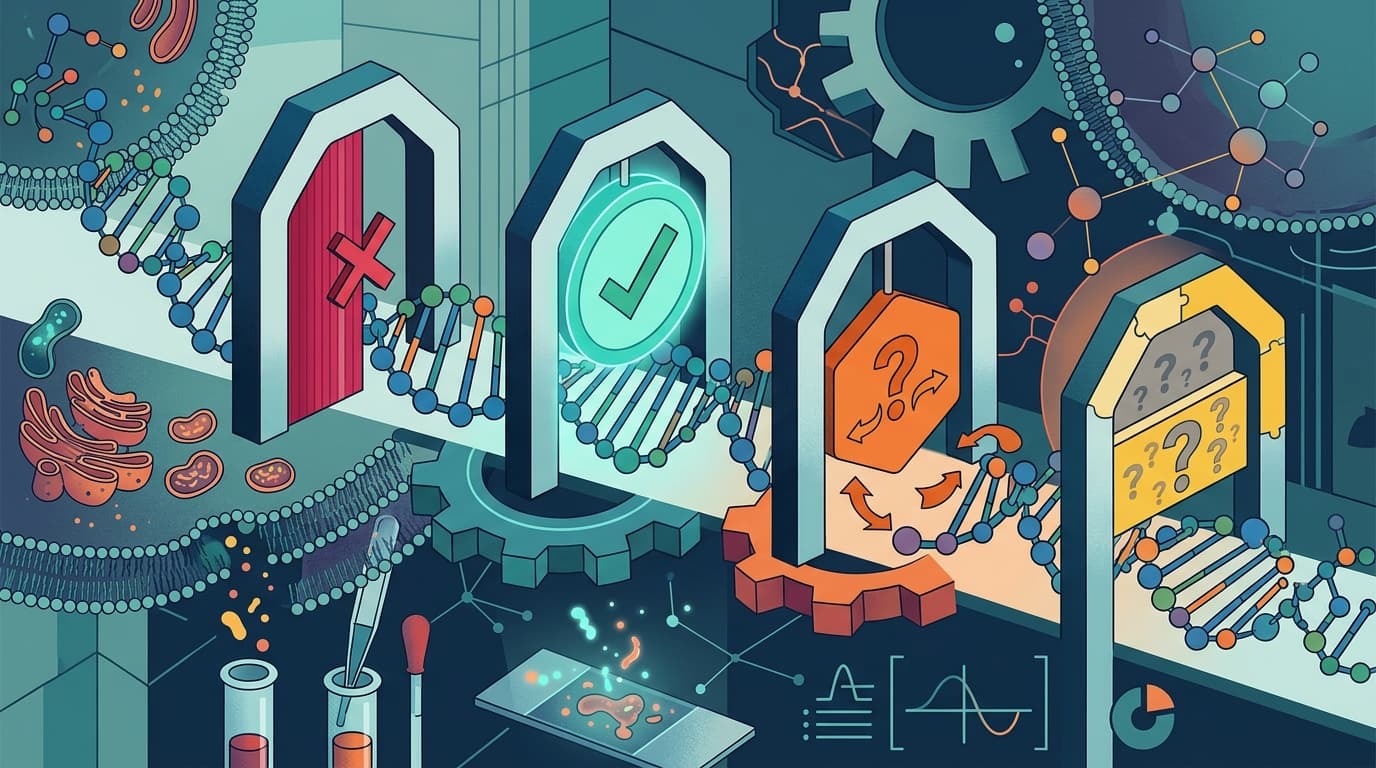
In November 2024, the FDA told UniQure that its Phase 1/2 trial data, compared against a natural history database of untreated patients, could serve as the primary evidence for an accelerated approval application. UniQure started planning a filing for early 2026. Green light.
Then came November 2025. The FDA changed its mind. The agency said it "no longer agrees" that the Phase 1/2 data plus external controls were sufficient. UniQure called the feedback "unexpected" and "a drastic change." Red light.
By January 2026, it got worse. In a formal meeting, the FDA "strongly recommended" that UniQure run a brand-new, randomized, sham-surgery-controlled trial before filing. A senior FDA official told STAT that reviewers were "not convinced there's any therapeutic benefit" and described AMT-130 as a "failed" treatment. The Q1 2026 filing? Dead.
Get tomorrow's biotech intelligence before your competitors.
Join thousands of biotech professionals who start their day with our free, daily briefing.
And then, on June 17, the FDA flipped again. After a new Type B meeting, the agency agreed that a three-year analysis from the same Phase 1/2 study it had previously rejected could, in fact, support an accelerated approval filing.
Three reversals in roughly 18 months. For the Huntington's community, it must have felt like emotional whiplash.
The Data That (Eventually) Won the FDA Over
So what's actually in this dataset? The Phase 1/2 trial enrolled a small group of early-manifest Huntington's patients who received high-dose AMT-130, an AAV-based gene therapy injected into the striatum (a brain region critical for movement and cognition). Their outcomes were compared to a matched group from ENROLL-HD, a large natural history study.
At 36 months, the high-dose group showed a 75% slowing of disease progression on the composite Unified Huntington's Disease Rating Scale (cUHDRS), essentially a scorecard that tracks motor, cognitive, and functional decline. That result was statistically significant, with a p-value of 0.003.
A key secondary measure, Total Functional Capacity (which tracks a patient's ability to handle daily life), showed a 60% slowing of decline. Cognitive tests pointed in the same direction: one measure of processing speed showed 88% slowing, while a reading test actually showed slight improvement in treated patients versus steady decline in controls.
Cerebrospinal fluid levels of neurofilament light chain (NfL), a protein that rises when brain cells are dying, dropped in the treated group. Think of NfL as a smoke detector for neurodegeneration; lower levels suggest less damage.
For a disease with zero approved therapies that slow progression, these numbers are remarkable. Current treatments only manage symptoms: drugs to reduce involuntary movements, antidepressants for mood, and physical therapy to maintain function as long as possible. Nothing touches the underlying disease.
Why the FDA Blinked
The FDA hasn't published a detailed explanation for its reversal, but several factors likely played a role.
First, time. The three-year data package is more mature than what the FDA was evaluating in late 2025. Longer follow-up strengthens the case that the treatment effect is real and durable, not a statistical fluke or a placebo artifact.
Second, the accelerated approval framework itself. This pathway lets the FDA approve drugs based on endpoints that are "reasonably likely" to predict clinical benefit, with a confirmatory trial required after approval. The bar is intentionally lower than traditional approval. The FDA may have concluded that while the data aren't perfect, they clear the "reasonably likely" threshold.
Third, external pressure. The Huntington's community pushed back hard against the demand for a sham-surgery trial, arguing it was both ethically fraught and logistically nightmarish. Media coverage intensified. Analysts and patient advocates questioned the agency's consistency.
And then there's the personnel factor. Reports indicate that the departure of Vinay Prasad, head of the FDA division overseeing gene therapies, shifted the regulatory climate. Multiple analysts described his exit as a "big win for biotech," particularly for rare disease programs.
The FDA did attach conditions. It wants UniQure to finalize the design of a confirmatory study before submitting the BLA, and it has suggested using a concurrent control group on standard-of-care therapy rather than a sham surgical procedure. In other words: you can file now, but you still owe us a proper trial later.
What This Means Beyond Huntington's
This decision doesn't just matter for the roughly 41,000 Americans living with Huntington's symptoms (and the 200,000 at risk of inheriting the disease). It could reshape the regulatory playbook for an entire category of medicines.
Accepting Phase 1/2 data with external controls as the primary basis for a CNS gene therapy filing sets a strikingly low evidentiary bar by historical standards. For context, the recent accelerated approval of AVLAYAH for Hunter syndrome relied on a clear biomarker surrogate (a 91% reduction in a cerebrospinal fluid marker), and ALS gene therapy Sodesta needed randomized, placebo-controlled data.
AMT-130's path is different: a small, uncontrolled early-phase study benchmarked against an external database. If this works, every company developing gene therapies for Alzheimer's, Parkinson's, ALS, and other neurodegenerative diseases will take note. The template could accelerate timelines across the field.
But there's a flip side. The FDA's zigzagging on AMT-130 has already shaken confidence in the predictability of regulatory interactions. If the agency can reverse written agreements multiple times within 18 months, how much can any company trust the guidance it receives?
Wall Street Is All In (For Now)
Analysts aren't waiting for the answer. After the June 17 announcement, the consensus on UniQure turned overwhelmingly bullish. Leerink's Joseph Schwartz called the program "a game-changer and a definitive win," raising his price target to $68. Stifel's Paul Matteis lifted his target to $65. H.C. Wainwright reiterated a Buy at $70.
The average analyst target sits around $57, with multiple Buy ratings. At one point during the data-driven rally, UniQure's stock surged roughly 250% in a single session.
Of course, a BLA filing isn't an approval. The FDA could still reject the application during formal review. Manufacturing a gene therapy that requires brain surgery to deliver is extraordinarily complex. And the confirmatory trial, whenever it happens, could disappoint.
But for now, Huntington's patients have something they haven't had before: a realistic shot at a treatment that fights the disease itself, not just its symptoms. After years of failed trials and broken promises in this space, that's worth paying attention to.
Deals & M&A
5 min read
Novo Nordisk Just Bet $812M That Obesity's Future Isn't GLP-1
Novo Nordisk just dropped $812 million on a tiny AI-driven startup to find obesity drugs that have nothing to do with GLP-1. The deal with Deep Apple Therapeutics signals that even the king of Ozempic and Wegovy thinks the next era of weight loss will look very different.