The FDA Wants to Inspect Your Factory in One Day. Yes, Really.
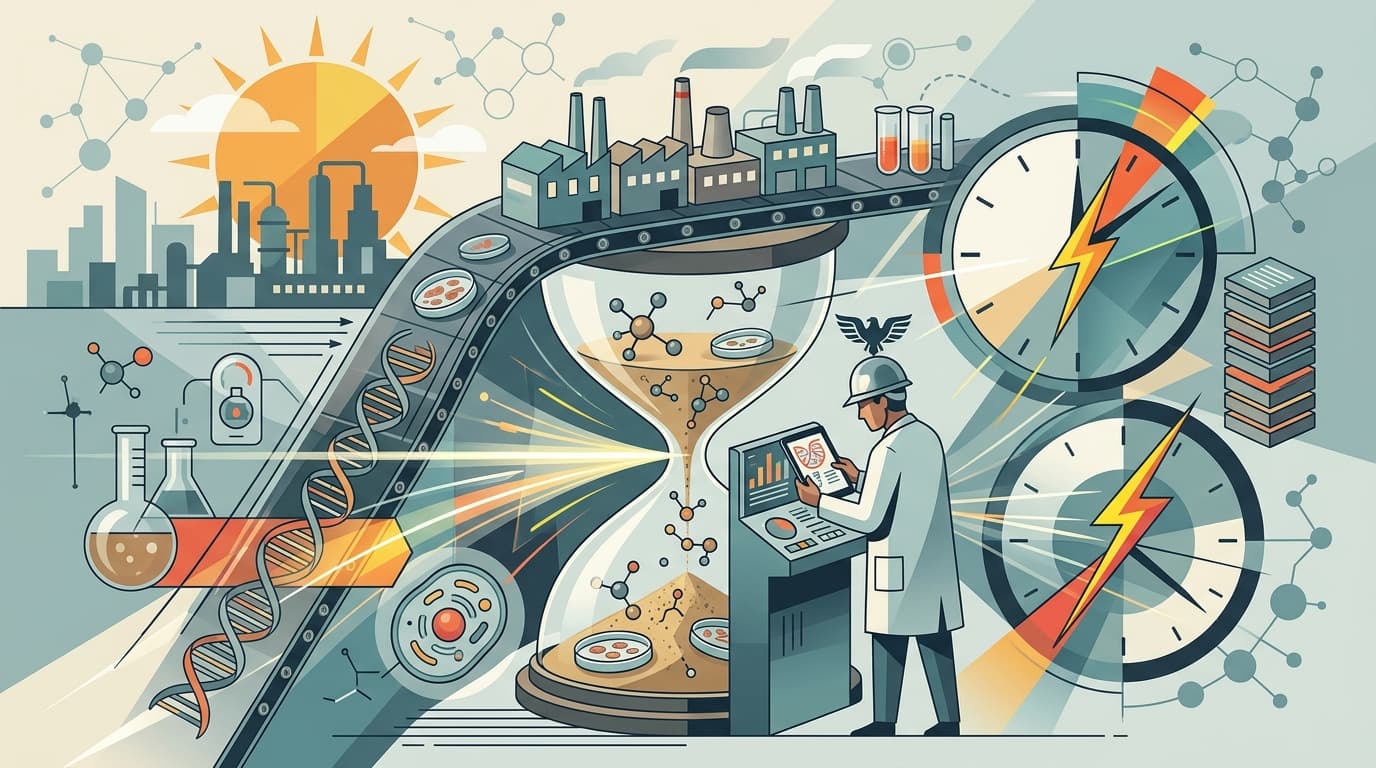
The FDA is piloting one-day factory inspections powered by AI risk analytics, replacing the traditional week-long deep dive for low-risk facilities. With 2,000 firms uninspected since before the pandemic, the agency is betting that algorithms can tell it where to look and where to move on.
Speed Dating, but for Drug Factories
Imagine you're a restaurant owner. Health inspectors usually camp out in your kitchen for a week, poking through every drawer and watching you prep Tuesday's soup. Now imagine they show up, spend a few hours laser-focused on the three things most likely to make someone sick, and leave before lunch.
That's basically what the FDA just started doing to drug, biologics, and food facilities across the country.
The agency launched a pilot program for one-day inspectional assessments, using AI-powered risk analytics to figure out which facilities are safe enough for a quick visit instead of the traditional week-long deep dive. The pilot started in April 2026, spans biologics, drugs, medical products, clinical research programs, and human and animal food facilities, and is set to run through the end of fiscal year 2026.
And they've already completed about 46 of these speed-round inspections. Most facilities passed with flying colors.
Why the FDA Is in a Hurry
The short answer: COVID broke the inspection system, and it still hasn't fully recovered.
When the pandemic hit in 2020, the FDA hit pause on a huge chunk of its inspections. International visits didn't resume until 2022. By May 2024, roughly 2,000 pharmaceutical manufacturing firms hadn't been inspected since before the pandemic. More than 340 of those plants were in India and China, two of the world's biggest drug ingredient suppliers.
Even as inspections ramped back up, the gap remained wide. In fiscal year 2023, the FDA conducted 621 foreign and 444 domestic drug manufacturer inspections. That was still 36% fewer than fiscal year 2019. The agency increased inspections by 694 in FY 2025 compared to the prior year, but the backlog was never fully cleared.
So the FDA found itself stuck in a familiar bind: too many facilities, not enough inspectors, and a growing pile of sites that hadn't been checked in years. The one-day pilot is essentially a triage strategy. If AI can reliably identify which factories are low-risk, inspectors can spend less time there and more time at the places that actually need scrutiny.
Get tomorrow's biotech intelligence before your competitors.
Join thousands of biotech professionals who start their day with our free, daily briefing.
How AI Picks the Winners (and Losers)
The facility selection process leans on risk-based criteria: product type, prior inspection outcomes, and operational characteristics. Commissioner Marty Makary has said the agency uses artificial intelligence to identify low-risk facilities suitable for abbreviated visits, both domestic and overseas.
Behind the scenes, the FDA uses AI-enabled risk scoring and other data analytics tools to crunch compliance histories, operational data, and quality metrics to generate risk profiles for each facility. Think of it like a credit score, but for pharmaceutical manufacturing.
Facilities that score well get the abbreviated treatment. Those that don't? They're still getting the full five-to-seven-day inspection experience.
And here's the feedback loop that makes this interesting: data from each one-day visit (compliance patterns, facility-specific risk scores, gaps between what a company registered and what inspectors actually find on site) gets fed back into the AI models. Every quick visit makes the targeting smarter for the next round.
What Actually Happens During a One-Day Visit
A traditional FDA inspection is a marathon. Investigators show up with a Form 482 (the official notice), spend three to seven consecutive business days walking the floor, reviewing batch records, checking data integrity, observing production across multiple shifts, and holding daily debriefs. For complex biologics or sterile drug operations, it can stretch even longer.
The one-day assessment is more like a focused screening. Inspectors arrive with a tight, pre-planned scope. They're not trying to audit every system in the building; they're checking specific risk areas identified by the AI models. Think of it as a targeted biopsy rather than a full-body scan.
But don't mistake "short" for "soft." If inspectors find something concerning, they can expand the scope or extend the visit beyond one day. And observations still get documented on the dreaded Form FDA 483, the official citation that can trigger warning letters and enforcement actions.
Of the 46 assessments completed so far, most resulted in "No Action Indicated" outcomes, meaning the facilities checked out fine. That's either a sign the AI is picking the right targets, or a sign the bar is too low. The FDA says it will track escalation rates and other metrics to figure out which.
The Industry Is Cautiously Optimistic (With Caveats)
Regulatory experts and industry consultants are broadly supportive of the concept. For a biologics manufacturer running a tightly scheduled production campaign, having an inspector on site for one day instead of a full week is a meaningful reduction in disruption.
But the concerns are real. How exactly does the AI define "low risk"? Regulatory lawyers want more transparency into the models, the inputs, and the recalibration schedule. A facility with a clean history might be developing new risks (a new supplier, a process change) that historical data wouldn't capture. If the AI generates too many false negatives, classifying risky facilities as safe, the consequences could be serious.
There's also the "gotcha" risk. A hyper-focused one-day visit zeroed in on a single system, say data integrity or cleaning validation, could still yield significant findings. Some pharma compliance teams worry that the compressed format creates a snapshot problem: one bad day could look worse without the context a multi-day inspection provides.
The FDA has been clear on one point: this does not change enforcement policy. Pre-approval inspections, for-cause investigations, and complex or high-risk operations all remain on the traditional multi-day track. The one-day format is a complement, not a replacement.
The Bigger Picture: An FDA That Moves Faster
The inspection pilot isn't happening in a vacuum. It's part of a broader push by Commissioner Makary to modernize the agency's operations. The FDA recently reorganized its field structure, rebranding the Office of Regulatory Affairs into the Office of Inspections and Investigations (OII) to sharpen its focus on enforcement.
Makary has also described a program to inspect manufacturing facilities while they're still being built, eliminating the traditional one-to-two-year lag between construction and FDA clearance. Add in moves toward accepting real-world data in applications, reducing some clinical trial requirements from two pivotal trials to one, and a new pilot to issue review decisions "in a matter of weeks," and the theme is unmistakable: this FDA wants to run leaner and faster.
Whether faster also means better is the billion-dollar question. The evaluation metrics for the one-day pilot (inspection duration, escalation rates, and how useful the findings are for future risk decisions) will tell us a lot. If the AI gets the risk calls right, this could be a genuine breakthrough in regulatory efficiency. If it misses, the consequences land squarely on patients.
For now, 46 facilities have gotten the speed-dating version of an FDA inspection. The agency is betting that AI can tell it who deserves a second date and who needs a full background check. The pilot runs through September 2026, and the biotech world will be watching every data point.
Clinical & Regulatory4 min read
A Tiny Korean Biotech Just Put Up MASH Numbers That Rival Novo Nordisk
A small Korean biotech just dropped MASH liver disease data that looks competitive with Novo Nordisk's blockbuster semaglutide. The catch? Only 35 patients were in the trial, and the competition is about to get fierce.