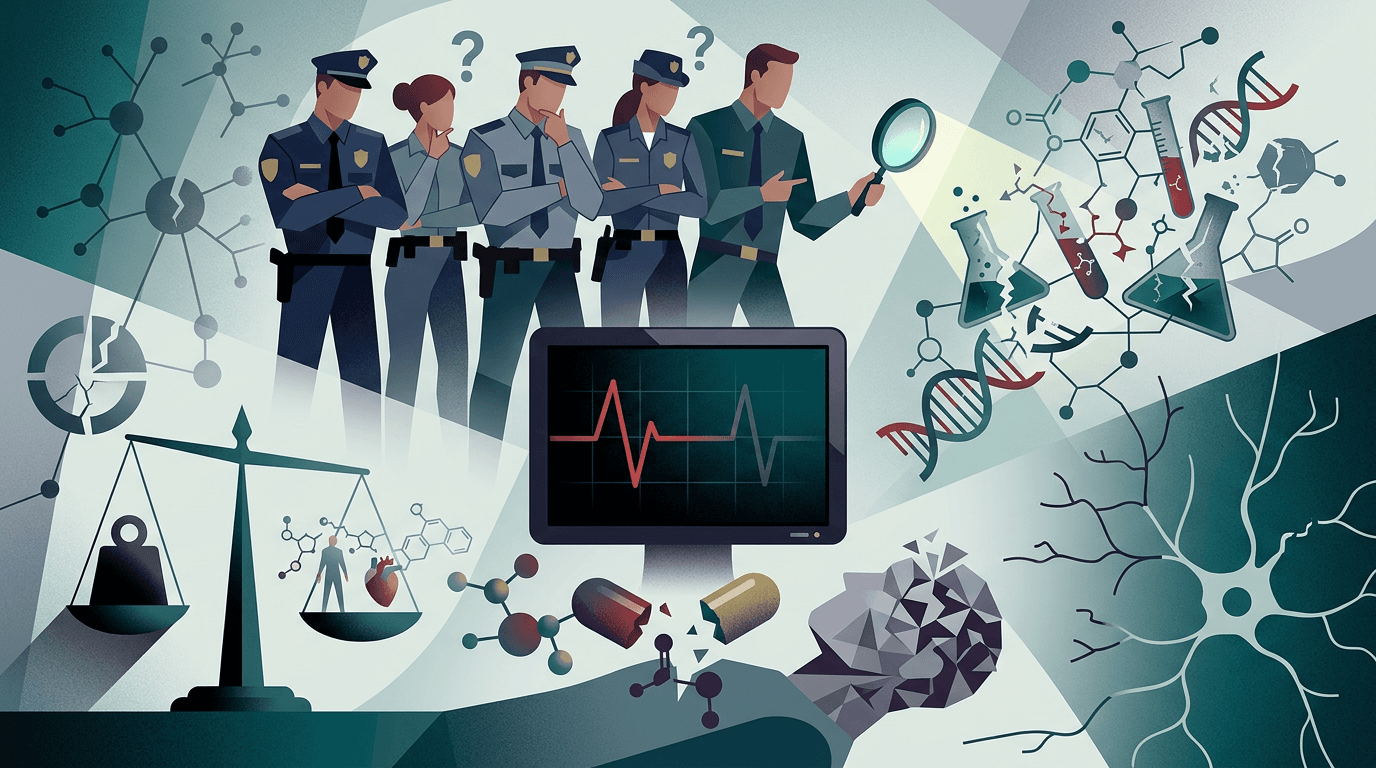

The FDA slammed the brakes on Newron Pharmaceuticals' Phase 3 schizophrenia trial after a patient died at a non-U.S. site. The company says the drug isn't to blame, but the agency wants proof. For one of the few novel approaches to treatment-resistant schizophrenia, the clock is ticking.
Somewhere outside the United States, a patient in a schizophrenia trial died suddenly. Within days, the FDA pulled the emergency brake on Newron Pharmaceuticals' Phase 3 study at all U.S. sites. No new patients. No new doses. Not until the agency gets answers.
The clinical hold landed on April 29, 2026, freezing Newron's ENIGMA-TRS 2 trial in its tracks on American soil. For a small Italian company betting its future on a novel approach to one of psychiatry's hardest problems, the timing couldn't be worse.
A clinical hold is the FDA's version of a red card. It means the agency believes there's a safety concern serious enough to stop a trial from moving forward until it's resolved. Think of it as "prove this is safe before you touch another patient."
The death occurred at a non-U.S. site. The site's own investigator assessed it as unrelated to the drug being tested (evenamide). An independent safety monitoring board reviewed the event and recommended that both of Newron's Phase 3 trials continue as designed. Newron's Chief Medical Officer, Ravi Anand, noted that sudden death is not uncommon among schizophrenia patients generally.
But the FDA doesn't take anyone's word for it. The agency wants its own look at the data before American patients keep receiving the drug.
To understand why this matters, you need to understand what evenamide is trying to do. Most antipsychotics work by blocking dopamine receptors in the brain. They've been doing this since the 1950s. It's like turning down the volume on a speaker that's too loud; effective, but it mutes everything, including signals you actually need.
Evenamide takes a completely different approach. It targets voltage-gated sodium channels in overactive neurons, which reduces excessive glutamate release (glutamate is the brain's main excitatory chemical messenger). Instead of turning down the whole speaker, it's more like fixing the feedback loop that causes the screeching in the first place.

Chiesi just dropped $1.9 billion on KalVista to grab the only oral pill for acute hereditary angioedema attacks. In a week with five biotech acquisitions, this bet on needles going extinct in HAE might be the smartest of the bunch.

Join thousands of biotech professionals who start their day with our free, daily briefing.

The idea is to use evenamide as an add-on to existing antipsychotics for patients with treatment-resistant schizophrenia (TRS): people whose symptoms don't respond adequately to standard drugs. These are among the hardest patients to help in all of psychiatry.
The hold applies only to U.S. sites. That's an important distinction. Enrollment continues in India, Argentina, and at sites nearing activation in Colombia and Malaysia. ENIGMA-TRS 1, a separate Phase 3 trial running in Europe, Canada, Latin America, and Asia, remains completely unaffected.
Still, this is a meaningful setback. ENIGMA-TRS 2 aims to enroll roughly 400 patients total. Losing your U.S. sites (including UCLA's Semel Translational Research Center, the first activated American location) slows recruitment and raises questions with investors. Newron's stock has been volatile; shares have ranged from a 52-week low of CHF 5.20 to a high of CHF 31.85, trading recently around CHF 21.40.
The company says it still expects 12-week primary endpoint results in Q4 2026. Whether the hold delays that timeline depends entirely on how quickly Newron can satisfy the FDA's concerns.
Newron isn't the first company to hit this wall. In 2024, Neumora Therapeutics saw its schizophrenia candidate NMRA-266 placed on clinical hold after preclinical data showed convulsions in rabbits.
Developing drugs for the brain is notoriously brutal. The organ is complex, protected by the blood-brain barrier, and the diseases it develops are poorly understood at a molecular level. Clinical holds, failed trials, and unexpected safety signals are almost a rite of passage in CNS drug development.
Boehringer Ingelheim's iclepertin failed its Phase 3 in late 2024. Neumora had to pivot its entire schizophrenia franchise. The graveyard of abandoned brain drugs could fill a textbook.
Evenamide isn't competing in a vacuum. The schizophrenia pipeline has gotten more interesting in the past two years, with several novel mechanisms advancing:
Evenamide's glutamate-based mechanism is genuinely different from all of these. If it works, it could offer something unique for treatment-resistant patients. But "if" is doing a lot of heavy lifting in that sentence right now.
Newron needs to respond to the FDA with enough safety data to demonstrate that evenamide didn't cause this death and that the risk-benefit profile remains acceptable. Clinical holds can be lifted in weeks or drag on for months, depending on the complexity of the agency's questions and the quality of the company's data package.
The independent safety board's recommendation to continue is a good sign. No increased mortality has been observed between evenamide and placebo groups across the program so far. But the FDA operates on its own timeline, with its own standards.
For Newron, the math is simple: resolve this quickly, keep international enrollment on track, and hit that Q4 2026 data readout. For the roughly 30% of schizophrenia patients who don't respond to existing treatments, the stakes are even simpler. They're running out of options, and they need this science to work.
The hold is a speed bump, not necessarily a dead end. But in CNS drug development, speed bumps have a way of becoming sinkholes. We'll be watching.
GSK and Alector just killed their second Alzheimer's trial in six months, effectively torching a $700 million partnership. The failure raises uncomfortable questions about whether targeting the brain's immune system can actually slow neurodegeneration.