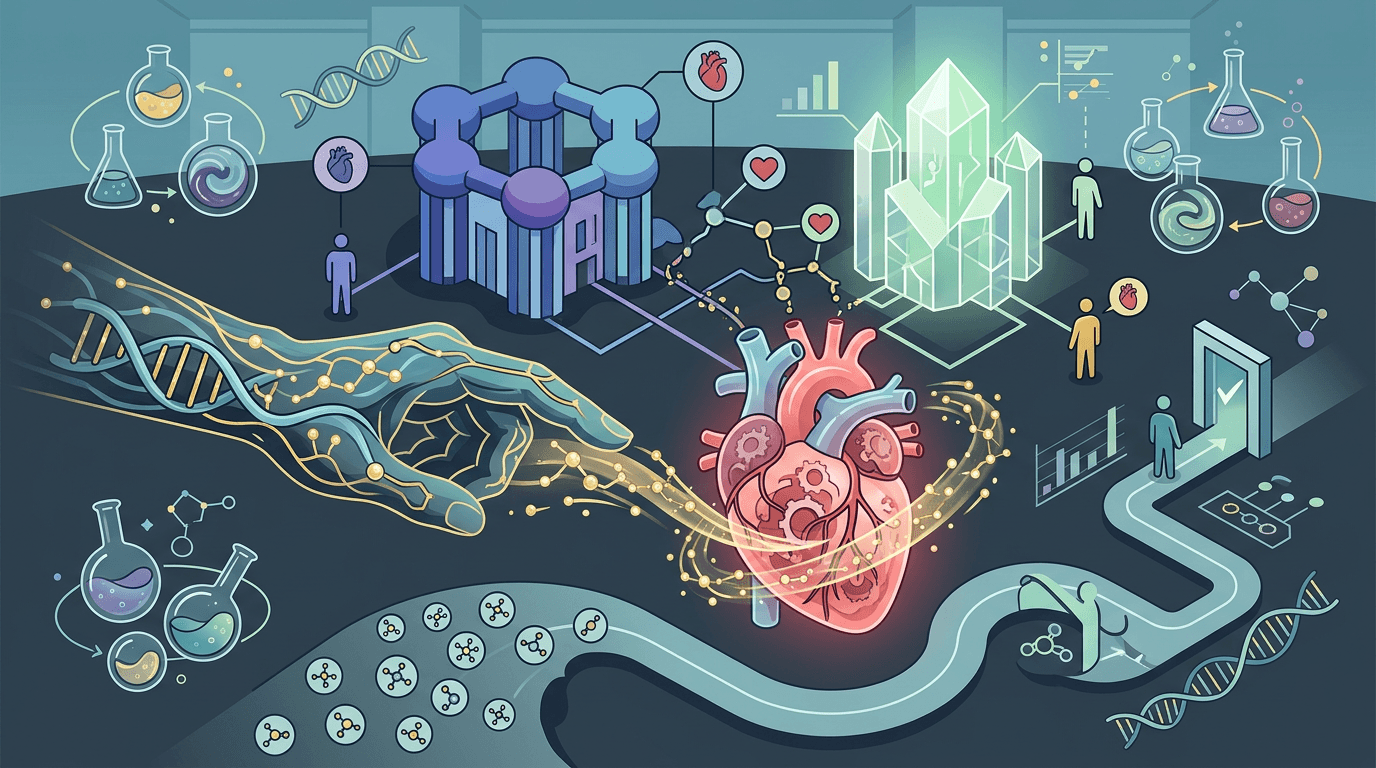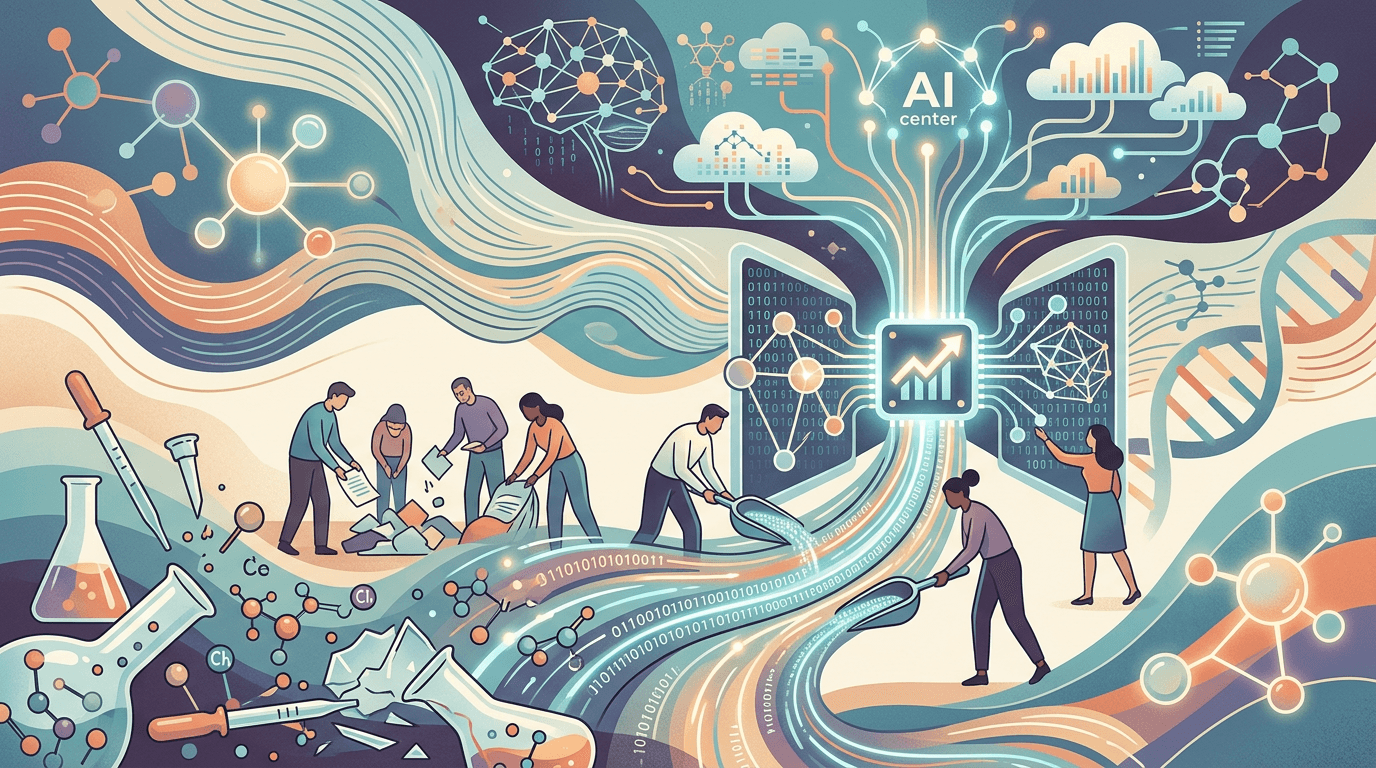

A biotech startup called Verge Labs turned data from its own failed neurology trial into an AI model for patient selection, and it might signal a fundamental shift in how the industry treats its most expensive mistakes. Turns out, failed trials aren't graveyards; they're goldmines.
When a clinical trial fails, the industry usually does what any of us would do with a bad date: pretend it never happened and move on. The data gets filed away, the team pivots, and billions of dollars' worth of patient information collects digital dust.
Verge Labs decided to do something different. The biotech startup took data from its own failed neurology trial and turned it into the foundation for an AI model designed to fix one of drug development's biggest problems: picking the right patients for clinical trials.
STAT News profiled the company this week, and the story lands at a moment when the industry is starting to realize that its mountain of failures might actually be its most valuable asset.
To understand why this matters, you need to appreciate just how brutal clinical trials are. About 90% of drug candidates that enter trials never reach approval. The single biggest reason? Lack of efficacy, which accounts for 40–60% of all failures.
But "lack of efficacy" is often a misleading label. It doesn't always mean the drug didn't work. Sometimes it means the drug worked for some patients, but the trial enrolled too many people who were never going to respond. The signal drowned in the noise of a heterogeneous population.
Think of it like testing a new lactose-free ice cream by giving it to a random crowd and asking, "Did anyone enjoy this?" If only 15% of the crowd is lactose intolerant, the average satisfaction score will be mediocre, even if the product is a revelation for its actual target audience.
That's the patient selection problem, and it's especially nasty in neurology. Diseases like ALS are wildly heterogeneous. Two patients with the same diagnosis can have completely different disease trajectories, genetic profiles, and treatment responses. Standard inclusion criteria (broad diagnostic labels, a single biomarker cutoff) are too blunt to sort them properly.
Verge Labs took the rich longitudinal data from its failed trial (clinical outcomes, imaging, biomarkers, the whole package) and used it to train an AI model for , which is the process of sorting patients into meaningful subgroups before a trial starts.

Edgewise Therapeutics just dropped Phase 2 data for a heart drug that works differently from anything on the market. Wall Street responded by selling the stock 10%, and some analysts think that's a mistake.


Join thousands of biotech professionals who start their day with our free, daily briefing.
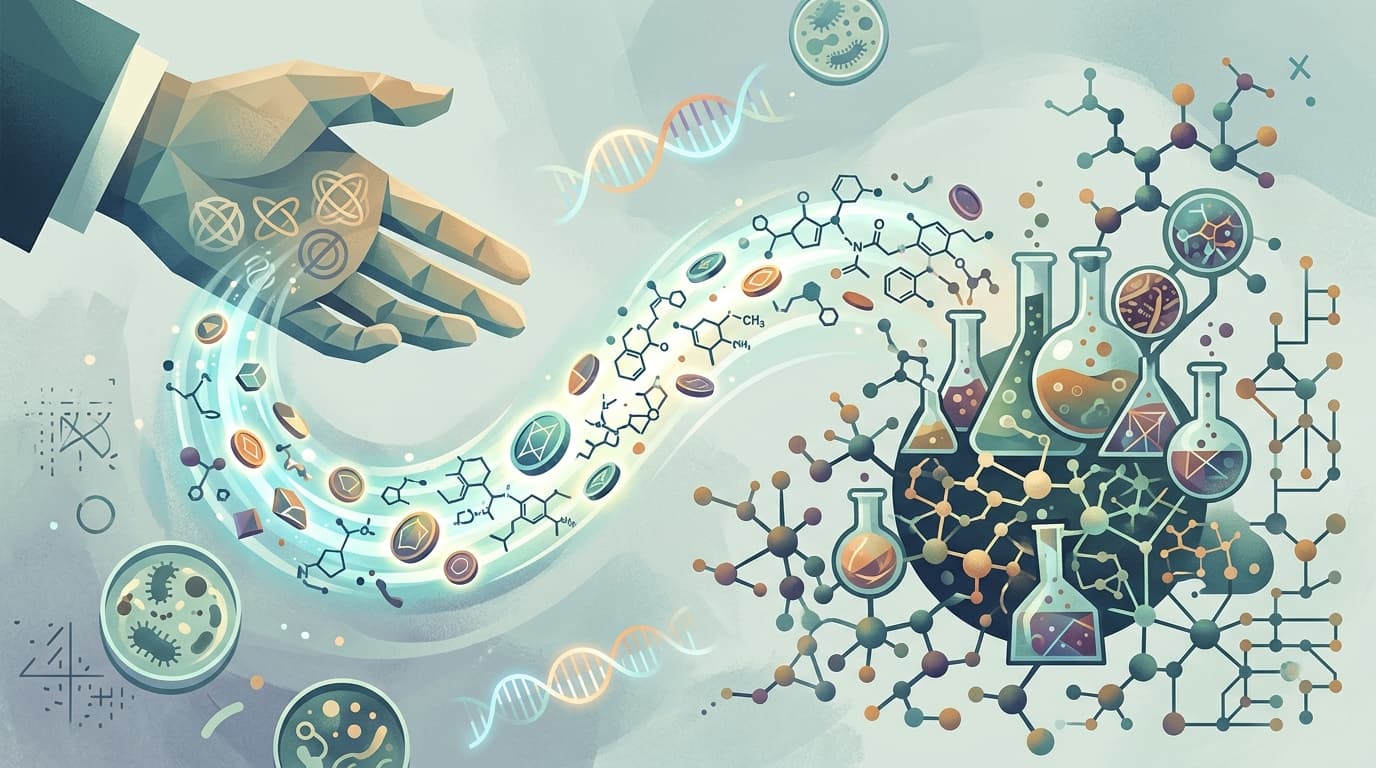
The model processes complex, multimodal patient data to detect subtle patterns that standard analysis would miss. It identifies clusters of patients who respond differently to treatment based on baseline attributes: genetics, imaging markers, digital biomarkers, and longitudinal clinical records. The goal is to figure out before a trial begins which patients are most likely to show a clear treatment signal.
As Verge's leadership told STAT, companies tend to "look away" from failed trials. They believe there are "valuable learnings for the field and for ALS broadly that should be shared," adding that this kind of openness "is not done very often."
They're not wrong. Most negative clinical data remains locked in corporate vaults, proprietary and untouched.
Verge isn't operating in a vacuum. The concept of AI-powered patient stratification has been gaining traction, and there's already compelling evidence that it works.
Consider this: researchers applied AI to re-stratify patients from the failed AMARANTH Alzheimer's trial. The original study was a bust. But the AI model found a subgroup of patients who experienced roughly a 46% slowing of cognitive decline when properly selected. The drug may have worked all along; the trial just enrolled the wrong mix of people.
The broader data on biomarker-guided trials tells a similar story. That's not a marginal improvement; it's the difference between a coin flip and a loaded die.
Other companies are chasing the same insight from different angles. Unlearn builds "digital twins" that model individual patient trajectories, enabling 19–33% reductions in control arm sizes. BostonGene uses multi-omics data to stratify cancer patients. Hologen trains large generative models on clinical data to predict individual treatment responses. The common thread: smarter patient selection, powered by AI, built on historical data.
The financial math here is staggering. Bringing a single new drug to market costs over $2 billion on average, and most of that spending funds programs that ultimately fail. Every day a Phase III trial runs costs roughly $55,000 in direct expenses, with delays costing around $500,000 per day in unrealized revenue.
Meanwhile, 80–85% of trials fail to hit their enrollment targets on time. About 11% of trial sites enroll zero patients. Sites are three times more likely to shut down in their first year than new U.S. businesses. The operational waste is enormous.
If AI-driven patient stratification can even modestly improve success rates, especially at the Phase II stage (where only about 28–33% of candidates survive), the downstream savings multiply fast. Fewer failed Phase III trials. Fewer billion-dollar write-offs. More drugs that actually reach patients who need them.
Experts aren't ready to throw a parade just yet. Training AI on failed trial data sounds elegant, but it comes with real pitfalls.
Data quality is a minefield. If the original trial was poorly designed or biased in its enrollment, the AI will learn those flaws. Garbage in, garbage out, as the saying goes. One analysis of AI in drug discovery flagged a "quiet wall of reproducibility" in published data: models that train on non-replicable findings end up amplifying errors rather than correcting them.
Integration is a nightmare. Clinical trial data comes in wildly inconsistent formats, with incompatible metadata and different outcome definitions. Pooling datasets from multiple failed trials without careful harmonization creates noise, not insight.
And there's the Phase II wall. AI-repurposed drugs show 80–90% success in Phase I (safety testing), then drop off sharply when efficacy actually gets tested. The technology has proven it can find safe, plausible candidates. Predicting whether they'll work is a harder problem, and one that failed trial data alone may not solve.
Still, the direction of travel is clear. Regulators are paying attention; FDA guidance now explicitly acknowledges AI-derived findings from clinical and observational data as a valid input for development decisions. The OECD highlights failed-but-safe drugs as prime candidates for AI-driven repurposing. Deloitte's life sciences outlook frames failure data as a "valuable asset" rather than a write-off.
Verge Labs isn't just building a model. It's building a case that the industry's most expensive mistakes contain the blueprints for its future successes. In a world where nine out of ten clinical programs fail, that pile of "failed" data isn't a graveyard. It's a library.
The question isn't whether more companies will follow Verge's lead. It's whether they'll do it fast enough to matter.
Novo Nordisk just dropped $812 million on a tiny AI-driven startup to find obesity drugs that have nothing to do with GLP-1. The deal with Deep Apple Therapeutics signals that even the king of Ozempic and Wegovy thinks the next era of weight loss will look very different.