The Pill That Wants to Trick Your Body Into Thinking It Just Worked Out
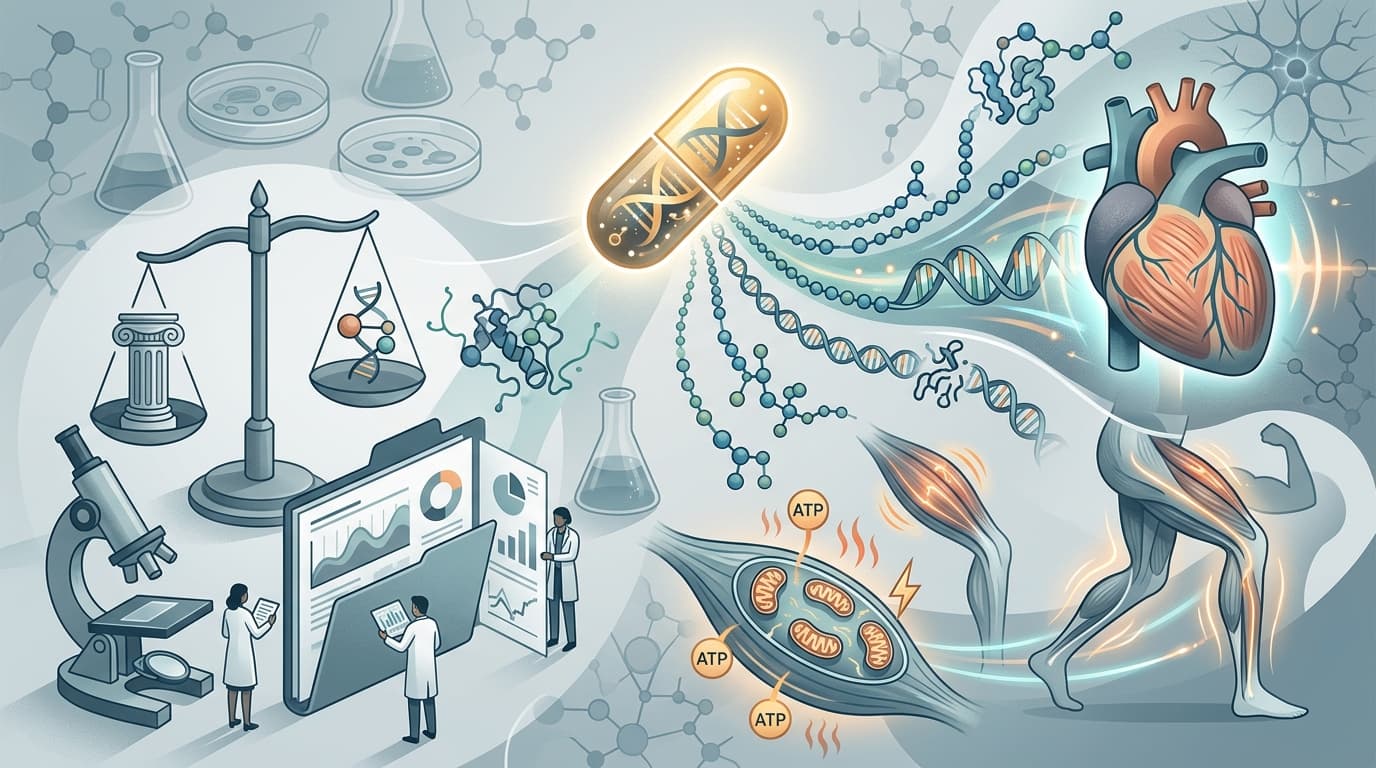
Enveda Biosciences just dropped Phase 1 data on a pill that mimics what your body produces after a hard workout. It's not trying to replace Ozempic; it's trying to solve the massive problem of what happens when you stop taking it.
Your Gym Membership, in Capsule Form
After a brutal workout, your body releases a molecule that tells your brain to stop eating. What if you could get that same signal from a pill, no treadmill required?
That's the pitch from Enveda Biosciences, a Boulder, Colorado-based startup that just dropped Phase 1 data on ENV-308, an oral drug designed to mimic a natural exercise metabolite called lac-phe (short for lactate phenylalanine). The company tested it in 88 healthy volunteers and reported strong tolerability: no serious side effects, no one dropped out, and no dose interruptions. Crucially, the drug also showed reductions in circulating leptin, a hormone tied to metabolism, suggesting it's actually doing something biologically meaningful.
But Enveda isn't chasing the same prize as Ozempic and Wegovy. It's going after what happens after you stop taking them.
The Billion-Dollar Bounce-Back Problem
GLP-1 drugs like semaglutide and tirzepatide are the biggest blockbusters in pharma right now. They work incredibly well for weight loss. The problem? They work like a gym membership, not a surgery. Stop paying, and the benefits disappear.
The numbers are rough. A 2026 trajectory analysis found that people regained 60% of their lost weight within one year of stopping GLP-1 therapy. Modeled out further, the rebound plateaued at about 75% of the weight they'd originally shed. That's not a minor inconvenience; it's a near-complete reversal.
Real-world data tell the same story. Patients start regaining almost immediately, going from 4.5% total body weight gain at three months to 7.5% at one year after discontinuation. The clinical consensus is becoming uncomfortably clear: these drugs function like chronic therapy for a chronic disease. Stopping them is essentially rolling back the clock.
So what are people actually doing? Many just restart the drug. One large observational study found that 47% of diabetes patients had gone back on a GLP-1 within a year of quitting. No validated tapering regimen exists. No proven "bridge" therapy has been established. The field is wide open for someone who can solve the maintenance problem.
Get tomorrow's biotech intelligence before your competitors.
Join thousands of biotech professionals who start their day with our free, daily briefing.
Enveda thinks lac-phe is the answer.
A Molecule Born in the Weight Room
Lac-phe isn't something dreamed up in a chemistry lab. It's something your body already makes. When you exercise hard, rising lactate combines with the amino acid phenylalanine (via an enzyme called CNDP2) to produce this metabolite. It then travels to the brain, where it quiets hunger neurons in the hypothalamus. Think of it as your body's built-in "you just ran five miles, maybe skip the second burrito" signal.
The foundational research came out of Jonathan Long's lab at Stanford. His team published a landmark paper in Nature in 2022 showing that giving lac-phe to obese mice reduced feeding and obesity without changing their activity levels. Mice that couldn't produce lac-phe gained more fat after exercise, confirming the pathway's importance in mediating exercise's anti-obesity effects.
Later work mapped the neural circuitry: lac-phe directly inhibits AgRP neurons (the ones that make you hungry) through a specific ion channel, which in turn activates downstream brain circuits that suppress appetite. It's elegant biology with a clear mechanism, which is more than some obesity targets can claim.
The catch, of course, is that the strongest evidence is still in mice. Human data confirm lac-phe spikes after exercise, but nobody had tested a lac-phe-mimicking drug in people until Enveda.
What the Phase 1 Actually Showed (and Didn't)
Let's be precise about what Enveda announced, because the hype can outrun the data quickly in obesity.
The Phase 1 trial tested ENV-308 across 88 healthy volunteers. It was designed to assess safety and pharmacology, not weight loss. On that front, the results were clean: well tolerated, favorable GI profile (a notable contrast to GLP-1s, which are infamous for nausea and vomiting), and no serious adverse events.
The leptin reduction is an intriguing exploratory finding. Leptin is a hormone that regulates energy balance, and seeing it move in healthy volunteers suggests the drug is engaging metabolism-relevant pathways. But it's a long way from "leptin went down in healthy people" to "this prevents weight regain in post-GLP-1 patients."
Enveda has also touted preclinical data showing ENV-308 preserved lean mass and prevented weight rebound after stopping GLP-1 therapy. In animals. The human proof is what Phase 2 will need to deliver.
The Competitive Calculus
Enveda is entering the obesity space at an interesting angle. Most competitors are trying to build a better GLP-1 mousetrap: dual agonists like tirzepatide, triple agonists like Lilly's retatrutide (GLP-1/GIP/glucagon), amylin combinations like Novo's CagriSema, and novel small-molecule GLP-1 receptor agonists like orforglipron.
All of those are fighting for the same real estate: maximum weight loss. Enveda is playing a different game entirely. Instead of competing on who can make you lose the most weight, it's positioning ENV-308 as the drug you take after the weight comes off. That's a smart strategic move, because it turns every GLP-1 patient into a potential customer rather than a competitor's patient.
The company's broader platform is worth noting, too. Founded in 2019, Enveda uses AI and metabolomics to mine natural products for drug candidates. It has raised over $500 million in venture funding, including a $150 million Series D in 2025 led by Premji Invest, with Kinnevik, Lux Capital, and Baillie Gifford among the backers. The pipeline spans three clinical assets across four indications, plus six programs approaching IND filings. ENV-308 isn't a one-trick bet; it sits within a diversified platform.
The Real Test Is Still Coming
Analysts will rightly view this Phase 1 as an encouraging checkpoint, not a victory lap. The tolerability profile is genuinely interesting, especially the clean GI data. The biology is sound, rooted in published academic work with a clear mechanistic story. And the strategic positioning (maintenance, not competition) is clever.
But the question that matters won't be answered until Phase 2: can ENV-308 actually prevent weight regain in humans who've stopped GLP-1 therapy? That's the trial Enveda is planning, and it's where the story gets real.
If it works, Enveda won't just have a new obesity drug. It'll have the missing piece of the GLP-1 puzzle, the off-ramp that tens of millions of patients are eventually going to need. If it doesn't, lac-phe stays an interesting exercise biology footnote.
For now, the exercise pill has cleared its first hurdle without tripping. The sprint is just beginning.
Funding & Financings
5 min read
CSL Just Had Its Best Day in 25 Years. Here's What Lit the Fuse.
CSL posted a $2.6 billion net loss and its stock soared 18%, the best single-day move in 25 years. Behind the apparent contradiction lies a "reset year" ending, a massive buyback, and a plasma market where demand keeps outrunning supply.