
Editas Medicine just got the green light to test a one-shot CRISPR therapy that could replace daily cholesterol pills forever. The primate data showed 90%+ LDL reduction from a single dose, and now it's heading into humans.
Imagine never taking a statin again. Not because you stopped caring about your cholesterol, but because a single injection rewired your liver to handle it on its own. That future just got a little more real.
Editas Medicine received authorization to begin the Phase 1/2 Strive trial of EDIT-401, a CRISPR gene-editing therapy for heterozygous familial hypercholesterolemia (HeFH), a genetic condition that keeps LDL cholesterol dangerously high. The trial will take place in Australia, with patient dosing expected to begin soon and early data anticipated in 2027.
This isn't CRISPR for a rare disease affecting a few thousand people. This is CRISPR pointed squarely at cardiovascular disease, the world's leading killer. And it could change everything about how we think about cholesterol treatment.
Most gene-editing therapies work like a surgeon: they go in, cut out something broken, and hope the body heals. EDIT-401 does something cleverer. Instead of deleting a bad gene, it turns up the volume on a good one.
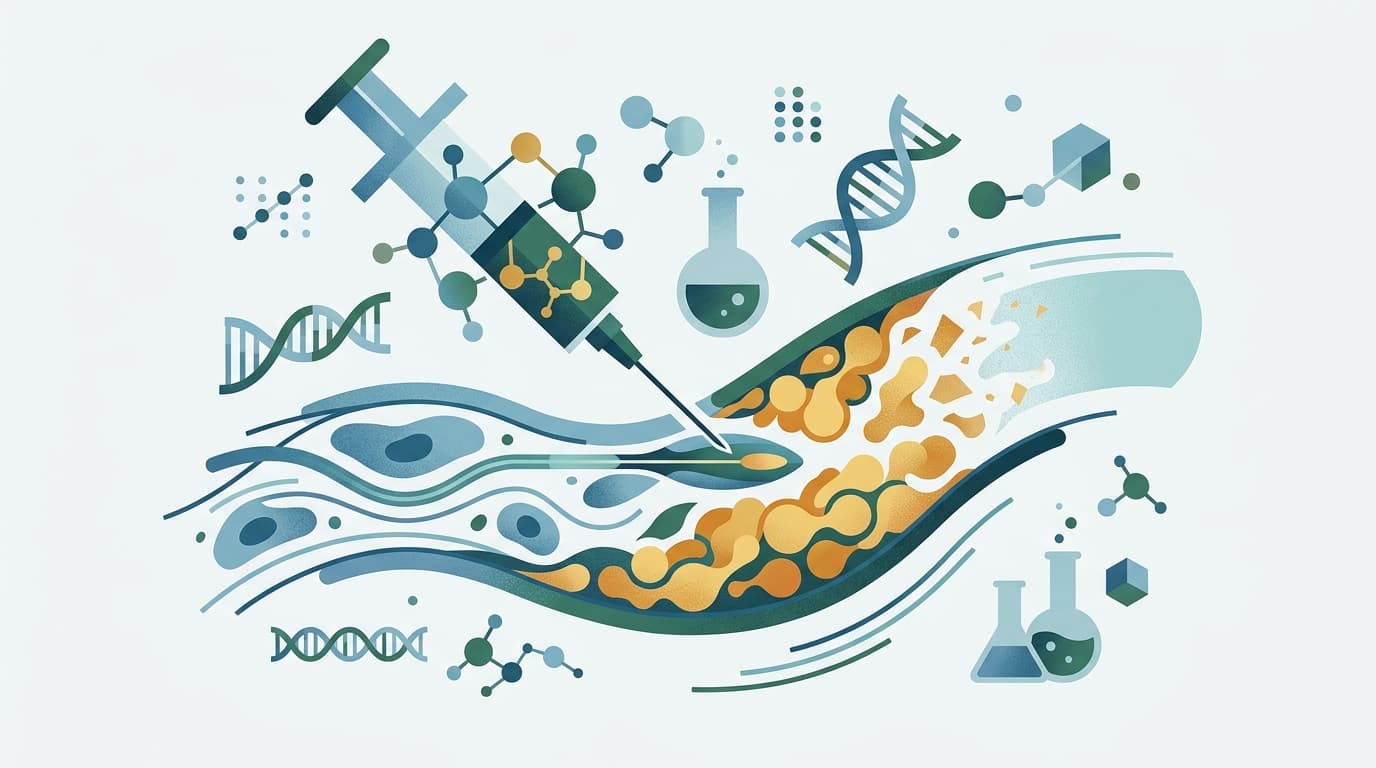
The therapy uses CRISPR to snip away tiny regulatory speed bumps near the LDLR gene in liver cells. Think of LDLR as your body's built-in cholesterol vacuum cleaner. In patients with HeFH, that vacuum works, but it's running on low power. EDIT-401 removes the genetic dimmer switch, boosting the production of LDL receptors so the liver can suck more cholesterol out of the bloodstream.
The delivery vehicle? Lipid nanoparticles (tiny fat bubbles, the same tech that made mRNA COVID vaccines possible) carry the CRISPR machinery directly to liver cells. One injection. No repeat dosing. No daily pills.
In non-human primates, a single dose of EDIT-401 produced a 90% or greater reduction in LDL cholesterol. That effect held for up to 10 months in ongoing studies, with no signs of wearing off. The therapy also boosted LDL receptor protein in the liver by roughly .

Cerevance, a company literally born from Takeda's corporate restructuring, just posted a Phase 3 win in Parkinson's disease. The drug gave patients back 37 minutes of normalcy per day, and in a field starved for progress, that matters more than you'd think.


Join thousands of biotech professionals who start their day with our free, daily briefing.

To put that in perspective: the most powerful PCSK9 inhibitors on the market today (injectable drugs like Repatha and Praluent that patients take every two to four weeks) typically reduce LDL-C by about 50-60%. EDIT-401's preclinical numbers blow that out of the water, and they come from a single dose.
Editas also reported reductions in two other worrisome lipid markers, Lp(a) and ApoB, suggesting EDIT-401's benefits might extend beyond just LDL cholesterol. That's a meaningful bonus; Lp(a) is a notoriously stubborn cardiovascular risk factor that almost nothing on the market can touch.
The scale of this opportunity is almost absurd. About 71 million U.S. adults have elevated LDL cholesterol. About 3% of adults walk around with severely high levels (LDL-C above 190 mg/dL), many of them unaware.
And even among people who know they have a problem, treatment rates are dismal. Fewer than half of patients with high LDL-C receive any treatment at all. Among those who do, fewer than 35% actually hit their target levels. Statins work, but they only work if people take them. And millions don't, whether because of side effects, forgetfulness, or just hating the idea of a daily pill for the rest of their lives.
A one-and-done gene-editing therapy sidesteps that entire compliance problem. It's the difference between telling someone to floss every night forever and just giving them teeth that don't get cavities.
Editas isn't the first company to aim CRISPR at cholesterol. CRISPR Therapeutics is further ahead with CTX310, which targets a different gene called ANGPTL3. That program has already completed a Phase 1a study in 15 patients and moved into Phase 1b, with one-year follow-up data showing durable reductions in both LDL cholesterol and triglycerides.
Verve Therapeutics has been working on PCSK9-directed gene editing (a different cholesterol target) and presented early clinical findings. But Verve's public human data is less mature than what CTX310 has shown so far.
EDIT-401 enters the race as the newest competitor, and the only one using the LDLR upregulation approach. That's a meaningful differentiator. While CTX310 and Verve's programs knock out genes that raise cholesterol, EDIT-401 boosts the gene that lowers it. Same destination, completely different route.
Whether that route turns out to be better, worse, or just different will depend on human data. And now, for the first time, Editas gets to find out.
Guggenheim responded to the news with an upgrade to Buy, citing the trial timeline and program potential. The authorization represents a major inflection point for Editas, which spent years pivoting away from its earlier sickle cell and eye disease programs toward an in vivo CRISPR platform built around liver-targeted gene editing.
The company has laid out an aggressive milestone calendar: initial safety and tolerability data in Q1 2027, followed by topline results from Part 1 of the trial later that year. If those numbers even partially mirror the primate data, this stock will not stay quiet for long.
This trial matters beyond Editas. It marks a turning point for the entire CRISPR field. For years, gene editing has proven itself in rare diseases: sickle cell, beta-thalassemia, conditions affecting thousands of patients. Important work, but commercially limited.
Hyperlipidemia is a different animal. With tens of millions of affected Americans and a standard of care that leaves most patients undertreated, this is CRISPR stepping onto the main stage. The FDA has recommended 15-year safety follow-up for gene-editing therapies, which tells you regulators are taking the long view on these treatments.
If EDIT-401 works in humans (a big if, as primate results don't always translate), the implications ripple far beyond one company. It would validate in vivo CRISPR for common diseases and open the door to similar approaches for hypertension, diabetes, and other conditions that kill millions through chronic mismanagement.
One injection. One edit. Potentially one less disease to worry about for the rest of your life. The first patients will soon find out if that promise is real.
Telix Pharmaceuticals is spending up to $2.35 billion to acquire ITM Isotope Technologies, and the real story isn't the pipeline. It's a high-stakes bet on controlling the fragile supply chain that the entire radiopharmaceutical industry depends on.