An Ebola Pill Gets Its First Real Test in the Middle of an Outbreak
Congo just started testing Gilead's oral antiviral obeldesivir as post-exposure prevention during an active Bundibugyo Ebola outbreak that has killed over 700 people. With no approved treatments for this Ebola species, the trial could reshape how the world fights outbreaks.
Taking a Pill to a Gunfight
Imagine trying to stop a wildfire with a garden hose you've never actually tested outside the lab. That's roughly where the world has been with Bundibugyo Ebola: no proven treatments, no approved vaccines, and an outbreak tearing through eastern Congo with nearly 2,000 confirmed cases and over 700 deaths since May.
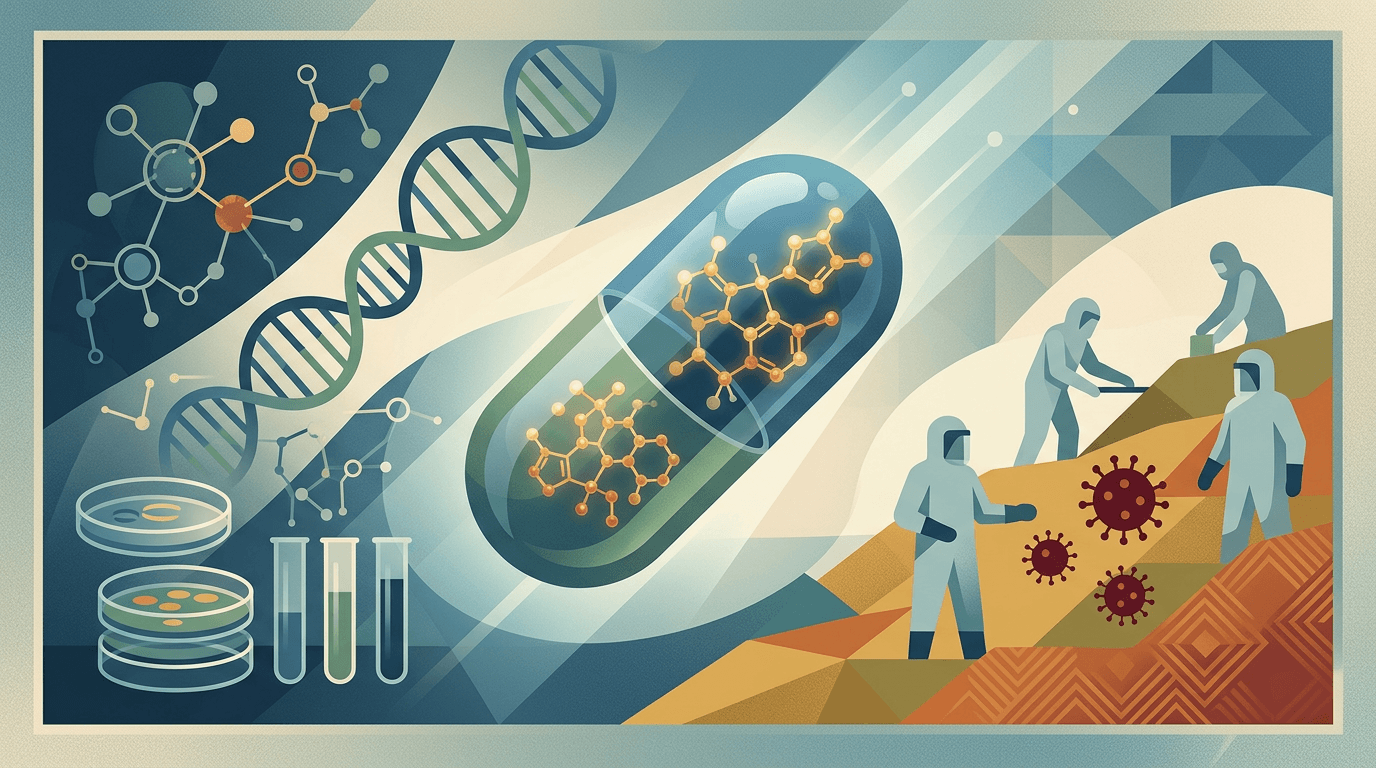
On July 14, researchers in Congo's Ituri province started enrolling people in a clinical trial of obeldesivir, an experimental oral antiviral made by Gilead Sciences. The drug isn't meant for patients who are already sick. It's meant for people who've been exposed to the virus but haven't shown symptoms yet. Think of it like a morning-after pill, but for Ebola contact.
If it works, it could fundamentally change how the world fights Ebola outbreaks. If it doesn't, well, the people enrolled are running out of other options anyway.
Why the Current Arsenal Is Basically Empty
You might be thinking: don't we already have Ebola drugs? We do. Two of them, in fact. Inmazeb (a cocktail of three antibodies) and Ansuvimab (a single antibody) both won FDA approval after a landmark trial called PALM, run during a 2018–2019 outbreak in Congo. In that study, both antibody treatments cut the death rate to roughly 34%, compared with 51% for the older drug ZMapp.
Here's the catch: both are approved only for Zaire ebolavirus. The current outbreak is caused by Bundibugyo ebolavirus, a different species entirely. It's like having a flu shot that only works against influenza A when you're dealing with influenza B. The antibodies target specific structures on the Zaire virus; nobody has proven they work against Bundibugyo in patients.
That leaves doctors in Ituri with supportive care (fluids, fever management, hope) and not much else. The need for something new isn't academic. It's urgent.
Remdesivir's Cooler, Younger Sibling
Obeldesivir has an interesting family tree. Its active ingredient, once it's processed by your body, is the that makes remdesivir work. Both drugs ultimately produce a compound called GS-443902, which jams the copying machinery (RNA polymerase) that viruses use to replicate. It's like putting sugar in the gas tank of viral replication.
Get tomorrow's biotech intelligence before your competitors.
Join thousands of biotech professionals who start their day with our free, daily briefing.
exact same molecule
The difference is delivery. Remdesivir requires an IV drip in a hospital. Obeldesivir is a pill you swallow. In an outbreak zone where hospitals are overwhelmed and IV supplies are scarce, that distinction matters enormously.
Gilead originally developed obeldesivir for COVID-19, but those trials didn't pan out; at least one major Phase 3 study was terminated early because lower-than-expected event rates meant it wasn't going to demonstrate a statistically significant treatment effect. The company has since pivoted the drug toward RSV in children and, now, filoviruses like Ebola.
The filovirus data, though early, is striking. In a study using cynomolgus monkeys infected with Sudan ebolavirus (another Ebola species), once-daily oral obeldesivir for 10 days provided 100% survival. Every treated animal lived. Every untreated control died. That's the kind of preclinical result that gets people's attention.
The Trial Design: Simple Concept, Brutal Logistics
The study is called EBO-PEP (Ebola Post-Exposure Prophylaxis), and the concept is straightforward. Researchers identify people who've had high-risk contact with a confirmed Bundibugyo Ebola case within the past five days: touching a sick person, handling a body, suffering a needle-stick injury. Those contacts, provided they're at least 12 years old and still symptom-free, get enrolled.
Participants take obeldesivir pills twice daily for 10 days, then researchers monitor them daily for 21 days (the virus's incubation period) with a final check-up at 42 days. The goal is to recruit about 1,000 people and measure whether the drug prevents them from developing Ebola.
The trial is led by Congo's National Institute for Biomedical Research (INRB), with support from France's ANRS, the humanitarian organizations ALIMA and Médecins Sans Frontières, plus technical guidance from WHO and funding from Africa CDC and the European Commission's Global Health EDCTP3 partnership.
But money is tight. Initial funding totals roughly €3.4 million from the EU and $6 million combined from Africa CDC, South Africa, and Congo. The remaining funding gap sits at around $16 million, with another $2–3 million needed just for contact tracing, the backbone of identifying eligible participants.
Running Science in a War Zone
Ituri province isn't just dealing with Ebola. It's one of the most unstable regions in central Africa, with armed groups, displacement, and fractured infrastructure. Running a clinical trial here is like trying to conduct a chemistry experiment on a roller coaster.
The PALM trial during the 2018–2019 Zaire Ebola outbreak proved it could be done. That study randomized 681 patients across multiple treatment centers in active conflict zones and produced data strong enough to get two drugs approved by the FDA. It set the precedent that rigorous research can happen during an epidemic, not just after one.
But the PALM model also revealed the pain points. Field monitoring was hampered by security threats and poor roads. Community engagement required constant dialogue to maintain trust, especially when rumors about the trial's purpose circulated.
The obeldesivir trial faces all those same challenges, plus a new one: it's testing prevention, not treatment. That means researchers need a robust contact-tracing operation to find eligible participants before they get sick. WHO experts have flagged that contact tracing in parts of Congo remains operationally difficult. If you can't find the exposed contacts fast enough, the trial stalls.
The Bigger Picture: What Success Would Mean
Right now, there are parallel trials happening for people who already have Bundibugyo Ebola. The PARTNERS trial is testing the antibody MBP134 and remdesivir (as an IV treatment) in confirmed patients. Gilead is donating remdesivir for that effort, while reserving obeldesivir for the prevention study.
Children under 12 and pregnant or breastfeeding women, who are excluded from the obeldesivir trial, can receive remdesivir through a separate compassionate-use protocol. It's an imperfect patchwork, but it represents the most comprehensive Ebola research portfolio ever assembled during an active outbreak of a non-Zaire species.
If obeldesivir proves it can prevent Bundibugyo Ebola in exposed contacts, the implications extend far beyond this outbreak. An oral antiviral that works as post-exposure prophylaxis could become standard equipment in the outbreak response toolkit: something health workers hand out to contacts at home instead of waiting for them to show up at a treatment center already dying.
The virus has killed 719 people in Congo and spread across five provinces and into Uganda (20 cases, 2 deaths). It reached as far as France through a traveler. A pill that could break the chain of transmission at the contact level would be, to borrow a technical term, a very big deal.
The first participants are enrolled. The clock is ticking. And somewhere in Ituri, a twice-daily pill is being asked to do what no drug has done before.
Clinical & Regulatory5 min read
The FDA Wants to Build Drug Factories Inside Hospitals
The FDA proposed a new rule that could let drug manufacturers register entire networks of modular production units as a single facility. For cell and gene therapies, it's the regulatory foundation for a future where your cancer treatment gets made down the hall, not across the country.