
Sensorion just reported the first human data from its gene therapy trial in deaf toddlers, and children who previously heard nothing are starting to respond to sound. The results are early, but they could reshape how we treat one of the most common genetic causes of childhood deafness.
Imagine being a parent who has never heard your child react to your voice. No turning toward a clap. No startling at a loud noise. Nothing.
Now imagine a single injection into the inner ear changes that.
Sensorion just reported the first human data from its AUDIOGENE trial, a Phase 1/2 study testing a gene therapy called SENS-501 in babies and toddlers born profoundly deaf. The results are early, but they're real: children who couldn't hear anything are starting to respond to sound. And the safety profile so far? Spotless.
The children in this trial have a condition called DFNB9. It's caused by mutations in both copies of a gene called OTOF, which makes a protein called otoferlin. Think of otoferlin as the courier that carries sound signals from your inner ear's hair cells to your auditory nerve. Without it, the hair cells work fine, but the message never gets delivered. The lights are on, but nobody's answering the phone.
DFNB9 accounts for roughly 2 to 8% of all genetic deafness, affecting an estimated 200,000 people worldwide. It's one of the most common single-gene causes of congenital hearing loss, and right now the only real option is a cochlear implant: a surgically placed electronic device that bypasses the broken synapse entirely. Implants work reasonably well, but they're not normal hearing. Speech in noisy rooms, music appreciation, whispered conversations; all of these remain difficult even with the best devices.
What if you could just fix the gene instead?
This is where the engineering challenge gets interesting. Gene therapies typically use a tiny virus called AAV (adeno-associated virus) to shuttle a working copy of a gene into the right cells. It's like stuffing a letter into an envelope and mailing it to a specific address. The problem: otoferlin's genetic instructions are about 6,000 base pairs long, and AAV can only carry around 4,700. The letter doesn't fit in the envelope.
Sensorion's solution is a dual-vector system. They split the otoferlin gene across two AAV8 viruses, each carrying half the instructions plus overlapping sequences that help the cell stitch them back together. Both halves need to reach the same inner hair cell, and the cell has to reassemble the full protein correctly. It's a bit like shipping a piece of IKEA furniture in two separate boxes and hoping the customer can build it without losing any screws.

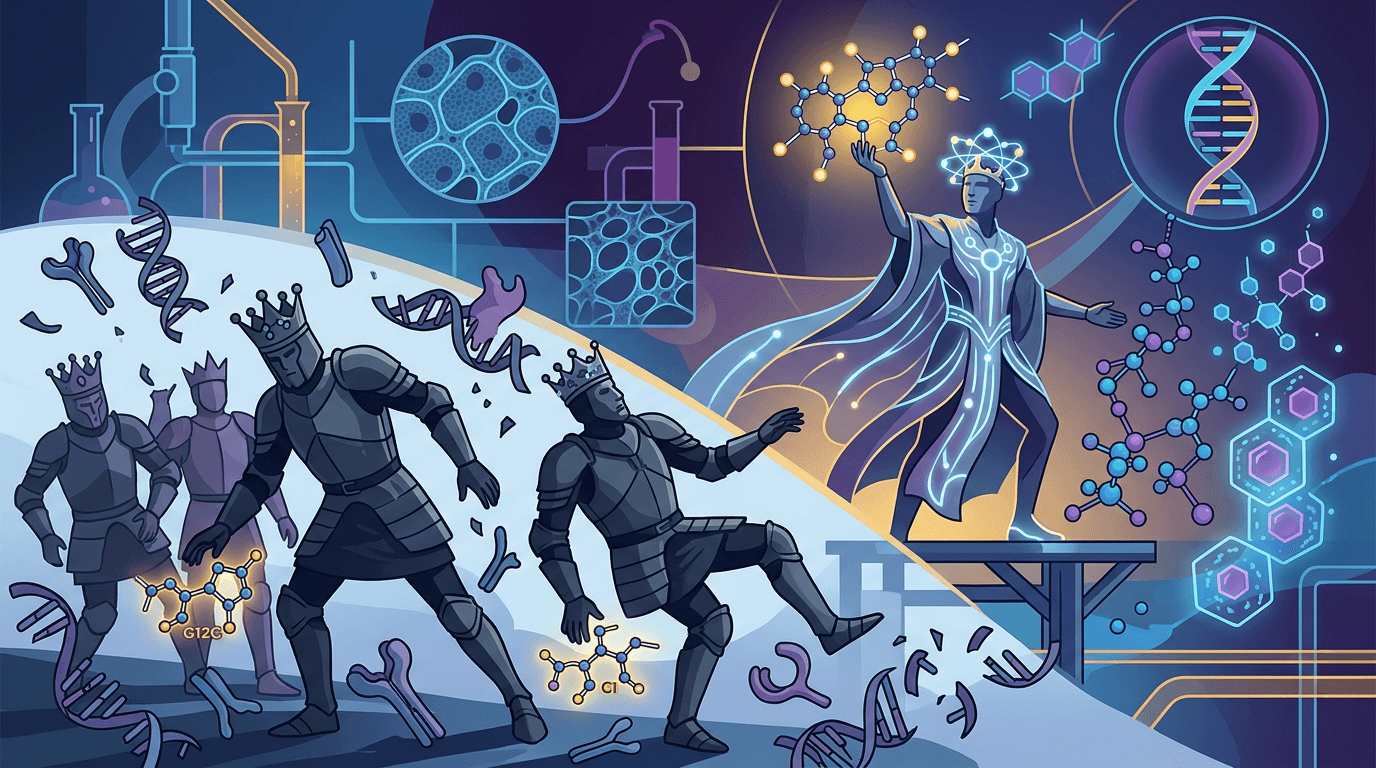
Roche's divarasib just outperformed both approved KRAS G12C inhibitors in a head-to-head Phase 3 trial, hitting superiority on both progression-free survival and overall survival. Wall Street says it's a solid win, but the real billions hinge on what comes next.


Join thousands of biotech professionals who start their day with our free, daily briefing.

The fact that it works at all is remarkable. The fact that it might restore hearing in deaf children is extraordinary.
Sensorion enrolled six children across two dose cohorts (three at a low dose, three at a higher dose), all between 6 and 31 months old, all without cochlear implants. Each child received a single injection into one ear during a specialized surgical procedure.
Safety first: across all six patients, there were no serious adverse events and no dose-limiting toxicities. Vestibular function (balance) and otoacoustic emissions (a sign that outer hair cells are intact) remained unchanged from baseline. An independent Data Monitoring Committee reviewed the data twice and raised zero safety concerns both times.
Now the exciting part. In the low-dose group, Patient 3 (injected at 11 months old) showed positive auditory brainstem responses at two frequencies by the three-month mark, with the best threshold reaching 70 decibels. That's not normal hearing, but for a child who previously registered nothing, it's a seismic shift. Parents reported a 145% improvement on a standardized infant hearing behavior scale, noting meaningful responses to sounds and voices for the first time.
At the higher dose, results were even more encouraging. Two of three children showed improvements on pure-tone audiometry at three months, with best thresholds of 60 and 70 decibels respectively. Those improvements held steady at six months, suggesting the effect is durable rather than a flicker.
The pattern across both dose levels points toward a dose-dependent biological effect: more virus, more hearing. That's exactly what you want to see in an early-stage gene therapy trial.
Sensorion isn't operating in a vacuum. Regeneron's competing OTOF gene therapy, now branded Otarmeni, already received FDA accelerated approval for pediatric and adult patients with otoferlin-related deafness. Their CHORD trial treated 20 patients, and the numbers are impressive: about 80% achieved meaningful hearing improvement by 24 weeks, and roughly 42% of those followed to 48 weeks reached normal hearing, including the ability to detect whispers.
So why does Sensorion's data matter if someone else already crossed the finish line?
A few reasons. First, one approved product doesn't satisfy global demand for 200,000 affected patients across dozens of countries. Second, competition drives innovation; different vector designs, delivery approaches, and dosing strategies could yield better outcomes for certain patient populations. Third, Sensorion is targeting a particularly young cohort (under 31 months), which is critical because the brain's ability to develop language from auditory input has a narrow developmental window. Treating earlier could mean better long-term outcomes.
Also worth noting: Eli Lilly's Akouos unit dosed its first U.S. child in October 2023 with its own OTOF gene therapy but hasn't published detailed efficacy data yet. Chinese groups including Otovia Therapeutics have reported early positive results as well. This field is heating up fast.
The broader significance here goes beyond any single company's pipeline. For decades, inner-ear gene therapy was considered borderline impossible. The cochlea is tiny, surgically tricky, and immunologically sensitive. Delivering a protein as large as otoferlin via AAV required creative molecular engineering that many doubted would translate to humans.
Now we have multiple programs showing it works. Children born into silence are hearing their parents' voices. A 2025 review described the field as reaching "transformative clinical milestones," and that assessment looks increasingly accurate.
Sensorion still has a long road ahead. Six patients with three-to-six-month follow-up is a proof of concept, not a finished product. The company needs to pick its recommended dose, expand enrollment, and eventually generate the kind of robust, long-term data that regulators require. But the signal is clear, the safety is clean, and the science is sound (pun absolutely intended).
For 200,000 families around the world, the envelope may finally fit the letter.
The FDA is about to let a panel of peptide-selling doctors and pharmacists vote on whether their own products should be legal. Critics say the July advisory committee meeting is a case study in regulatory capture, with billions in gray-market sales hanging in the balance.