CSL Just Handed Its Drug Pipeline to Amazon's Cloud
CSL just plugged its entire drug development operation into Amazon's cloud. It's not alone: the biggest pharma companies on the planet are racing to lock in hyperscale AI partners, and the deals keep getting bigger.
The Pharma Lab Is Moving to the Cloud
Drug discovery is slow. Painfully, expensively, soul-crushingly slow. The average new medicine takes over a decade to get from lab bench to pharmacy shelf. So when one of the world's largest biotech companies decides to plug its entire research operation into Amazon's cloud, it's worth paying attention.
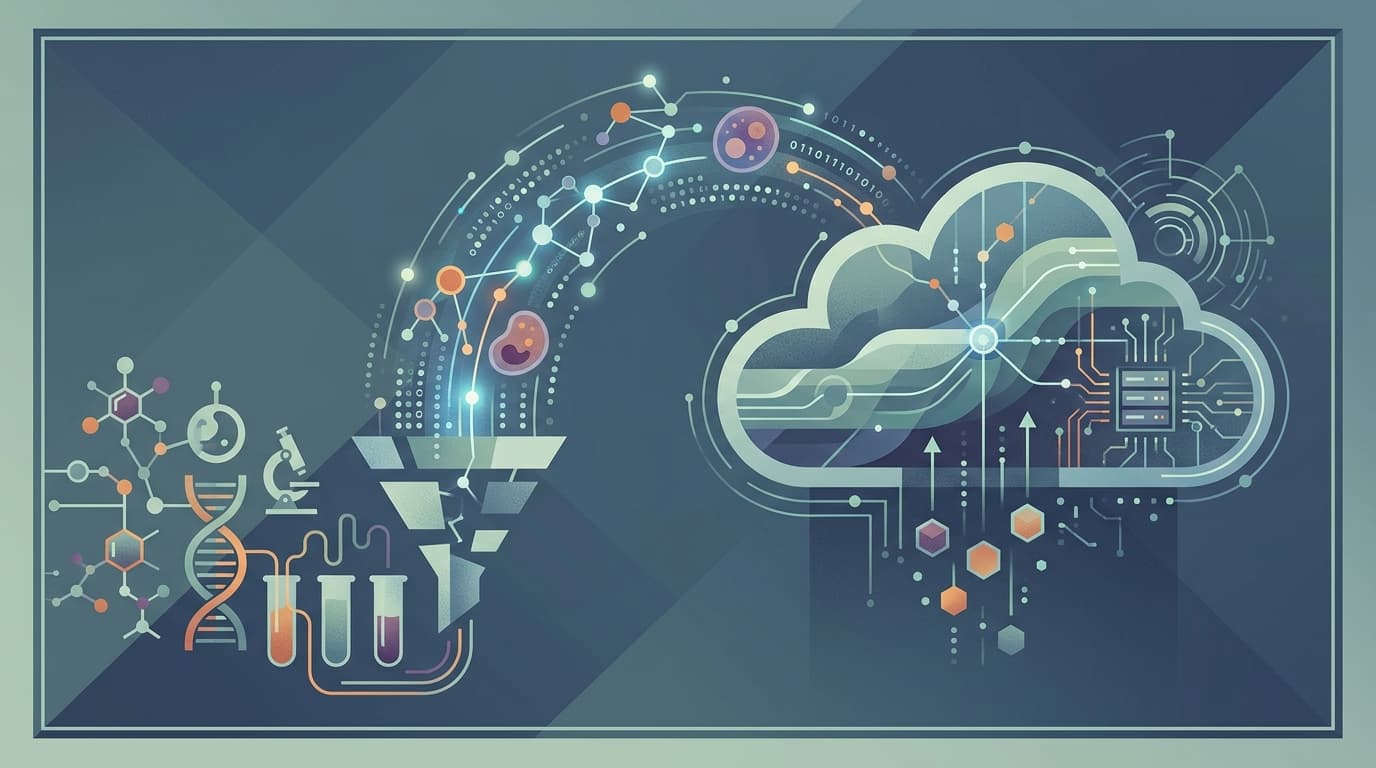
CSL Limited, the Australian biotech giant behind blockbuster plasma therapies and vaccines, announced a collaboration with Amazon Web Services (AWS) to deploy AI and cloud technology across its research and clinical development pipeline. Not a pilot. Not a proof of concept in one department. This is an enterprise-wide bet that cloud-scale AI can fundamentally change how CSL finds and develops drugs.
And CSL isn't alone. It's the latest domino to fall in a wave of billion-dollar pharma-cloud marriages that's rewriting the rules of drug development.
What CSL Is Actually Doing
Let's get specific, because "AI partnership" has become one of those phrases that can mean anything from a ChatGPT subscription to a full data-center overhaul.
CSL's deal with AWS covers three big buckets. First: research acceleration. The goal is to connect and analyze scientific data more effectively so CSL's scientists can spot promising drug targets earlier. Think of it like upgrading from a paper map to GPS; the destination is the same, but you find it a lot faster.
Second: tighter integration between the lab and the computer. Right now, in most pharma companies, experimental findings from the wet lab and computational models exist in semi-separate universes. CSL wants those two worlds talking to each other in real time, so a result from Tuesday's experiment informs Wednesday's simulation.
Third (and this is where it gets practical): reducing the mountain of manual work in clinical development. Protocol authoring, clinical data management, regulatory submissions: these are the unglamorous, paper-heavy tasks that slow trials down. AWS tools, including its Amazon Bedrock AI platform, are being deployed to automate chunks of that workload.
Get tomorrow's biotech intelligence before your competitors.
Join thousands of biotech professionals who start their day with our free, daily briefing.
CSL emphasized that all of this is happening within strict data governance and inspection-readiness standards. In pharma, that caveat matters. Regulators don't care how cool your AI is if you can't prove your data is traceable and trustworthy.
CSL Didn't Wake Up Yesterday
This partnership might sound like CSL suddenly caught the AI bug, but the company has been building toward this moment for years. Back in 2018 and 2019, CSL was already calling AI "core" to its 2030 strategy. By 2020, it had set up a Centre of Excellence for advanced analytics and a Community of Practice to spread AI adoption across business teams.
By 2023, the company was automating lab workflows and collaborating with Monash University on an "AI Biochemist" project. And heading into 2026, CSL built out formal AI governance structures covering privacy, cybersecurity, and model integrity.
The AWS deal is less of a pivot and more of a graduation. CSL spent years laying the foundation; now it's building the house. The company is also undertaking a massive cloud migration involving more than 5,000 servers and over 1,000 applications across 29 data centers. That kind of infrastructure overhaul doesn't happen on a whim.
Welcome to the Pharma Cloud Arms Race
CSL's move fits a pattern that's becoming impossible to ignore. The biggest pharma companies on the planet are racing to lock in hyperscale cloud partners, and the deals keep getting bigger.
Consider Merck's reported multi-year partnership with Google Cloud, valued at up to $1 billion, to deploy Google's Gemini AI across R&D, manufacturing, commercial operations, and corporate functions. Or Novo Nordisk's 2026 collaboration with AWS to create an AI co-innovation hub in London, aimed at compressing the path from drug target to first human dose.
Pfizer has given roughly 1,500 scientists access to generative AI tools built on Amazon Bedrock and Anthropic's Claude. AWS says that 19 of the top 20 global pharmaceutical companies already use its platform for sensitive research workloads.
This isn't a trend. It's a migration. And the companies not moving are the ones that should be worried.
Why It's Harder Than It Looks
Before we get too starry-eyed, let's talk about the catch. Measuring ROI on cloud-AI deals in biopharma is notoriously difficult. The benefits are indirect and delayed: faster timelines, better target selection, less administrative friction. None of those show up as a line item on next quarter's earnings call.
Then there's the validation problem. Every AI-driven workflow in drug development still has to meet regulatory standards. You can't just tell the FDA, "Our algorithm said it was fine." Governance, traceability, and audit-readiness add layers of complexity that don't exist when, say, a retail company uses AI to optimize its supply chain.
Data integration is another headache. Most pharma companies have lab systems, clinical databases, and computational platforms that grew up separately and don't play nicely together. Connecting them is less like plugging in a USB drive and more like teaching three people who speak different languages to write a novel together.
Analysts generally view CSL's AWS partnership as a long-term R&D productivity play, not a near-term revenue booster. The payoff will be measured in shorter development cycles and smarter pipeline decisions, not in this year's balance sheet.
Where AI Could Matter Most for CSL
CSL's pipeline is heavily weighted toward rare and serious diseases, particularly in immunology. The company is pursuing treatments for primary and secondary immunodeficiency, hereditary angioedema, autoimmune conditions, and rare kidney and liver diseases. It has at least 59 clinical trials in progress across these areas.
Rare diseases are, ironically, where AI might have the biggest impact. Patient populations are small and scattered. Finding the right people for a clinical trial is like searching for a specific grain of sand on a beach. AI-powered patient matching and biomarker discovery could dramatically speed up enrollment and improve trial design.
On the research side, CSL is hunting for novel drug targets in complex immune-mediated diseases: conditions where the body's defense system attacks itself in unpredictable ways. Sifting through that biological complexity is exactly the kind of pattern-recognition problem that AI was built to solve.
The Bottom Line
CSL's AWS deal isn't revolutionary on its own. It's one more tile in a mosaic that's becoming clearer by the month: the future of drug development runs through the cloud.
The interesting question isn't whether pharma companies will adopt enterprise AI (they will), but which ones will actually translate that investment into better drugs, faster. Cloud infrastructure is a tool, not a strategy. The companies that win will be the ones that were already doing the hard, unglamorous work of cleaning their data, training their people, and building governance frameworks before they signed the big deal.
CSL has been doing exactly that since 2018. Whether that head start pays off in faster approvals and smarter pipeline bets is the billion-dollar question. Literally.
Clinical & Regulatory
4 min read
The $3.95 Million Drug That Costs More Than Most Houses
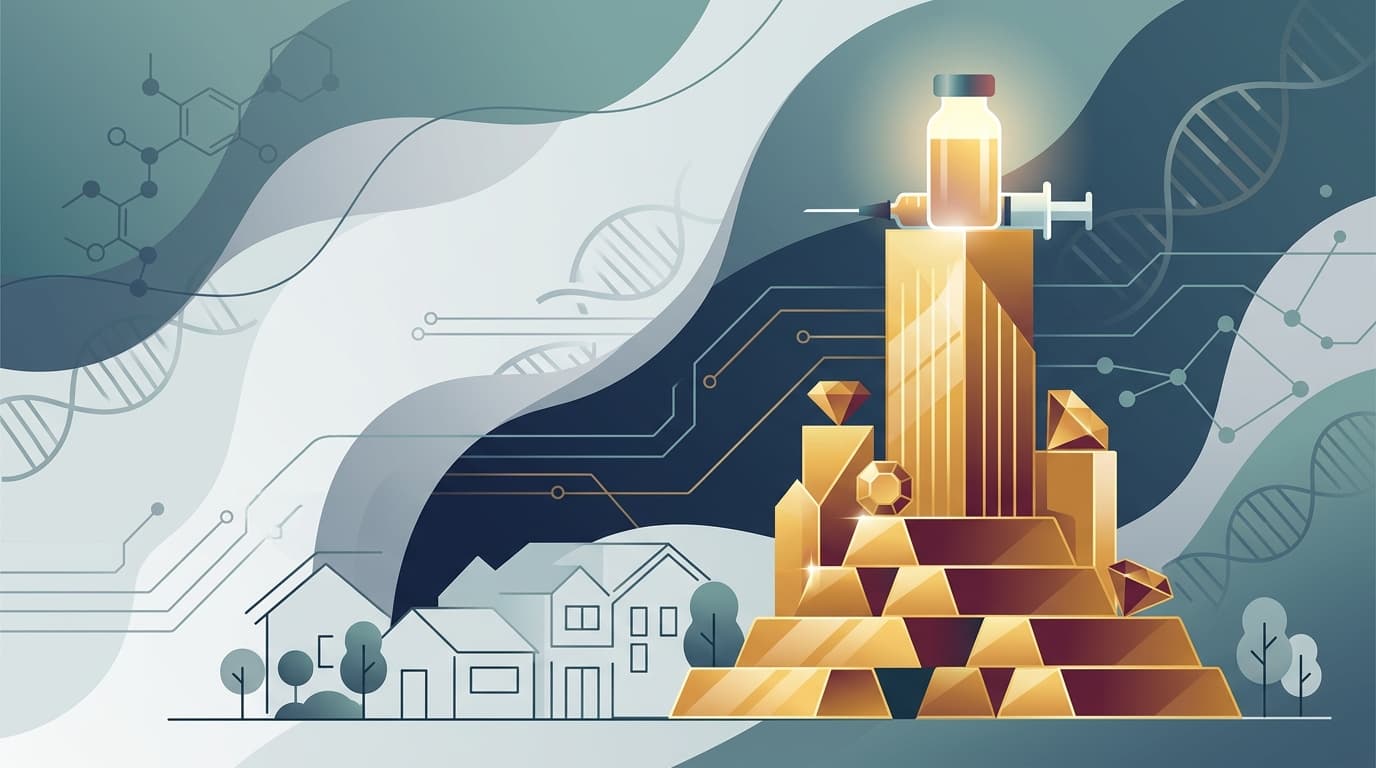
Ultragenyx just priced its new gene therapy Fayuvi at $3.95 million per patient, making it the second most expensive drug in the world. It's a one-time treatment for a fatal childhood brain disease with zero alternatives, and it's reigniting the fiercest debate in biotech: who pays for a genetic cure?