A Child Died in a Chinese Gene-Editing Trial. The World Found Out a Year Later.
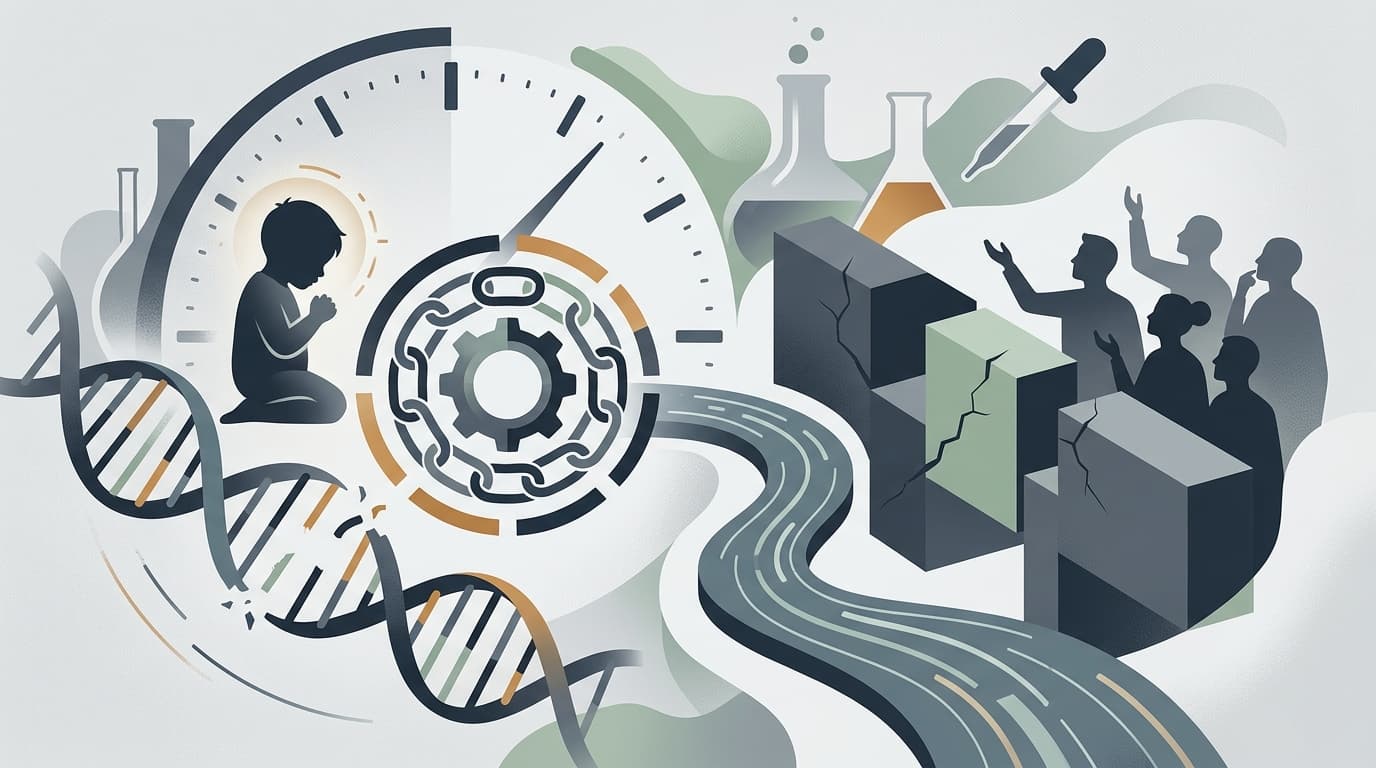
A boy with Duchenne muscular dystrophy died in a Chinese CRISPR trial in 2025, and the world didn't find out until a year later. The delayed disclosure, ignored preclinical red flags, and persistent oversight gaps are raising urgent questions about whether China's gene-editing regulations are worth the paper they're written on.
The Silence Was the Scandal
Sometime in 2025, a young boy with Duchenne muscular dystrophy received an experimental CRISPR gene-editing therapy at Shanghai Children's Medical Center. He was between 4 and 8 years old. He developed acute respiratory distress syndrome, a catastrophic immune reaction that overwhelmed his body. He died.
And then, for roughly a year, nobody outside the trial said a word about it.
It took STAT News pressing the company, HuidaGene Therapeutics, before the death became public knowledge. The company eventually confirmed the boy died in August 2025 after receiving a high-dose infusion of its experimental therapy, HG302. By then, the silence had already become the story.
What Actually Happened
HuidaGene's HG302 trial enrolled four boys, ages 4 to 8, all with Duchenne muscular dystrophy (DMD), a genetic disease that progressively destroys muscle tissue. Think of it like the body slowly losing the blueprint for a critical structural protein. Without it, muscles deteriorate, and most patients don't survive past their 20s or 30s.
The therapy used an AAV (adeno-associated virus) to deliver CRISPR gene-editing tools into the body. In plain terms: a modified virus carried the molecular scissors to the right cells, where they'd attempt to fix the broken gene. The boy received a high-dose systemic infusion, meaning the therapy flooded his entire system rather than targeting a specific tissue.
His immune system revolted. The response triggered acute respiratory distress syndrome (ARDS), which is essentially the lungs becoming so inflamed they can no longer do their job. HuidaGene attributed the death to this severe immune reaction.
This wasn't even the only pediatric gene-editing death in China around the same period. A 6-year-old girl died in a separate, investigator-led base-editing trial at Xinhua Hospital in Shanghai. That trial targeted Snijders Blok-Campeau syndrome, a rare neurodevelopmental disorder. Two children, two trials, two deaths; neither disclosed promptly.
Get tomorrow's biotech intelligence before your competitors.
Join thousands of biotech professionals who start their day with our free, daily briefing.
The Preclinical Red Flags That Got Ignored
When experts reviewed the available evidence, a troubling pattern emerged: the warning signs were there before the trial ever started.
Multiple scientists and bioethicists pointed out that animal studies (primate data, specifically) had shown serious liver and kidney damage. In drug development, animal studies are supposed to be the canary in the coal mine. If primates are showing organ damage, that's the canary falling off its perch. You don't keep digging.
Yet the program advanced to human testing anyway.
Experts also questioned whether the risk-benefit balance made any sense. DMD is devastating, but it's not immediately life-threatening in a 4-to-8-year-old. A first-in-human trial with a high viral dose carries enormous uncertainty, and critics argued that parents may not have fully understood that death was a realistic possibility, not just a theoretical one buried in fine print.
The Chinese Society of Gene & Cell Therapy responded by calling for robust preclinical evidence, rigorous ethical governance, transparency, and timely reporting of serious adverse events. Which sounds like a list of everything that may have gone wrong here.
China's Oversight Problem Has a Name: He Jiankui
If this story feels familiar, it should. In 2018, Chinese researcher He Jiankui shocked the world by announcing he'd created the first gene-edited babies, CRISPR-modified twin girls whose genomes were altered before birth. The scientific community was horrified. Not because gene editing doesn't work, but because He acted without proper oversight, transparency, or ethical review.
He went to prison. China responded by tightening its rules. New civil and criminal law provisions targeted unauthorized genome editing. A sweeping biomedical technology regulation called Order 818 was signed in 2025 and took effect on May 1, 2026. It restricts investigator-initiated trials to top-tier hospitals, adds filing and review requirements, and creates penalty mechanisms.
On paper, China's regulatory framework is stronger than it was in 2018. In practice, the latest deaths suggest the gap between written rules and real-world enforcement is still dangerously wide. Legal analyses of Order 818 note a glaring hole: the regulation creates reporting duties to the National Health Commission but does not require public disclosure of outcomes, including negative results. A company can technically comply with the law and still keep a child's death quiet.
How This Compares to the Rest of the World
In the United States, pediatric clinical trials operate under extra protections (called Subpart D). For studies involving more than minimal risk, the review board must find that the risk is justified by anticipated direct clinical benefit to the child. The logic is simple: don't test on the most vulnerable patients until you've built a safety profile in people who can consent for themselves.
China's rules require a parent or legal guardian to sign informed consent, and children aged 8 and older are supposed to have a voice. But the frameworks diverge in a critical way: the U.S. system presumes transparency as a baseline. Adverse events get reported. Deaths get disclosed. In China, as these cases demonstrate, disclosure still depends more on journalistic pressure than regulatory mandate.
Meanwhile, the broader global CRISPR safety record is actually encouraging. Programs like CRISPR Therapeutics' CTX310, which targets ANGPTL3 for refractory dyslipidemias, have reported no serious treatment-related adverse events in follow-up data. The technology itself isn't the villain. But technology in the hands of institutions that skip steps and hide outcomes? That's a different equation entirely.
Why This Matters Beyond China
Gene editing is one of the most promising frontiers in medicine. Approved CRISPR therapies already exist. Dozens of trials are underway globally. The field is moving fast, and that speed is mostly a good thing for patients who have no other options.
But public trust is the oxygen that keeps this field alive. Every undisclosed death, every trial that advances past flashing-red animal data, every parent who may not have fully understood the risks: these erode the foundation that legitimate researchers need to do their work.
The boy in Shanghai didn't just lose his life. He became a data point in an argument about whether the world can trust gene-editing research to police itself. And right now, the answer from China is deeply unsettling.
The rules look better on paper than they did in 2018. But a child is dead, the world found out a year late, and the preclinical warning signs were apparently sitting right there the whole time. Stronger regulations mean nothing if the culture of transparency doesn't follow. And until it does, every new gene-editing trial in China will carry an asterisk that the field cannot afford.
6 min read
The $3.9 Million Shot That Could Save Kids With No Other Options
For decades, families with Sanfilippo syndrome were told to take their kids home and love them. Now a $3.9 million gene therapy from Ultragenyx is the first FDA-approved treatment for this fatal childhood brain disease, and it's part of a wave that's reshaping rare disease medicine.