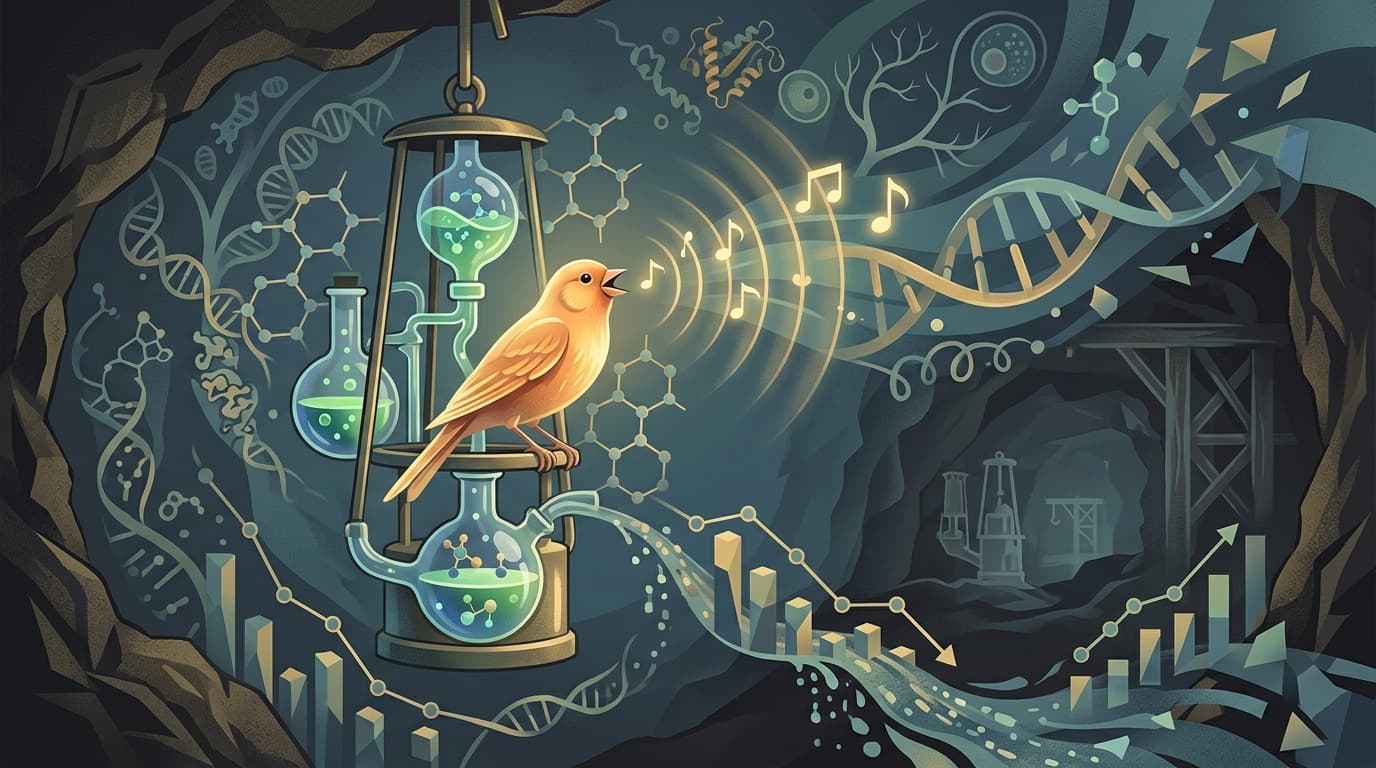

Charles River Laboratories just raised its profit forecast, and it's the closest thing biotech has to a recovery signal. As the gas station of drug development, when Charles River's business picks up, the whole industry is starting to spend again.
If you want to know whether biotech is actually recovering, don't ask the VCs. Don't ask the bankers. Ask the company that sells the picks and shovels.
Charles River Laboratories just raised its profit forecast, and that matters way more than one company's earnings call. Charles River is the gas station on the highway of drug development: nearly every biotech that runs preclinical studies, safety tests, or manufacturing passes through its doors at some point. When Charles River's business picks up, it means the whole industry is starting to spend again.
And after two brutal years of belt-tightening, that signal is worth paying attention to.
Charles River posted Q2 2026 revenue of $1.00 billion and raised its full-year adjusted EPS guidance to a range of $11.15–$11.45. On the surface, revenue actually fell 2.7% year over year. But here's the number that really matters: organic revenue grew 0.1%. That strips out divestitures and currency swings to show what's happening in the core business.
It's the company's best organic growth quarter since Q3 2023. Not exactly fireworks, but when you've been sliding downhill for two years, flat ground feels like a mountaintop.
The real tell was the DSA net book-to-bill ratio of 1.19x. Translation: for every dollar of revenue Charles River recognized in its Discovery and Safety Assessment segment, it booked $1.19 in new orders. That's like a restaurant where reservations are coming in faster than tables are turning over. It means the pipeline of future work is getting fatter, not thinner.
Charles River operates in three main segments. Think of them as the three stages of getting a drug to market.
Research Models and Services (RMS) is the earliest stage: lab animals and basic research tools. Discovery and Safety Assessment (DSA) is the middle stage: finding drug candidates and testing whether they're safe enough for humans. handles the late-stage work of actually making drugs at scale.

Bristol Myers Squibb just signed a deal worth up to $15.2 billion with China's Hengrui Pharmaceuticals, covering 13 early-stage drug programs. It's one of the year's biggest cross-border pharma transactions, and it's happening despite U.S.-China tensions that should theoretically make deals like this impossible.


Join thousands of biotech professionals who start their day with our free, daily briefing.
The recovery isn't hitting all three equally. DSA is leading the charge, with improving demand and stronger order intake. Manufacturing is showing better-than-expected execution. But RMS is still declining, guided for a mid-single-digit reported revenue decline in 2026.
That pattern makes sense. When biotech companies get fresh funding, the first thing they do is restart preclinical programs (DSA work). Manufacturing demand comes later, once drugs advance through trials. RMS tends to follow broader academic and early-discovery spending, which recovers last. The recovery is happening in the right order.
So why is biotech spending again? Because money is flowing back into the system, albeit selectively.
Biotech funding rebounded materially through 2025 and into the first half of 2026. But there's an important caveat: the capital is increasingly concentrated in later-stage biotechs running fewer, larger fundraises. Early-stage venture funding is still cautious. J.P. Morgan's data showed that therapeutics venture investment hit just $4.5 billion in Q2 2025, the lowest second quarter in five years.
Think of it like the housing market after a crash. The luxury segment recovers first because wealthy buyers have cash. Starter homes take longer. In biotech terms, well-funded late-stage companies are spending freely on CRO services, while seed-stage startups are still scraping by.
There's another force at play: the patent cliff. Hundreds of billions of dollars in branded drug sales face loss of exclusivity over the coming years. That's a ticking clock for Big Pharma, and it's pushing companies to aggressively replenish their pipelines through partnerships, acquisitions, and outsourced research. More pipeline work means more business for companies like Charles River.
The stock jumped to around $280 in mid-August, up from $266 to $277 earlier that week, with intraday highs near $288. TD Cowen maintained its Buy rating and hiked its price target from $235 to $300. The broader analyst consensus sits at Moderate Buy, though the average target of about $255.65 actually trails the current stock price. That suggests the market has already priced in a good chunk of the recovery story; not everyone on Wall Street has caught up yet.
The divergence is telling. Investors are betting the recovery has legs. Analysts are still modeling cautiously. Somebody's going to be wrong.
Let's zoom out. Charles River's improved outlook fits into a broader pattern of selective recovery across the CRO industry. Clinical trial starts stabilized in 2024 at roughly pre-pandemic levels. Large CROs like IQVIA, ICON, and Medpace showed stabilizing performance through 2025. And outsourcing intensity keeps climbing; Deloitte data shows 61% of late-stage pipeline assets in 2024 were externally sourced, up from 59% in 2023.
But this isn't 2021 all over again. Large-pharma R&D spending actually fell 3.6% in 2025 to $159.1 billion across the top 16 companies. Venture funding breadth is narrow. And Charles River itself divested its CDMO and Cell Solutions businesses at a $63.7 million loss, a reminder that even recovery stories come with cleanup costs.
The best way to frame 2026: normalization, not euphoria. The worst of the funding drought is over. Biotech companies are reopening their checkbooks, especially for preclinical and safety work. But the spending is disciplined, concentrated in later-stage programs with clearer paths to revenue.
Charles River's guidance raise is a leading indicator, not a victory lap. The real test comes over the next two quarters. If early-stage venture funding starts to thaw (not just mega-rounds for late-stage companies), that would signal a broader recovery. If clinical trial starts accelerate and manufacturing bookings pick up, the recovery moves from "tentative" to "durable."
For now, the canary is singing. It's not belting out an aria yet, but after two years of silence, even a few notes sound pretty good.
Reports claim FDA Commissioner Marty Makary personally tried to block KalVista's rare disease drug, an almost unprecedented intervention that raises uncomfortable questions about political influence at the agency. The drug got approved anyway, but the fallout is just beginning.