A $1.6 Billion Bet on a Drug That Doesn't Exist Yet
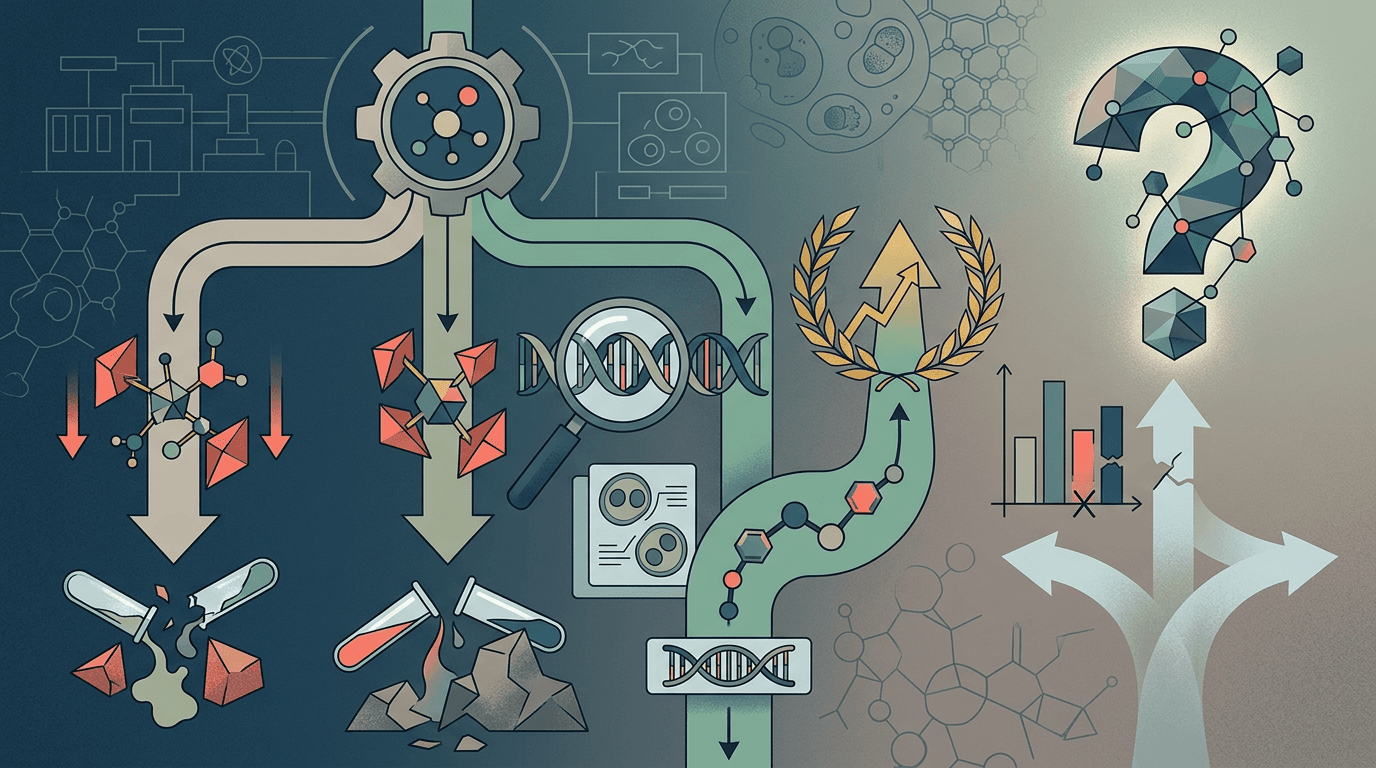
A stealth biotech you've never heard of just signed a $1.6 billion deal for a preclinical drug designed by AI. Boulevard Bio's bet on trispecific T-cell engagers for autoimmune disease could be brilliant, reckless, or both.
The Most Expensive Preclinical Bet You've Never Heard Of
Boulevard Bio is a biotech company so stealthy that its own backer's website doesn't even list it. Yet somehow, this Deerfield Management-backed startup just signed a licensing deal worth up to $1.6 billion for a single drug candidate that hasn't touched a human being.
The asset is called MTS-128, a trispecific T-cell engager (more on what that means in a second) licensed from Hong Kong-listed METiS TechBio. Boulevard gets exclusive worldwide rights to develop, manufacture, and sell it. METiS gets $20 million upfront, the promise of milestone payments that could reach $1.6 billion, and tiered royalties on any future sales.
Twenty million dollars now for the chance at $1.6 billion later. That's like putting down a security deposit on a penthouse you haven't even toured yet.
What's a Trispecific T-Cell Engager, and Why Should You Care?
Let's start with the basics. A T-cell engager is a type of engineered protein that grabs a T-cell (one of your immune system's killer cells) with one hand and a disease-causing cell with the other. It forces an introduction: "Hey, immune system, meet the bad guy. Now destroy it."
Most T-cell engagers on the market today are bispecific, meaning they have two hands. They grab two things. Trispecifics add a third hand, which opens up some genuinely interesting possibilities.
That third arm can do one of two things. It can grab a second target on the disease cell, making it harder for the cell to escape by disguising itself (a common problem called antigen escape). Or it can deliver a co-stimulatory signal to the T-cell, essentially giving it a double espresso before sending it into battle. Either way, the goal is the same: hit harder, hit smarter, cause less collateral damage.
In early trials for blood cancers, trispecific T-cell engagers targeting three proteins (BCMA, CD38, and CD3) have posted response rates around 79–84% across active dose levels. That's jaw-dropping for patients with disease that has already failed other treatments. We're still talking small, early studies, but the signal is strong.
Get tomorrow's biotech intelligence before your competitors.
Join thousands of biotech professionals who start their day with our free, daily briefing.
Not Cancer. Autoimmune Disease.
Here's where the story gets really interesting. MTS-128 isn't designed for cancer. It's aimed at autoimmune disease, a category where T-cell engagers are only beginning to find their footing.
The logic makes sense if you think about it. Autoimmune diseases happen when the immune system attacks your own body. If you can train a T-cell engager to selectively eliminate the rogue immune cells causing that attack, you might be able to "reset" the immune system without the scorched-earth approach of traditional immunosuppressants.
Boulevard Bio is clearly all-in on this thesis. The company's existing pipeline is built around B-cell-driven autoimmune diseases. Adding a trispecific T-cell engager to that portfolio turns Boulevard into a multi-modality autoimmune shop.
The specific autoimmune disease MTS-128 is targeting? METiS isn't saying. The three molecular targets? Also undisclosed. Boulevard is playing this one close to the vest.
The Deal Math: Generous or Insane?
Let's talk numbers, because the structure of this deal tells a story all by itself.
The $20 million upfront is modest. Compare that to Sanofi's recent deal with Kali Therapeutics for a similar trispecific autoimmune T-cell engager (KT501), which came with $180 million upfront and total milestones up to $1.05 billion. Or AbbVie's deal with IGI Therapeutics, which included a $700 million upfront for a trispecific T-cell engager in oncology.
Boulevard's low entry price reflects MTS-128's preclinical status. This molecule is still in the lab. No human has received a dose. The risk is enormous, and the deal structure acknowledges that: almost all of the $1.6 billion is back-loaded into milestones tied to development, regulatory, and commercial success.
Think of it as a call option. Boulevard is paying a relatively small premium now for the right to participate in what could be a massive payoff later. If MTS-128 flames out in early testing (as many preclinical assets do), Boulevard is out $20 million. Painful, but not fatal. If it works, the economics could be transformative.
For context, when Gilead acquired Ouro Medicines' BCMA T-cell engager for autoimmune disease earlier this year, it paid $1.67 billion upfront in a deal valued at up to $2.17 billion. That program was further along, but the comparison shows how quickly valuations can escalate once human data exists.
The AI Angle Nobody's Talking About
MTS-128 was designed using METiS TechBio's NanoForge platform, which the company describes as the world's first AI-driven nano-delivery platform. The idea: use artificial intelligence to engineer complex multi-target proteins that would be extremely difficult to design by hand.
Trispecific antibodies are hard to build. Getting three different binding arms to fold correctly, stay stable, and not interfere with each other is a manufacturing headache. AI-assisted design could be a genuine differentiator here, helping optimize the geometry, stability, and binding properties of these complex molecules before they ever reach a test tube.
Analysts tracking the deal have pointed to NanoForge as part of what Boulevard is buying. This isn't just a molecule; it's a proof of concept for AI-designed multispecific biologics. If MTS-128 works, it validates not just the drug but the entire platform that created it.
Deerfield's Quiet Empire
Behind Boulevard Bio sits Deerfield Management, a healthcare investment firm that raised more than $600 million in a new fund in 2025. Deerfield doesn't just write checks. It helps build companies from scratch, with nearly 30 academic institution partnerships and a track record of launching startups like Bridge Medicines and Vescor Therapeutics.
Boulevard fits the Deerfield playbook: find a compelling scientific thesis, assemble experienced operators, keep a low profile, and let the science do the talking. The company is led by what its job postings describe as "industry veterans" with experience spanning discovery through commercialization, though no individual executives have been publicly named.
The stealth approach is deliberate. In a biotech landscape where hype can inflate valuations and attract unwanted competition, sometimes the smartest move is to stay quiet until you have something worth shouting about.
The Bigger Picture: Trispecifics Are Having a Moment
Boulevard's deal doesn't exist in a vacuum. It's part of a surge of trispecific and multispecific T-cell engager partnerships that's reshaping the immunotherapy landscape.
In 2025 alone, eight of 14 multispecific antibody deals involved T-cell engagers. AbbVie struck deals potentially worth $5.1 billion combined across multiple T-cell engager partnerships. The first quarter of 2026 saw antibody partnering activity reach $36 billion in total disclosed deal value.
Bispecific T-cell engagers already have 9 FDA-approved products in oncology. They're established. They work. But the field is increasingly convinced that trispecifics can leapfrog them: better selectivity, reduced resistance, stronger immune activation. The clinical data is still early, but pharma is placing bets with real money.
What's particularly notable is the expansion into autoimmune disease. Sanofi, Gilead, and now Boulevard are all pursuing T-cell engagers for immune-mediated conditions, not just cancer. If refined T-cell engager designs can be made safe enough for chronic autoimmune use (where patients take drugs for years, not weeks), the commercial opportunity could dwarf oncology.
The China Connection
There's a geopolitical footnote worth mentioning. METiS TechBio is a Hong Kong-listed company, and this deal represents one of the largest overseas licensing transactions ever for a preclinical T-cell engager from a Chinese pharma company.
Chinese media have highlighted the deal as a landmark for cross-border AI-biotech collaboration, even as Beijing increases scrutiny of technology transfers involving sensitive fields. The fact that this deal closed smoothly could serve as a precedent for future China-to-US biologics licensing, particularly for AI-designed assets.
So What Happens Next?
Boulevard Bio now owns the global rights to a preclinical trispecific T-cell engager designed by AI for an undisclosed autoimmune disease. The company hasn't revealed timelines, clinical plans, or even the drug's targets.
The optimistic case: MTS-128 enters clinical trials, generates strong early data, and Boulevard becomes the next hot autoimmune biotech with a differentiated platform. The pessimistic case: the molecule never makes it out of preclinical testing, and the $20 million upfront becomes a footnote in Deerfield's portfolio.
The truth is probably somewhere in between. But in a market where pharma companies are paying billions for trispecific T-cell engagers and autoimmune immunotherapy is the hottest therapeutic trend in a decade, Boulevard's $20 million bet looks less like a gamble and more like a calculated opening move in a very high-stakes game.
Clinical & Regulatory
5 min read
Vistagen's Anxiety Drug Just Went 1-for-3 in Phase 3. Now What?
Vistagen's anxiety drug fasedienol just went 1-for-3 in Phase 3 trials, torching 80% of the stock's value. The company is betting a post-hoc subgroup signal and an FDA meeting can save a program that Wall Street has all but written off.