The Drug Pipeline Just Shrank for the First Time in 30 Years
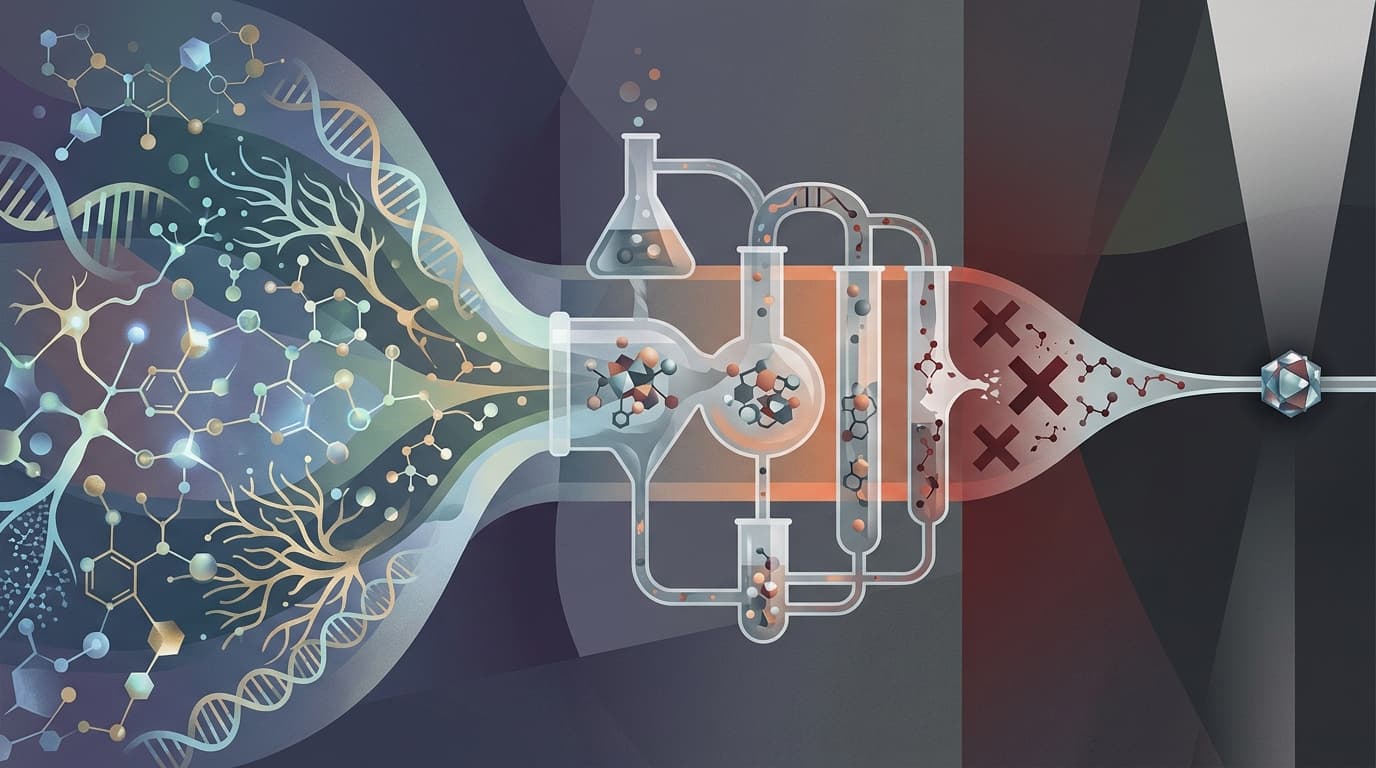
For three decades, the global drug pipeline only grew. Now it's shrunk for the first time since the mid-1990s, dropping nearly 1,000 programs. The forces behind the reversal tell a bigger story about where biotech is headed.
For three decades, the global drug pipeline only did one thing: grow. Every year, more experimental medicines entered development. More targets. More clinical trials. More shots on goal. It was the one metric that never went backward.
Until now.
The Streak Is Broken
At the start of 2026, the number of drugs in active development worldwide dropped to 22,940, down 3.9% from 23,875 the year prior. That's a net loss of 935 drug programs, according to data from Citeline, the analytics firm that tracks global R&D pipelines. It marks the first contraction since the mid-1990s.
To put that in perspective, the pipeline has nearly quadrupled since 2001, when just 5,995 drugs were in development. Year after year, the number climbed. It was the biotech industry's version of a win streak, the kind of record that felt permanent. Think of it like the housing market before 2008: everyone assumed it could only go up.
Now, for the first time in a generation, it went down.
Citeline does flag one caveat worth noting. Changes to its data collection systems may have slightly inflated the 2025 baseline figure, meaning the pipeline has likely been "fairly flat" near 23,000 since 2024. But even accounting for that, the trend is clear: the era of relentless pipeline expansion is over. New drugs entering development fell 1.3% in 2025, which means the front door is getting narrower, too.
Follow the Money (or the Lack of It)
So what killed the streak? Start with the money.
Biotech companies, especially smaller ones, ran headfirst into a funding buzzsaw in 2025. The IPO market sputtered after a brief January-February window, then went cold for months. Venture capital got selective, with global biotech VC dipping to approximately $2.7 billion in Q2 before rebounding later in the year. Federal grant freezes, geopolitical risks, and regulatory chaos under the new administration made investors skittish.
The result was a brutal "haves and have-nots" dynamic. Late-stage companies with validated data could still raise capital. Early-stage biotechs with promising but unproven science? Many of them hit what one observer called a "nuclear financial winter." When your funding dries up, your pipeline dries up with it.
Get tomorrow's biotech intelligence before your competitors.
Join thousands of biotech professionals who start their day with our free, daily briefing.
Big Pharma felt different pressures but reached a similar conclusion: trim the fat. Pfizer cut its pipeline significantly. Among the top 15 pharma companies globally, there was a net loss of 10 pipeline assets. The only reason the top 25 showed a slight gain (32 assets) was because of aggressive expansion by companies like BioNTech, which is less an industry trend than individual companies' aggressive bets.
AstraZeneca climbed in the rankings after adding 20 programs. But these are exceptions, not the rule.
The Patent Cliff Is Driving the Panic
Behind the spreadsheets, there's a deeper structural story. The pharmaceutical industry is staring down one of the most punishing patent cliffs in its history. The top 20 drugs losing exclusivity between 2026 and 2029 generated $176 billion in sales in 2024 alone. That revenue is about to evaporate as generics and biosimilars flood in.
You'd think that kind of pressure would push companies to develop more drugs, not fewer. And historically, that's exactly what happened. But developing a new drug now costs upward of $2 billion, timelines keep stretching longer, and the success rate remains brutally low. Companies are choosing quality over quantity, pruning weak candidates instead of throwing spaghetti at the wall.
M&A has become what one analyst group called a "core survival strategy." In 2025, the industry saw 129 deals worth $138 billion, with buyers zeroing in on precision oncology, cell and gene therapies, and GLP-1 drugs (the blockbuster weight loss class). Instead of building pipelines from scratch, companies are buying them pre-built.
There's also a crowding problem. About 25% of the roughly 13,600 active drug-target pairs in development are clustered around just 38 molecular targets. That's like 50 restaurants all opening on the same block; eventually, most of them fail. The more companies pile onto the same biology, the higher the odds of expensive, redundant failures.
Oncology Still Dominates, but Neuro Is Surging
Even in a shrinking pipeline, the therapeutic mix is shifting in interesting ways. Oncology remains the 800-pound gorilla, accounting for 38.6% of all new pipeline entrants in 2025. Cancer drugs have dominated biopharma R&D for years, and that isn't changing anytime soon.
But neurological diseases are quietly gaining ground, rising to 14.4% of new candidates. That's a meaningful shift. For years, Big Pharma treated the brain as a graveyard of failed clinical trials (Alzheimer's programs famously had a 99% failure rate for decades). The success of Leqembi and Kisunla in Alzheimer's, along with advances in neuropsychiatry and rare neurological conditions, seems to be pulling investment back into the space.
The FDA Factor: Advocates Sound the Alarm
The pipeline contraction isn't just a Wall Street story. For patients with rare diseases, it's personal.
On April 2, 2026, a coalition of patient advocacy groups and biotech executives sent a pointed message to the Trump administration and new FDA leadership: restore regulatory clarity, or watch the rare disease pipeline wither. Their frustration centers on what they see as a growing disconnect between the FDA's rhetoric about accelerating drug approvals and the agency's actual decisions.
The numbers back them up. In 2025, the FDA's Center for Biologics (CBER), under new Director Vinay Prasad, issued just 5 orphan drug approvals alongside 4 complete response letters (essentially rejections). That's a 44% rejection rate, far above the historical norm of roughly 10%. Companies like Atara Biotherapeutics, Regenxbio, and UniQure received rejections despite designing their studies in alignment with earlier FDA guidance.
As Stacey Frisk of the Rare Disease Company Coalition put it, the expectation for a "single perfect trial" is often unrealistic for ultra-rare conditions where patient populations are tiny and randomized trials simply aren't feasible.
The FDA did respond with a potential lifeline in February 2026: the Plausible Mechanism Framework, a draft guidance that would let ultra-rare disease therapies (think genome editing and RNA-based treatments) win approval using natural history data and biological plausibility rather than traditional randomized controlled trials. Comments are due April 27, and stakeholders are watching closely. It could be a game-changer for orphan drug developers, or it could be a well-meaning document that never translates into actual approvals. The industry has seen both before.
What Happens Next
Late 2025 offered some reason for cautious optimism. Venture capital surged 70.9% quarter-over-quarter in Q3, with $3.1 billion flowing into biotech. M&A activity accelerated. Private funding rounds got larger. If that momentum holds, 2026 could see a partial thaw.
But the structural pressures aren't going away. R&D costs keep climbing. The patent cliff looms larger every quarter. China now runs roughly 30% of global clinical trials and is doing it faster and cheaper, creating competitive pressure that U.S. and European companies can't ignore. Add tariff threats, drug pricing reform uncertainty, and a turbulent FDA, and you've got an environment where "do more with less" isn't just a corporate cliché; it's an existential mandate.
The pipeline contraction might turn out to be a one-year blip, a statistical hiccup amplified by data collection changes. Or it might be the beginning of a fundamental shift in how the industry operates: fewer bets, bigger bets, more M&A, less internal discovery.
Either way, the three-decade growth streak is done. And in an industry that measures progress by the sheer number of drugs in development, that's a signal nobody can afford to ignore.
The biotech world just learned something the rest of us figured out a long time ago: nothing grows forever.
4 min read
Inside Big Pharma's Tariff Escape Hatch
The Trump administration just announced 100% tariffs on imported brand-name drugs, but the fine print tells a very different story. With 13 companies already cutting confidential deals and generics completely exempt, analysts say only 4.4% of pharma imports will actually face the full rate.