Biogen Spent $5.6B on Apellis. Then It Torched the Science.
Biogen closed its $5.6 billion Apellis acquisition and immediately killed most of the company's research programs, keeping only the two products already making money. It's a pattern that keeps repeating in big pharma M&A, and it says a lot about what acquirers actually value.
Imagine spending $5.6 billion on a house, moving in, and immediately ripping out every room except the kitchen.
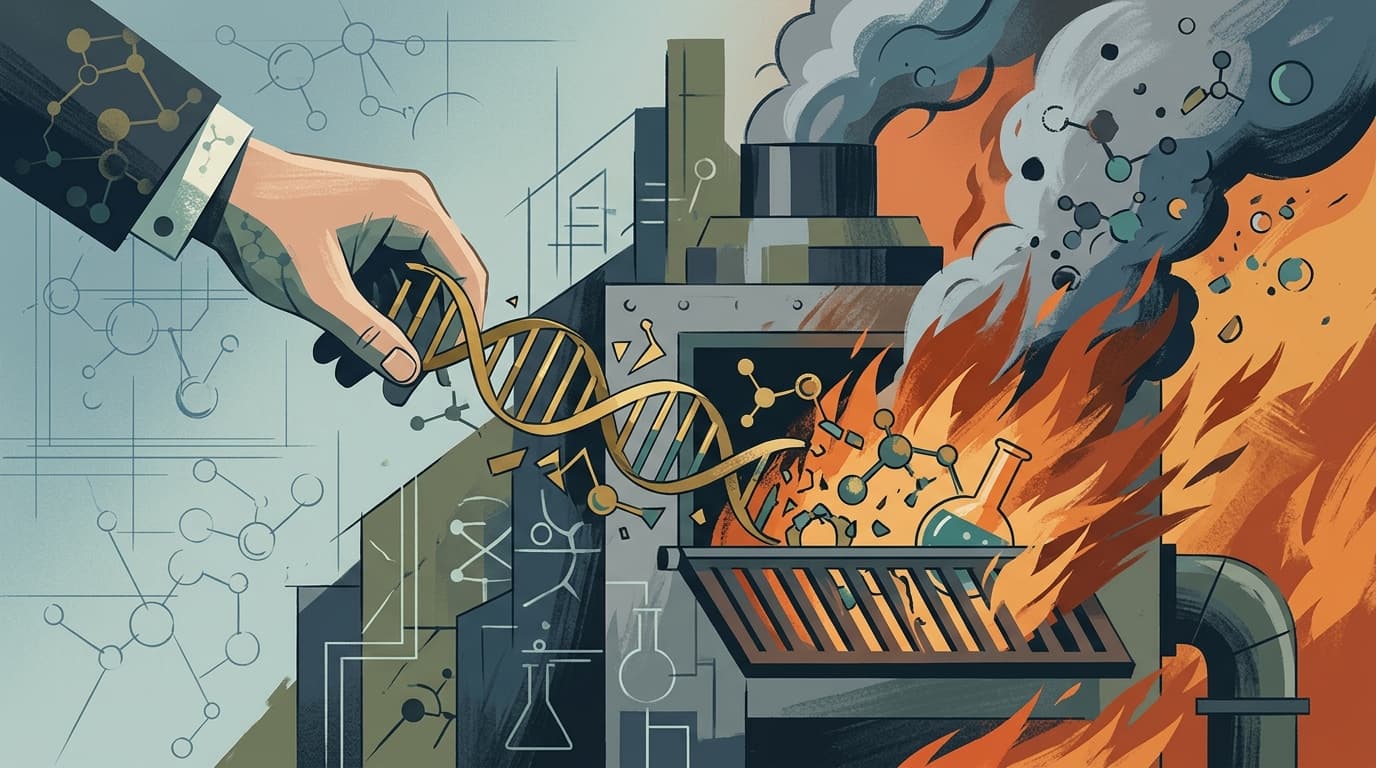
That's essentially what Biogen just did to Apellis Pharmaceuticals. Weeks after closing one of 2026's biggest biotech acquisitions, Biogen announced it was pausing or terminating the majority of Apellis's research programs and cutting research roles. The company kept only the two products already generating revenue: Syfovre (for a blinding eye disease called geographic atrophy) and Empaveli (for rare blood and kidney disorders).
The science that made Apellis interesting? The gene-editing collaboration with Beam Therapeutics, the brain-penetrating complement inhibitor, the preclinical RNA therapies, the oral complement pill? Gone. Frozen. Under "review," which in big pharma usually means the same thing as gone.
A $5.6 Billion Shopping Trip for Two Products
The deal's structure tells the story. Biogen paid $41 per share in cash, an 86% premium to Apellis's 90-day average trading price. On top of that, shareholders got a contingent value right (a CVR, basically an IOU) worth up to $4 more per share if Syfovre hits ambitious sales targets between 2027 and 2031.
Biogen financed the whole thing with about $3.6 billion in cash on hand and $2 billion in debt. CEO Chris Viehbacher framed it as a transformative move to diversify away from Biogen's declining multiple sclerosis business and push deeper into rare disease and nephrology (kidney medicine).
And to be fair, the commercial assets aren't nothing. Syfovre and Empaveli brought in roughly $689 million in combined U.S. revenue in 2025. Syfovre commands about 60% of the geographic atrophy market. Empaveli is gaining traction in rare kidney diseases like C3G and IC-MPGN, with management calling it a future blockbuster.
But Apellis wasn't just two drugs. Before the acquisition, it had a sprawling complement biology platform: clinical trials in kidney transplant patients, a next-generation siRNA combination therapy (APL-3007), a brain-active C3 inhibitor called APL-1030 aimed at neurodegenerative diseases, and up to six gene-editing programs with Beam targeting the eye, liver, and brain. There was even an FcRn gene therapy with an IND filing planned for the second half of 2026.
Get tomorrow's biotech intelligence before your competitors.
Join thousands of biotech professionals who start their day with our free, daily briefing.
All of that is now in limbo, or worse.
What Actually Got Cut
Biogen hasn't released a program-by-program breakdown, which is itself a signal. What we know: two clinical trials of Empaveli in kidney indications are now listed as "suspended" on ClinicalTrials.gov.
Beyond those, the preclinical RNA therapies, the Beam gene-editing work, and the oral complement inhibitor have all had their funding "paused or terminated." One bright spot: the APL-3007 combination trial with Syfovre appears to still be enrolling, though Biogen says the entire portfolio is under strategic review.
A "small number" of research roles were eliminated. Biogen characterized the cuts as targeted, not a mass layoff. But when you kill most of someone's research programs, the distinction feels academic.
This Is a Pattern, Not an Anomaly
If this sounds familiar, it should. Big pharma buying biotech companies for their revenue and then gutting their labs is practically a tradition.
When Amgen acquired Immunex in 2002, it shut down most of Immunex's cancer immunotherapy research. A congressional investigation later concluded the merger "helped set back cancer research." The irony? Immuno-oncology became one of the most valuable therapeutic areas in history just a decade later.
Pfizer's serial megamergers (Warner-Lambert in 2000, Pharmacia in 2003, Wyeth in 2009) led to entire research sites being closed. Former Pfizer R&D chief John LaMattina has written about how these deals devastated the company's discovery capabilities.
AbbVie's approximately $63 billion acquisition of Allergan in 2019 was so clearly a play to plug the Humira patent cliff that EU regulators required divestitures over competition concerns about the deal's impact on innovation.
The playbook is consistent: buy the company for two or three late-stage assets, strip out the exploratory science, redirect the savings to hit synergy targets. Analysts at Stifel estimated the Apellis deal at roughly 3.5x projected 2030 revenue, a price that creates real pressure to cut costs and justify the premium.
The Cautionary Tale for Small Biotechs
For Apellis shareholders, $41 per share plus a CVR wasn't a bad outcome. The stock had been struggling, and the 86% premium to its trading average was generous.
But for the scientists who spent years building a complement biology platform? For the patients enrolled in those kidney trials? The message is bleak. "Strategic acquisition" often means your acquirer wants your products, not your ideas.
This is especially sobering when you consider what Apellis was trying to build. Complement biology (the part of your immune system that tags threats for destruction) is genuinely frontier science. Programs like the brain-active C3 inhibitor or the Beam gene-editing collaboration weren't moonshots for the sake of moonshots; they were logical extensions of deep expertise in a biological pathway that touches dozens of diseases.
Now those programs sit in a folder labeled "under review" at a company whose primary motivation was revenue diversification.
What Biogen Actually Wanted
Strip away the press release language and the deal math is simple. Biogen's MS franchise is declining. Its Alzheimer's bet (Leqembi) has had a rocky commercial launch. It needed revenue, and it needed a way into nephrology, where its own drug felzartamab is heading toward late-stage kidney trials.
Apellis gave Biogen two revenue-generating products, a nephrology field sales force, and deep relationships with kidney specialists. That infrastructure alone could accelerate felzartamab's eventual launch. Biogen didn't buy a platform. It bought a distribution channel with products attached.
Wall Street seems to agree. After the deal was announced, 20 analysts rated Apellis a Hold with an average price target of $40.93, essentially the deal price. The CVR milestones (requiring Syfovre to hit $1.5 billion and then $2 billion in global sales) were widely described as unlikely. Biogen's own stock dropped about 4% on the news.
The Bigger Picture
Nearly half of blockbuster drug approvals between 2014 and 2023 came from acquired assets, not internal R&D. Big pharma has increasingly become a venture capital firm with a sales force: identify what works, buy it, commercialize it, repeat.
That model can generate enormous shareholder value. But it has a cost. Every time an acquirer buys a biotech and guts its pipeline, the industry loses optionality. Some of those killed programs would have failed anyway. But some wouldn't have. And we'll never know which ones.
Apellis's complement platform might have produced the next breakthrough in neurodegeneration, or a one-time gene therapy for rare kidney disease, or an oral pill that replaces chronic injections. Now those possibilities are footnotes in an integration memo.
Biogen got what it paid for: two commercial products and a faster path to kidney medicine. Whether that's worth $5.6 billion depends on your time horizon. But for anyone who believed Apellis was building something bigger than its current revenue line, the answer came fast and without ceremony.
Sometimes the most honest thing a deal can do is show you exactly what the buyer valued. And what it didn't.
Deals & M&A
5 min read
Lilly Just Paid $202M for a Company With Zero Drugs
Eli Lilly dropped up to $202 million on a preclinical biotech with zero drugs and zero revenue. The prize? A DNA delivery platform that could unlock an entire generation of genetic medicines. It's Lilly's latest move in a $20 billion+ acquisition spree, and it says everything about where pharma is headed.