
Beam Therapeutics' base-editing therapy for sickle cell disease just landed in the New England Journal of Medicine, and the results are turning heads: 31 patients treated, zero severe pain crises, and fetal hemoglobin levels that rival healthy carriers. This isn't just a win for one company; it's a credibility moment for a whole new class of gene editing.
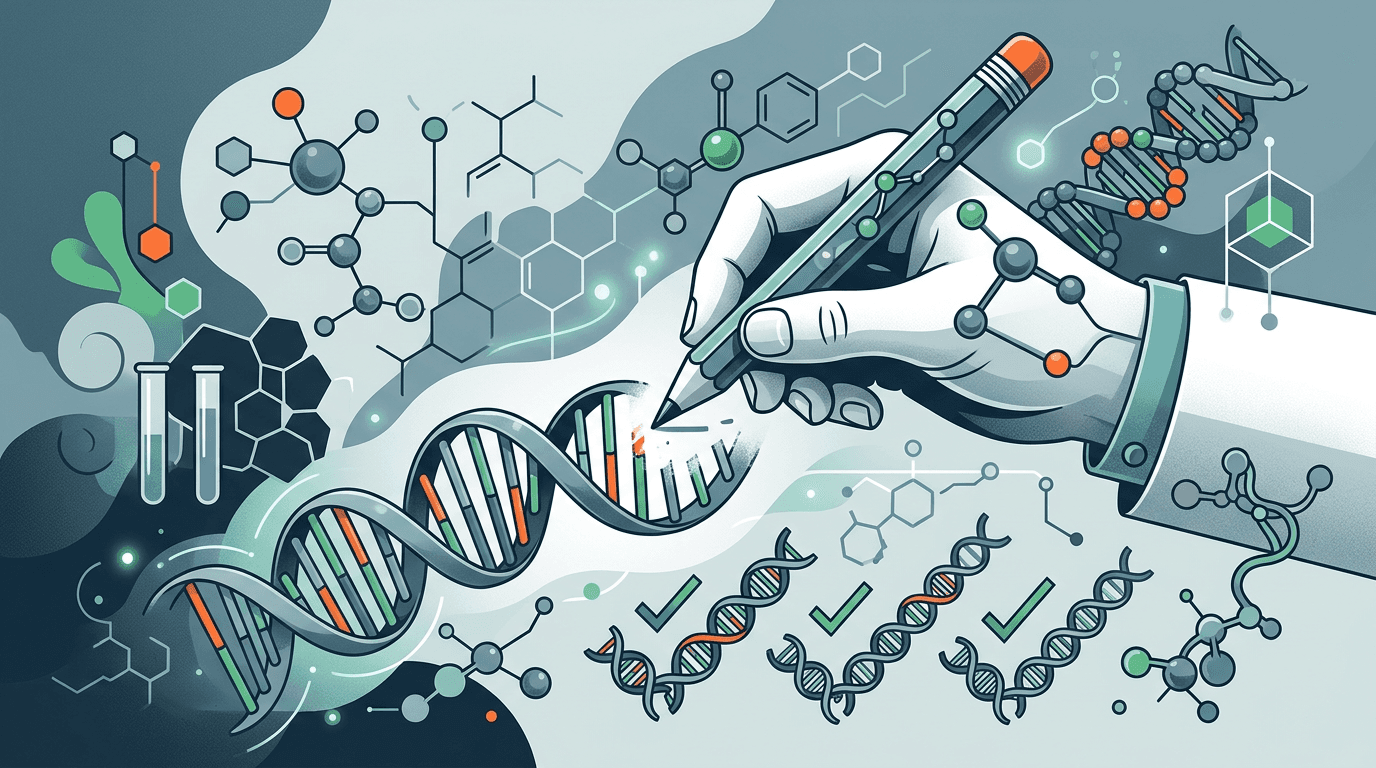
If CRISPR is a pair of molecular scissors, base editing is a pencil. And that pencil just got the highest grade in medicine.
Beam Therapeutics' sickle cell therapy, risto-cel, had its clinical data published in the New England Journal of Medicine on April 1, 2026. For anyone outside of medicine, that might sound like just another journal article. It's not. The NEJM is the Super Bowl of medical publishing: peer-reviewed, brutally selective, and the gold standard for proving a therapy actually works. Getting your data in there is a credibility milestone that separates "promising" from "real."
And the data? It's the kind that makes you lean forward in your chair.
Sickle cell disease is a genetic condition where red blood cells twist into rigid, crescent-shaped forms that clog blood vessels and cause excruciating pain episodes called vaso-occlusive crises (VOCs). Imagine your blood vessels as a network of highways, and your red blood cells as cars. In sickle cell, the cars are the wrong shape, causing pileups everywhere.
The BEACON trial treated 31 patients with severe sickle cell disease. The results, with follow-up stretching out to 20.4 months, tell a striking story.
Not a single patient experienced a severe VOC after their cells engrafted. Zero. For people who previously lived in fear of the next agonizing crisis, that's not an incremental improvement. It's a different life.
The therapy works by boosting fetal hemoglobin (HbF), a form of hemoglobin that healthy babies produce before birth and that naturally suppresses sickling. Risto-cel pushed mean HbF levels above 60%, while driving sickle hemoglobin (HbS) below 40%. Those numbers are comparable to people with sickle cell trait, who carry one copy of the mutation but almost never have symptoms. Essentially, the treatment dialed patients' blood chemistry back to a place where the disease can't do its damage.
To understand why this matters beyond sickle cell, you need to understand the technology underneath.

The Trump administration just dropped 100% tariffs on patented drug imports, the most aggressive pharma trade action in modern history. The real story isn't the tariff itself; it's the coordinated strategy pairing trade policy with FDA overhauls to fundamentally rewire how America makes and approves its medicines.


Join thousands of biotech professionals who start their day with our free, daily briefing.
CRISPR, the gene-editing tool that won a Nobel Prize, works by cutting both strands of DNA at a precise location. It's powerful, but cutting DNA in half is inherently risky. Those double-strand breaks can trigger the cell's alarm systems, activate a tumor-suppressing protein called p53, and occasionally cause unintended rearrangements in the genome. Think of it like fixing a typo in a book by ripping out the page and gluing in a new one. It usually works, but sometimes you lose a paragraph.
Base editing, developed by David Liu's lab at the Broad Institute in 2016, takes a fundamentally different approach. Instead of cutting DNA, it chemically converts one DNA letter into another, rearranging atoms at the molecular level without ever breaking the strand. It's like using a pencil eraser to fix that typo directly. No ripping, no gluing, no collateral damage.
The precision shows up in the numbers. Editing efficiency in patients' blood cells averaged 67.4% at six months and climbed to 72.8% at twelve months, suggesting the edits are not just sticking but becoming more prominent over time as edited stem cells expand.
Gene therapies have a dirty secret: they're logistically nightmarish. You have to collect a patient's stem cells, edit them in a specialized facility, and ship them back for infusion. The process for existing therapies can take months, during which patients remain desperately ill.
Risto-cel's manufacturing profile is quietly impressive. Patients needed a median of just one cell collection cycle (less poking and prodding). The product was ready for release in a median of 2.9 months, with patients receiving their dose at a median of 4.5 months from the start. Neutrophil engraftment, the point where the new cells take hold and start rebuilding the immune system, happened at a median of 17.5 days.
For context, reducing each of these steps even slightly translates to less time in the hospital, fewer complications, and lower costs. In a disease that disproportionately affects communities with limited healthcare access, that efficiency isn't a footnote. It's the difference between a therapy that works in theory and one that works in practice.
Risto-cel isn't the first gene-based therapy for sickle cell. The FDA approved two others in late 2023: Casgevy (from Vertex and CRISPR Therapeutics), which uses traditional CRISPR to disrupt a gene that suppresses fetal hemoglobin, and Lyfgenia (from bluebird bio), which uses a viral vector to deliver a functional hemoglobin gene.
Both are meaningful advances. But neither is perfect. Casgevy relies on those double-strand DNA breaks, and some patients still retain meaningful levels of sickle hemoglobin. Lyfgenia delivers a working gene but doesn't correct the underlying mutation.
Base editing occupies a distinct lane: higher precision, no DNA breaks, and fetal hemoglobin levels that match the asymptomatic carrier state. In preclinical studies, base-edited stem cells showed 68% HBB^G allele frequency in derived reticulocytes at 16 weeks in mice, outperforming CRISPR-based approaches in head-to-head transplant experiments. Whether that preclinical edge translates into a clinical advantage over existing therapies will take years to confirm, but the early signal is promising.
Beam's stock rose on the day of the publication. Analysts at Leerink Partners have a price target of $47, while Bernstein rates the stock Outperform at $40. The company is targeting a BLA submission (the formal application for FDA approval) by the end of 2026.
The sickle cell treatment market is projected to hit roughly $3.2 to $3.75 billion in 2025, growing at a 13 to 16% annual clip through the end of the decade. With an estimated 100,000 Americans affected and far more globally, the patient population is large enough to support multiple winners.
This NEJM publication isn't just about sickle cell. It's a validation moment for an entire class of technology. Base editing and its cousin, prime editing (also from Liu's lab), are being tested in clinical trials across leukemias, high cholesterol, liver disease, and more.
Eight years ago, base editing was a finalist for Science magazine's Breakthrough of the Year. Now it has peer-reviewed patient data in the world's most prestigious medical journal, with results that would make any gene therapy envious. The pencil, it turns out, might be mightier than the scissors.
The UK just became the only country with tariff-free pharmaceutical access to the U.S. market, dodging 100% duties that everyone else still faces. The price? A 25% hike in what the NHS pays for new drugs, and a template that could reshape global pharma negotiations.