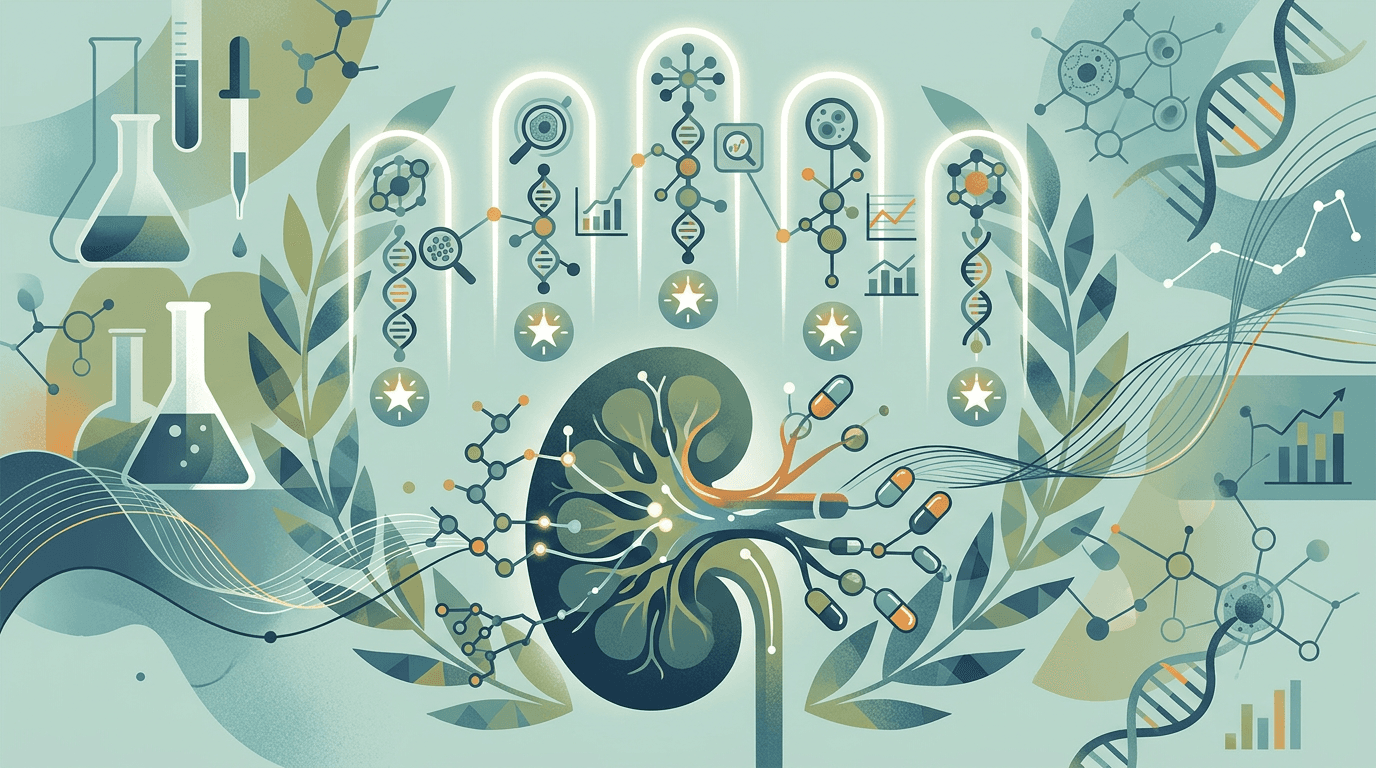

Kerendia just became the first drug to post five consecutive Phase III wins across kidney and heart disease populations. Bayer's latest trial success could unlock a massive new patient population, and the company's turnaround plan is banking on it.
Imagine a basketball player sinking every free throw in five consecutive playoff games. That's essentially what Bayer's kidney drug Kerendia (finerenone) just pulled off in the clinical trial world.
On March 16, Bayer announced that its Phase III FIND-CKD trial hit its primary endpoint, showing that Kerendia significantly slowed kidney function decline in patients with non-diabetic chronic kidney disease (CKD). That makes it five straight Phase III wins for the drug across more than 20,000 patients. Five trials, five successes, zero misses. In drug development, where roughly 90% of clinical candidates flame out, that's an absurdly good batting average.
But the real story isn't just the streak. It's who this trial was designed to help.
Kerendia already has FDA approval for CKD in patients with type 2 diabetes and certain types of heart failure. That approval was a solid win, but it left a massive group of kidney disease patients on the sidelines: the ones whose kidneys are failing for reasons that have nothing to do with diabetes.
Chronic kidney disease affects more than 10% of the global population. It's the ninth leading cause of death worldwide, killing over 1.4 million people in 2023 alone. And for patients without diabetes, treatment options have been frustratingly thin. The standard of care basically boils down to managing blood pressure, hoping things don't get worse, and eventually facing dialysis or a transplant if they do.
That's the gap Bayer is trying to fill. The FIND-CKD trial enrolled roughly 1,500 adults with non-diabetic CKD who were already on maximum-tolerated doses of standard blood pressure medications (ACE inhibitors or ARBs). Half got finerenone; half got a placebo. The question was simple: does adding this drug slow the rate at which kidneys lose function?
The primary endpoint measured something called eGFR slope, which tracks how fast kidney filtration ability declines over time. Think of it like measuring how quickly a car's engine loses horsepower. A flatter slope means the engine is holding up better.

The FDA just dropped guidance that could cut biosimilar development costs by $20 million per product and slash timelines by years. It's the second big regulatory swing in six months, and it could reshape who gets to compete in the $192 billion biologics market.


Join thousands of biotech professionals who start their day with our free, daily briefing.
Over 32 months, patients on Kerendia showed a statistically significant and clinically meaningful improvement in eGFR slope compared to placebo. In plain English: their kidneys deteriorated more slowly. The drug was also well-tolerated, with a safety profile consistent with what doctors have seen in previous trials.
Bayer hasn't released the full dataset yet (that's coming at an upcoming scientific conference), but the topline results are encouraging enough that the company is already planning an FDA submission to expand Kerendia's label to include non-diabetic CKD.
Finerenone is what's called a non-steroidal mineralocorticoid receptor antagonist. That's a mouthful, so here's the short version: your body has a hormone called aldosterone that, when overactive, causes inflammation and scarring in your kidneys and heart. Older drugs that block this hormone are steroid-based and come with messy side effects. Kerendia blocks the same pathway but does it more selectively, like using a scalpel instead of a sledgehammer.
This cleaner mechanism is a big reason the drug keeps posting wins across different patient populations, from diabetic CKD to heart failure to now non-diabetic kidney disease.
Bayer isn't exactly having the best decade. The German pharma giant has been grinding through a painful restructuring that includes roughly 12,000 layoffs and a target of €2 to €2.3 billion in annual savings by 2026. Its blockbuster blood thinner Xarelto is facing steep sales declines as patents expire. The company needs new revenue engines, and it needs them fast.
Kerendia is one of the brightest spots in the portfolio. Sales jumped 67% in Q2 2025, and Bayer has publicly discussed more than €3 billion in peak sales potential for the drug. Expanding the label to non-diabetic CKD would dramatically widen the addressable patient population, potentially turning that peak sales target from aspirational to achievable.
The drug isn't fighting alone, either. Bayer's renal pipeline includes nurandociguat (an oral drug in Phase II for CKD) and a Phase II candidate for Alport syndrome, a rare genetic kidney disease. There's also an ongoing trial of finerenone in CKD patients with type 1 diabetes, which showed a 25% reduction in a key kidney damage marker back in November 2025.
Bayer isn't the only company eyeing the kidney disease market. The global nephrology drug market sits at roughly $18 billion in 2025, with projections pushing it toward $24 to $29 billion by the early 2030s. SGLT2 inhibitors like Jardiance have already muscled their way into CKD treatment. The competition is heating up.
But Kerendia has a distinct advantage: it works through a completely different mechanism than SGLT2 inhibitors, which means doctors can potentially use both together. Instead of competing for the same slot on a prescription pad, these drugs could be complementary. That's a much friendlier competitive dynamic than a head-to-head showdown.
Bayer will present the full FIND-CKD data at an upcoming medical conference, which will give analysts and physicians a deeper look at exactly how well the drug performed across subgroups. After that, expect an FDA submission for the expanded label.
If approved, Kerendia would become one of the few drugs available for non-diabetic CKD patients who currently have limited options beyond blood pressure management. For a disease that affects hundreds of millions globally, that's not just a win for Bayer's balance sheet. It's a genuine step forward for patients who've been waiting a long time for something better than "manage and hope."
Five Phase III wins, zero losses. The streak is real, and Bayer is betting the next chapter of its turnaround on keeping it alive.
Amplifon just dropped €2.3 billion to buy the company that makes the hearing aids it sells, creating a vertically integrated giant in one of medtech's fastest-growing markets. The deal reshapes an entire industry, and the competition should be worried.