Aligos Therapeutics licensed its hepatitis B drug to a Chinese partner in a deal worth up to $445 million. With a market cap under $50 million and cash running low, did the company sell a goldmine or pull off a masterclass in survival strategy?
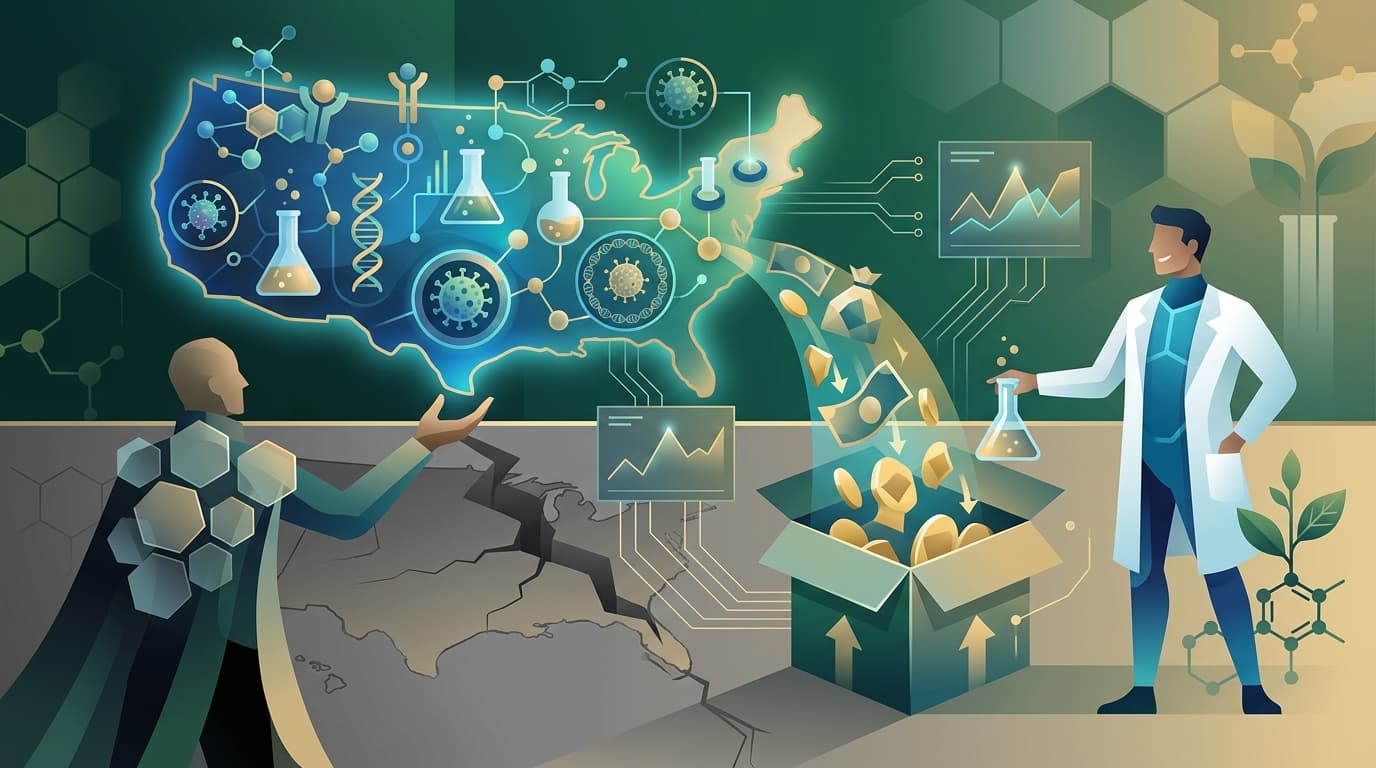
Aligos Therapeutics had $77.8 million in the bank at the start of 2026. For a small-cap biotech burning cash on a Phase 2 hepatitis B drug, that's like driving cross-country with your gas light on. So the company did something smart: it sold the China map.
On April 16, Aligos licensed the Greater China rights to its lead hepatitis B candidate, pevifoscorvir sodium, to Xiamen Amoytop Biotech. The deal is worth up to $445 million, including $25 million upfront, up to $420 million in milestone payments, and tiered high single-digit royalties on net sales. Aligos keeps the rest of the world. Wall Street loved it: shares surged more than 20% on the news, with intraday gains hitting nearly 31%.
But here's the real question. Is this a brilliant strategic move, or did Aligos just trade a goldmine for gas money?
The Math Behind the Map
Greater China is home to more than 90 million people living with chronic hepatitis B. That's a staggering number, roughly the population of Germany, all carrying a virus that can quietly destroy the liver over decades. If you're developing a new HBV drug, China isn't just "a market." It's the market.
So giving it away sounds crazy, right? Not when you zoom in on Aligos's situation. The company's market cap before the deal was around $49.47 million. That $25 million upfront payment represents more than half of its entire public valuation arriving as a single wire transfer. And it extends the company's cash runway into Q4 2026, buying precious time to hit clinical milestones without diluting shareholders through a desperate equity raise.
Think of it like selling your beach house to fund your startup. Painful? Maybe. But you can't build a company if you're broke.
Why Amoytop Makes Sense as the Buyer
Amoytop isn't some random acquirer. Founded in 1996 and listed on China's STAR Market, the company has deep roots in hepatitis B. Its flagship product, PEGBING (a pegylated interferon treatment), is one of the commercially approved HBV therapies in China. Amoytop broke foreign monopolies with that drug when it launched in 2016 as China's first Class 1 new drug in its category.
Get tomorrow's biotech intelligence before your competitors.
Join thousands of biotech professionals who start their day with our free, daily briefing.
The two companies aren't strangers, either. Aligos and Amoytop already collaborate on a preclinical antisense oligonucleotide program for HBV. This deal expands an existing relationship rather than building one from scratch, which means less friction, more trust, and a partner who actually knows how to navigate China's regulatory landscape.
Under the agreement, Amoytop gets exclusive development and commercialization rights across Mainland China, Taiwan, Hong Kong, and Macau. Crucially, Amoytop funds the development costs in those territories. Aligos keeps the right to run clinical trials in Greater China (useful for global regulatory filings) without footing the bill for commercialization there.
What Exactly Is Pevifoscorvir?
Pevifoscorvir sodium is what's called a capsid assembly modulator, or CAM-E. In plain English: the hepatitis B virus builds a protective shell (a capsid) around its genetic material, like packing a suitcase before traveling through your body. Pevifoscorvir jams the zipper on that suitcase, preventing the virus from assembling properly and spreading.
The drug is currently in the B-SUPREME Phase 2 trial, and the first interim results look encouraging. A Data Safety Monitoring Board reviewed the data on April 14, 2026, and recommended expanding enrollment from 74 to 100 participants in the HBeAg-negative cohort. That's a good sign; the board found no reason to stop the trial (prespecified futility criteria were not met) and the drugs were well-tolerated across all 174 enrolled participants.
No clinically concerning lab abnormalities. No drug-related viral breakthroughs. The FDA has also granted Fast Track designation for the program, which signals regulatory interest in getting this drug reviewed faster.
Topline data from B-SUPREME is expected in 2027. If the results hold up, those $420 million in milestones start looking a lot more real.
The Bigger Picture: Everyone Wants a Piece of China
Aligos isn't doing anything unusual here. Cross-border licensing between U.S. biotechs and Chinese partners has exploded. In 2025 alone, Greater China out-licensing deals hit a combined value of $135.7 billion across 157 deals.
Most of that action has been in oncology, not hepatitis. But the HBV market is massive and growing, projected to reach somewhere between $8.9 billion and $10.2 billion by 2035, depending on which estimate you trust. The pipeline is crowded with novel approaches: RNA interference therapies, capsid modulators like pevifoscorvir, immunotherapies, and combination strategies all racing toward the holy grail of a "functional cure" (sustained clearance of the surface antigen, meaning the immune system has effectively won).
With over 80 companies developing 90+ pipeline drugs globally and Asia-Pacific leading 65% of trial activity, having a strong China partner isn't optional. It's table stakes.
The Fine Print and the Risks
Not everything is rosy. The deal still needs Amoytop shareholder approval, expected within about 30 days. And while $25 million buys time, it only extends the runway to Q4 2026. After that, Aligos will need either spectacular clinical data or another creative financing move.
Analysts were already bullish before the deal. Jefferies had initiated coverage with a Buy rating and $48 price target; H.C. Wainwright maintained Buy with a $50 target. But the stock traded at a fraction of those levels, reflecting how much execution risk remains. A market cap under $50 million for a company sitting on $445 million in potential deal value tells you the market is pricing in a lot of "ifs."
Retail investors noticed too, with trading volume spiking significantly on announcement day.
So, Smart Move or Desperation?
Honestly? Both. Aligos was in a tight spot financially, and this deal relieves pressure without giving up its most valuable global rights. The U.S., Europe, Japan, and South Korea remain firmly in Aligos's hands. If pevifoscorvir works, those markets alone could be worth multiples of the China deal.
And if it doesn't work, the $25 million still bought time and a partner who's invested in the drug's success. Amoytop has skin in the game now, and their HBV commercial infrastructure in China is real.
For a $46 million company, turning geography into cash and keeping the rest of the world isn't desperation. It's survival with a plan.
Funding & Financings5 min read
The Biotech Field That Didn't Exist a Decade Ago Just Got Its Biggest Bet Yet
Storm Therapeutics just raised $56 million and dosed the first patient in a Phase 2 sarcoma trial, all for a drug targeting an enzyme most people have never heard of. It's the biggest clinical milestone yet for epitranscriptomics, a therapeutic field that literally didn't exist a decade ago.