The AI That Picks Which Cancer Patients Will Actually Survive
AstraZeneca and Tempus AI built an AI framework that retroactively improved survival in cancer trials by 15%, not by changing the drug, but by picking better patients. The real test: can it work prospectively?
The Pitch: What If You Could Rig a Clinical Trial (Legally)?
Clinical trials fail for a lot of reasons. Bad molecules. Bad timing. But one of the sneakiest reasons? Bad casting. You enroll a thousand patients, give half of them your drug, and pray it works. The problem is that your drug might actually work brilliantly, just not for everyone in the room. Some of those patients were never going to respond, and they dilute your results like watering down good whiskey.
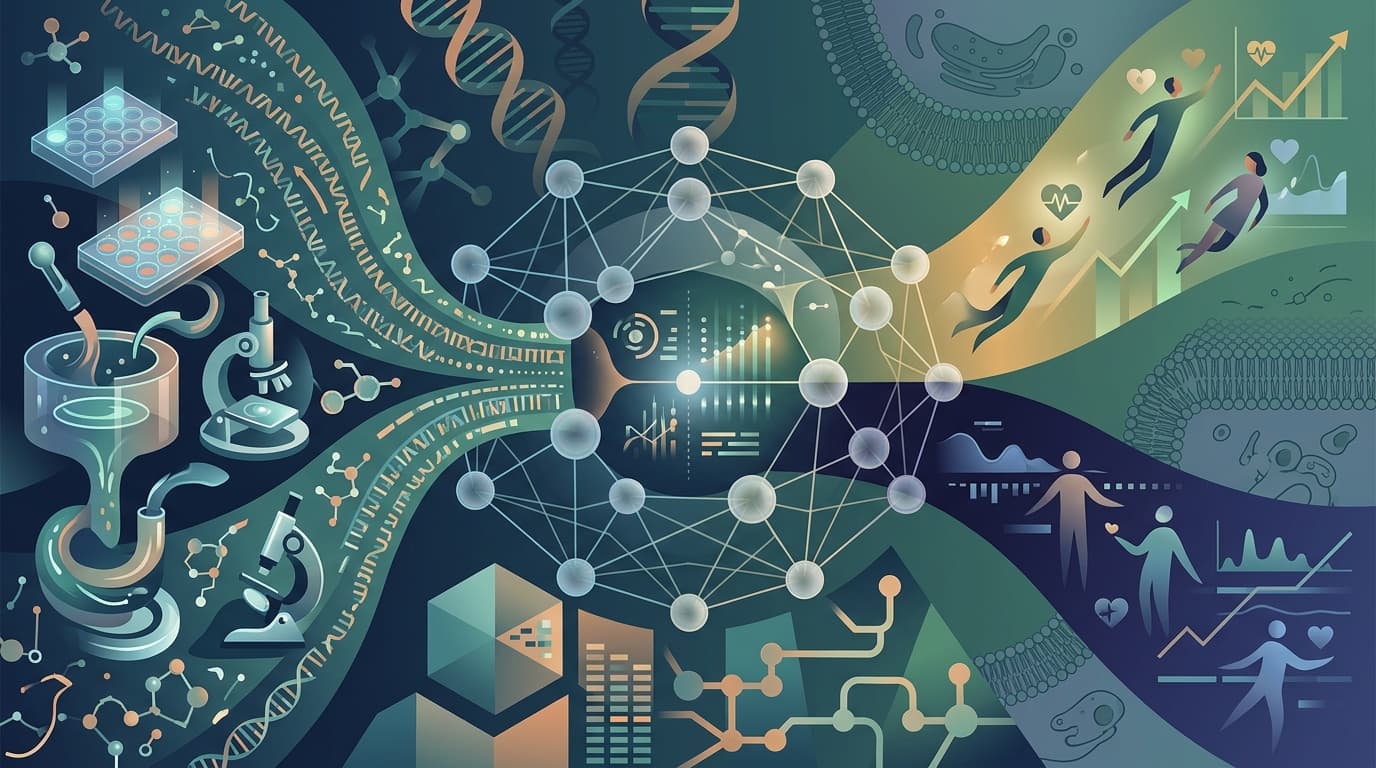
AstraZeneca and Tempus AI think they've found a way to fix that. Their new AI framework, called the Predictive Biomarker Modeling Framework (PBMF), analyzes mountains of patient data to figure out who is most likely to benefit from a specific cancer treatment. When they tested it retrospectively on past immuno-oncology trials, patients selected by the AI showed a 15% improvement in survival risk compared to the original, everyone-gets-in approach.
That's not a new drug. That's the same drug, just given to the right people.
How a Neural Network Plays Matchmaker
PBMF isn't your standard biomarker test. Traditional approaches rely on single markers like PD-L1 expression or tumor mutation burden (TMB), essentially checking one box at a time. PBMF takes a fundamentally different approach: it uses contrastive learning, a type of neural network training where the model learns to spot the differences between patients who benefit from a therapy and those who don't.
Think of it like a dating app algorithm, but for cancer drugs and patients. The system looks at clinical records, genomic sequencing, gene expression data, and tumor characteristics all at once. Then it figures out which combination of features predicts that this specific treatment will work better than the alternatives. That "predictive vs. prognostic" distinction matters enormously. A prognostic biomarker tells you how sick someone is. A predictive biomarker tells you which treatment will actually help them. PBMF hunts for the second kind.
The really clever part? After the neural network does its work, PBMF distills its findings into . So instead of a black-box AI telling doctors "trust me," you get transparent rules: something like "adenocarcinoma histology + LRP1B mutation + active immune signaling = this patient should get immunotherapy." Interpretable. Auditable. The kind of thing a regulatory agency could actually evaluate.
Get tomorrow's biotech intelligence before your competitors.
Join thousands of biotech professionals who start their day with our free, daily briefing.
simple, low-depth decision trees
The Numbers That Got People's Attention
In retrospective testing on phase 3 immuno-oncology trials, PBMF identified predictive biomarkers using only early study data. When those biomarkers were applied to the full trial population, the enriched group showed that 15% survival benefit.
To put that in context: a large analysis of over 17,000 drug development programs found that biomarker-guided patient selection increased the overall probability of successful development from 1.6% to 10.7%. That's more than a sixfold improvement. PBMF is trying to push that number even higher by discovering biomarkers that humans might never find on their own.
AstraZeneca has already started putting its money where its models are. The company embedded AI and real-world data analysis into its governance process for all oncology phase 3 trial designs. A pilot across five ongoing studies showed an average 5% increase in probability of technical success per study. Five percent might sound modest, but in late-stage oncology development, where a single failed trial can cost hundreds of millions of dollars, that's enormous.
A $200 Million Bet on the Foundation
PBMF didn't emerge in a vacuum. AstraZeneca and Tempus have been building toward this since 2021, when they signed a master services agreement for oncology AI and data collaboration. By 2023, they were piloting Tempus Next (a care-pathway AI platform) to catch NSCLC patients who should be getting biomarker testing but weren't. By early 2024, that pilot had expanded to 15 provider sites.
Then came the big move. In April 2025, AstraZeneca, Tempus, and a company called Pathos AI announced a $200 million partnership to build what they're calling the world's largest oncology foundation model. The idea is to train a massive multimodal AI on Tempus' data (we're talking 8+ petabytes of clinical and molecular records from over 8 million de-identified patients) and use it to discover drug targets, design trials, and predict which patients will respond to which therapies.
Tempus, for its part, has become something of an AI utility for Big Pharma. It now works with 19 of the top 20 global pharma companies, with total contract value exceeding $1.1 billion as of late 2025. Pfizer, GSK ($70 million upfront for a three-year extension), Merck, Bristol Myers Squibb: the client list reads like a who's who of oncology.
The Catch (Because There's Always a Catch)
Before anyone gets too excited, some important caveats. Every survival benefit reported so far is retrospective. PBMF was applied to trials that already happened, essentially asking "what if we'd enrolled differently?" That's a valuable exercise, but it's not the same as prospectively designing a trial around AI-selected biomarkers and proving it works in real time.
Generalizability is another open question. Tempus' data is vast, but it's largely drawn from U.S. academic medical centers and community oncology practices. How well these models perform across different populations, geographies, and care settings remains to be seen. Experts also flag concerns about data leakage (the model accidentally "seeing" outcomes it shouldn't) and model drift as treatment patterns evolve.
Regulators will want rigorous, pre-specified prospective validation before PBMF-guided biomarkers show up on drug labels. That means the real proof won't come from a retrospective analysis published in 2026; it'll come from a trial designed today that reads out in 2028 or 2029.
Why This Still Matters Right Now
Even with those caveats, the signal here is significant. The oncology industry spends billions on trials that fail because the right drug met the wrong patients. If AI can consistently improve patient selection by 10 to 15%, the downstream effects are staggering: smaller trials, faster timelines, higher success rates, and ultimately, more drugs reaching the patients who actually need them.
AstraZeneca isn't treating this as an experiment anymore. It's governance. It's infrastructure. And with Tempus processing data from over 5,000 clinical sites, the flywheel between diagnostics, data, and drug development keeps spinning faster.
The question isn't whether AI will reshape how cancer drugs are developed. It's whether this particular framework can survive the jump from "what if" to "what is." The retrospective results say the talent is there. Now it needs to prove it can perform live.
Clinical & Regulatory
5 min read
The FDA Just Overruled Its Own Experts on Moderna's Flu Shot
The FDA's vaccine advisory panel voted 9-0 that Moderna's mRNA flu shot was safe and effective. Then the agency rejected it anyway, on trial design grounds that blindsided the industry. The fallout could reshape how vaccine makers think about U.S. development for years.